
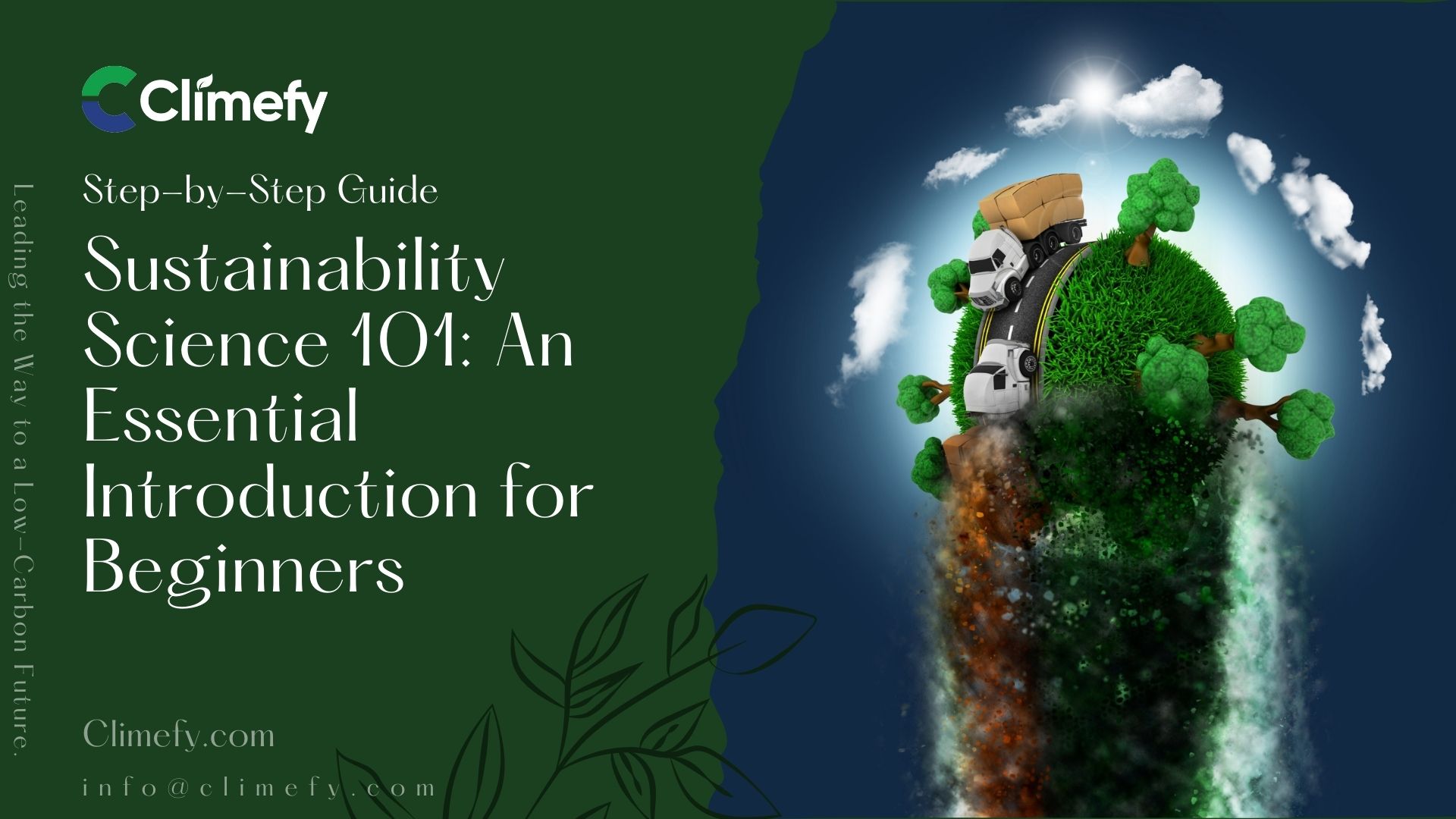
Sustainability science is the essential interdisciplinary field dedicated to understanding the complex interactions between human and environmental systems. It seeks actionable solutions to ensure the well-being of both people and the planet, now and for future generations. This beginner’s guide will demystify the core principles, tools, and urgent imperatives of this critical discipline.
In this comprehensive guide, you will learn:
Read More:
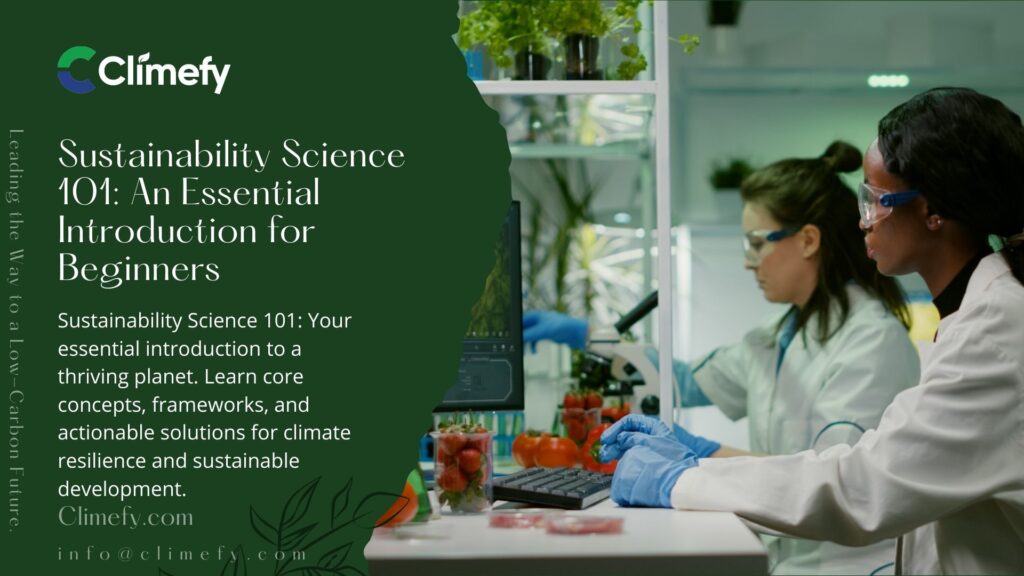
Sustainability science is not merely a branch of environmental studies; it is a vibrant, solutions-oriented field that integrates knowledge from ecology, economics, sociology, technology, and policy. Its primary purpose is to address the grand challenge of meeting human development needs while sustaining the life support systems of the Earth. Unlike traditional, siloed approaches, sustainability science explicitly focuses on the dynamic interplay between society and nature. It asks complex questions: How do we eradicate poverty without exceeding ecological limits? How do we design cities that are both livable and low-carbon? It provides a structured way to analyze these interconnected problems and identify pathways toward a just and sustainable future. This field is grounded in several core tenets that distinguish it from purely environmental science.
The imperative for sustainability science stems from overwhelming evidence that humanity is operating beyond the planet’s safe ecological limits. Our current trajectory of resource extraction, pollution, and inequality is unsustainable. This scientific field provides the essential roadmap for navigating away from planetary crisis and toward a state of resilience and balance. It moves the conversation from doom-and-gloom scenarios to actionable pathways for transformation across all sectors of society. The critical importance of this discipline is highlighted by several established global facts and frameworks that have emerged from its research.
✔ The Planetary Boundaries Framework: Developed by a team of Earth system scientists, this model identifies nine critical processes that regulate the stability and resilience of the Earth system. It shows that we have already transgressed safe boundaries for climate change, biosphere integrity (biodiversity loss), land-system change, and biogeochemical flows (nitrogen and phosphorus cycles).
✔ The Sixth Mass Extinction: Current species extinction rates are estimated to be 100 to 1,000 times higher than the natural background rate, primarily due to human activity—a clear indicator of severe ecological stress.
✔ Global Inequality: The UN estimates that the richest 1% of the global population owns nearly half of the world’s wealth, while billions lack access to basic resources, underscoring the social dimension of the sustainability challenge.
✔ Economic Risk: The World Economic Forum consistently ranks climate action failure, biodiversity loss, and natural resource crises among the top long-term global risks to economies worldwide.
Sustainable development is the overarching goal that sustainability science serves. It is commonly understood through the integrated framework of three pillars: Environmental Protection, Social Equity, and Economic Viability. True sustainability occurs only at the intersection of all three. For instance, a clean energy project (environmental) that displaces local communities (social) or is financially insolvent (economic) is not sustainable. To translate these pillars into actionable global targets, the international community has developed seminal frameworks that guide policy, investment, and scientific inquiry.
Climate change is arguably the most pressing and cross-cutting symptom of unsustainable human activity, making it a central focus of sustainability science. It acts as a “threat multiplier,” exacerbating existing challenges related to food security, water scarcity, public health, and social stability. Sustainability science approaches climate change not as an isolated environmental issue, but as a systemic problem intertwined with energy systems, land use, economic models, and consumption patterns. Effective climate action requires understanding these deep interlinkages. Mitigating greenhouse gas emissions and adapting to unavoidable impacts are fundamental objectives within the broader pursuit of sustainability. Key concepts include:
For individuals and organizations looking to understand their direct role in climate change, calculating one’s carbon footprint is a vital first step. Tools like Climefy’s carbon footprint calculator for individuals provide a clear picture of personal emissions from travel, diet, and energy use, offering a foundation for meaningful reduction strategies.
Carbon management is the systematic process of measuring, reducing, avoiding, and sequestering carbon dioxide and other greenhouse gas emissions. It is a core operational strategy within sustainability science for achieving climate mitigation. The ultimate goal for corporations and nations aligned with the Paris Agreement is to achieve net zero emissions. This state is reached when the amount of greenhouse gases added to the atmosphere is no more than the amount removed. The journey involves a clear hierarchy of actions, with offsetting being a final step for unavoidable emissions.
✔ Measure: Comprehensively audit all sources of emissions, categorized as Scope 1 (direct), Scope 2 (indirect from purchased energy), and Scope 3 (all other indirect emissions in the value chain).
✔ Reduce: Implement efficiency measures, switch to renewable energy, and innovate in processes and products to lower the absolute volume of emissions.
✔ Remove/Sequestester: Invest in activities that actively pull CO₂ from the atmosphere, such as afforestation and reforestation, soil carbon sequestration, or direct air capture technology.
✔ Offset: Compensate for residual, unavoidable emissions by purchasing high-quality carbon credits from projects that verifiably reduce or remove emissions elsewhere, such as renewable energy installations or forest conservation.
For businesses embarking on this path, expert guidance is invaluable. Climefy’s Net Zero Journey service provides a structured pathway, from initial footprint assessment using their carbon calculator for large organizations to the development and implementation of a credible decarbonization roadmap, ensuring compliance and leadership in the low-carbon economy.
The circular economy is a transformative economic model designed to eliminate waste and pollution, circulate products and materials at their highest value, and regenerate nature. It stands in direct opposition to the traditional “take-make-dispose” linear economy. Sustainability science provides the systemic analysis needed to design and implement circular systems. This model is not merely about recycling; it’s a fundamental redesign of how we produce, consume, and think about ownership. It decouples economic activity from the consumption of finite resources, addressing both environmental degradation and material security. The core principles are:
A critical component of managing the end-of-life cycle in both linear and circular systems is solid waste management. Effective strategies—from reduction and segregation to advanced treatment—are essential for preventing pollution, recovering resources, and reducing methane emissions from landfills. Companies like Climefy offer expertise in designing and implementing solid waste management solutions that align with circular principles, turning waste streams into value streams.
ESG stands for Environmental, Social, and Governance – a set of criteria used to evaluate a company’s operations and its long-term risk and growth potential from a sustainability perspective. In the realm of sustainability science, ESG represents the applied, corporate-facing arm that translates planetary and social boundaries into actionable business metrics. Investors, regulators, and consumers are increasingly using ESG performance to assess a company’s resilience, ethics, and future viability. Strong ESG performance is now correlated with reduced risk, lower cost of capital, and enhanced brand reputation.
Navigating this complex landscape requires specialized knowledge. Climefy’s ESG Consultancy helps businesses develop robust ESG frameworks, conduct materiality assessments, collect relevant data, and prepare compelling sustainability reports that meet growing stakeholder demands and regulatory requirements.
Moving from theory to practice requires robust tools for measurement and analysis. Sustainability science employs a suite of quantitative and qualitative methodologies to assess impacts, compare alternatives, and track progress. These tools are essential for transparency, accountability, and informed decision-making. Without them, claims of “green” or “sustainable” remain vague and unverifiable. Key methodologies include:
✔ Life Cycle Assessment (LCA): A comprehensive technique for assessing the environmental impacts associated with all the stages of a product’s life, from raw material extraction through materials processing, manufacture, distribution, use, repair and maintenance, to disposal or recycling (often called “cradle-to-grave” analysis).
✔ Carbon Footprint Analysis: A specific type of LCA focused solely on calculating the total greenhouse gas emissions caused directly and indirectly by an individual, organization, event, or product. Businesses can leverage tools like the carbon calculator for small & medium companies to initiate this process accurately.
✔ Environmental, Social, and Governance (ESG) Reporting Standards: Frameworks like the Global Reporting Initiative (GRI), the Sustainability Accounting Standards Board (SASB), and the Task Force on Climate-related Financial Disclosures (TCFD) provide standardized ways to disclose performance.
✔ The Environmental Profit & Loss Account (E P&L): A monetized metric pioneered by some corporations to quantify the environmental costs of their activities, putting a tangible financial value on impacts like water consumption and air pollution.
✔ Biodiversity Indicators: Metrics such as the Mean Species Abundance (MSA) or the Potentially Disappeared Fraction of species (PDF) used to assess a company’s or project’s impact on ecosystems.
While systemic change is crucial, individual choices collectively drive market trends and cultural norms. Sustainability science empowers individuals with the knowledge to make informed decisions that reduce their personal environmental impact and advocate for broader change. Action at the individual level is a powerful component of the multi-scale approach needed for global sustainability. Meaningful contributions span daily habits, financial choices, and civic engagement.
Achieving sustainability at the necessary scale and speed is impossible without enabling structures. Sustainability science explicitly studies the policy instruments, technological innovations, and forms of international cooperation that can accelerate the transition. This involves understanding what works, where, and why—and how to overcome political and economic barriers to change. Effective action requires a multi-level governance approach.
Sustainability science is the interdisciplinary study of how human systems (like economies and societies) interact with natural systems (like climate and ecosystems), with the explicit goal of finding practical solutions to ensure long-term planetary health and human well-being.
The three core, interconnected principles are Environmental Protection (conserving natural resources and ecosystems), Social Equity (ensuring justice, health, and quality of life for all people), and Economic Viability (maintaining stable and prosperous economies). They are often summarized as Planet, People, and Profit.
It addresses climate change as a systemic issue, integrating climate mitigation (reducing emissions) and adaptation (preparing for impacts) into broader strategies for energy, transportation, land use, and consumption. It provides the tools—like carbon footprinting and systems modeling—to develop holistic and just climate solutions.
Yes, and increasingly, long-term profitability depends on it. Businesses that embrace sustainability through efficiency, innovation, and strong ESG practices often see reduced operational risks, lower costs, enhanced brand loyalty, and better access to capital. The concepts of the circular economy and net zero are pathways to decouple growth from environmental harm.
The most impactful first step is to educate yourself about your own impact. Use a reliable carbon footprint calculator to understand your personal emissions hotspots. This data-driven starting point allows you to prioritize actions, from reducing energy use to making informed consumption choices, and even exploring credible carbon offsetting for emissions you can’t yet eliminate.