Sustainable Development Goal 12 (SDG 12): Achieving Responsible Consumption
Sustainable Development Goal 12 (SDG 12): Achieving Responsible Consumption
Sustainable Development Goal 12 (SDG 12) is the United Nations’ blueprint for fostering a global economy of responsible consumption and sustainable production. It addresses the critical need to decouple economic growth from environmental degradation by fundamentally reshaping how we produce goods, utilize resources, and manage waste. Achieving SDG 12 is not merely an environmental imperative but a foundational requirement for long-term economic resilience, social equity, and planetary health. This comprehensive guide will dissect every facet of this crucial goal, providing you with the knowledge to understand and contribute to a more sustainable future.
In this definitive guide, you will learn:
The core definition, targets, and global significance of SDG 12.
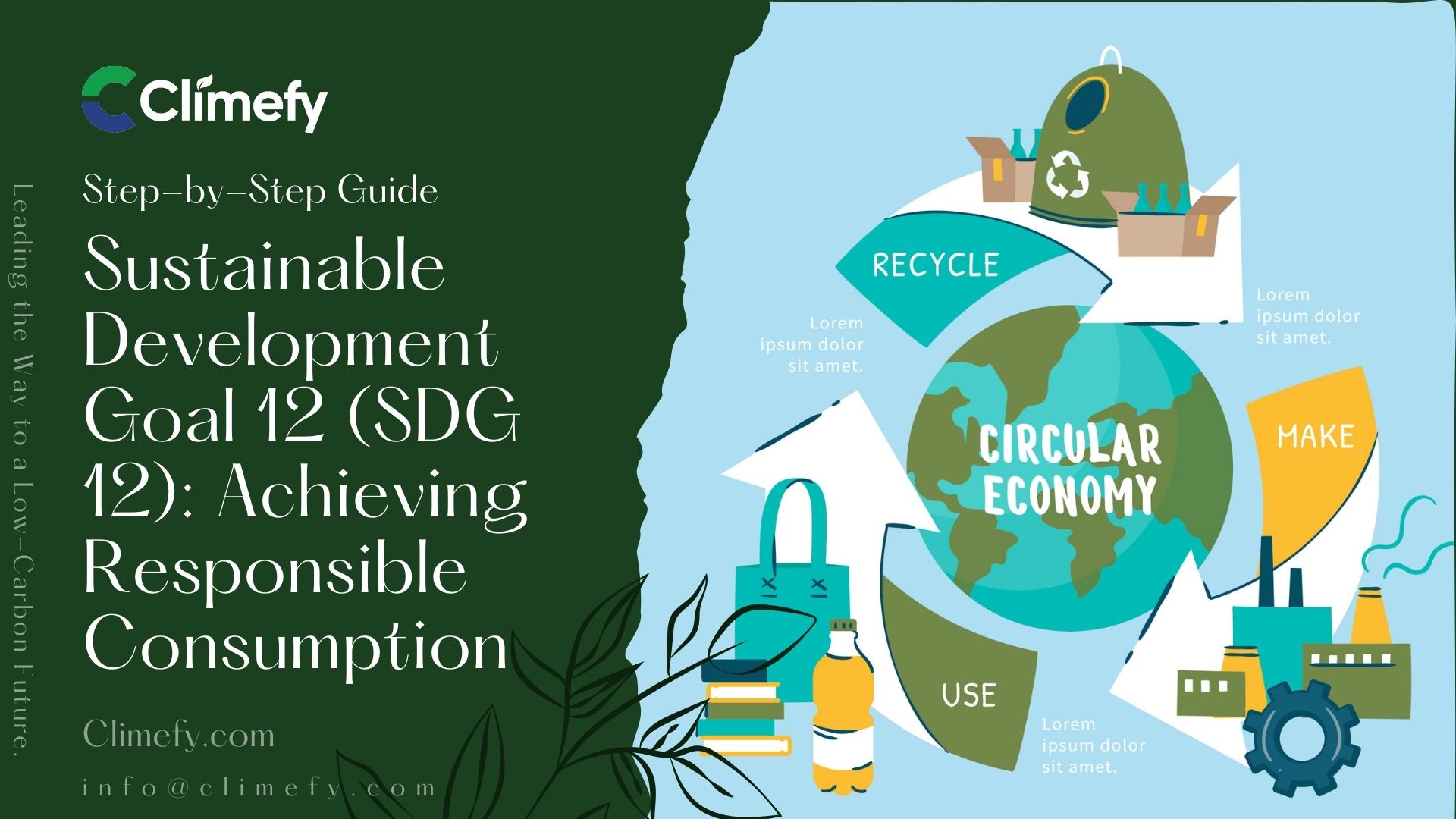
A deep dive into the principles of the Circular Economy versus the traditional Linear Economy.
Detailed explanations of key concepts like sustainable supply chains, eco-innovation, and life cycle assessment.
The critical role of businesses, governments, and individuals in implementing SDG 12.
The tangible benefits, persistent challenges, and practical solutions for achieving responsible consumption and production.
How modern tools and services, like those offered by Climefy, empower effective climate action aligned with SDG 12.
What is Sustainable Development Goal 12 and Why is it a Cornerstone of Global Sustainability?
Sustainable Development Goal 12, formally titled “Ensure sustainable consumption and production patterns,” is one of the 17 interlinked goals established by the United Nations as part of the 2030 Agenda for Sustainable Development. It specifically addresses the imperative to decouple economic growth from environmental degradation, increase resource efficiency, and promote sustainable lifestyles. SDG 12 is a cornerstone because our current patterns of extracting, using, and disposing of natural resources are fundamentally unsustainable, driving the triple planetary crisis of climate change, biodiversity loss, and pollution. Achieving SDG 12 is not an isolated endeavor; it is intrinsically connected to achieving all other SDGs. For instance, responsible management of agricultural resources (SDG 12) directly supports zero hunger (SDG 2) and life on land (SDG 15), while reducing industrial waste and pollution contributes to good health and well-being (SDG 3) and clean water and sanitation (SDG 6).
The goal is operationalized through 11 specific targets and 13 monitoring indicators, providing a measurable framework for global action. These targets provide a roadmap for nations, businesses, and citizens, covering critical areas such as:
Target 12.1: Implement the 10-Year Framework of Programmes on Sustainable Consumption and Production (10YFP).
Target 12.2: Achieve the sustainable management and efficient use of natural resources.
Target 12.3: Halve per capita global food waste at retail and consumer levels and reduce food losses along production and supply chains.
Target 12.4: Achieve environmentally sound management of chemicals and all wastes throughout their life cycle.
Target 12.5: Substantially reduce waste generation through prevention, reduction, recycling, and reuse.
Target 12.6: Encourage companies to adopt sustainable practices and integrate sustainability information into their reporting cycle.
Target 12.7: Promote sustainable public procurement practices.
Target 12.8: Ensure people everywhere have the relevant information and awareness for sustainable development and lifestyles in harmony with nature.
Why is SDG 12 so critically important for our planet and society?
Resource Depletion: Humanity currently uses the equivalent of 1.7 Earths to provide the resources we use and absorb our waste. This overshoot is only possible because we are depleting our planet’s natural capital.
Economic Burden: Inefficient resource use and waste management represent colossal economic losses. Food waste alone costs the global economy nearly $1 trillion annually, while the hidden costs of pollution on healthcare are staggering.
Social Equity: Unsustainable consumption in developed nations often exacerbates poverty and environmental damage in resource-extracting developing nations. SDG 12 aims to promote fair and equitable resource use for all.
Climate Change Linkage: Production and consumption are responsible for over 60% of global greenhouse gas emissions. Transitioning to sustainable patterns is non-negotiable for climate mitigation.
✅ Established Fact: The global material footprint—the total amount of raw materials extracted to meet consumption demands—grew by 70% between 2000 and 2017, far outpacing population growth and economic output, highlighting the urgent need for dematerialization.
✅ Established Fact: The circular economy, a core concept under SDG 12, could reduce global industrial greenhouse gas emissions by 40% by 2050, demonstrating its pivotal role in climate action.
✅ Established Fact:Greenwashing—misleading consumers about the environmental benefits of a product—remains a significant barrier to achieving SDG 12, underscoring the need for robust standards and certifications like the Climefy Verified Carbon Standard.
How Do Our Current Consumption and Production Patterns Threaten Planetary Boundaries?
Our prevailing global economic model is predominantly linear, operating on a “take-make-dispose” framework. This system is fundamentally extractive and wasteful, posing severe and interconnected threats to the stability of Earth’s systems. It assumes infinite resources on a finite planet, leading to the systematic overshoot of several planetary boundaries—the safe operating space for humanity. The environmental impact of this model is visible across the entire value chain, from raw material extraction to end-of-life product disposal.
The most pressing threats stemming from unsustainable consumption and production include:
Resource Depletion and Biodiversity Loss:
Deforestation and Habitat Destruction: Driven by agriculture, logging, and mining, leading to unprecedented species extinction rates.
Overfishing and Ocean Degradation: Depleting marine life and destroying crucial ecosystems like coral reefs.
Freshwater Scarcity: Excessive water use in agriculture and industry is depleting aquifers and rivers faster than they can recharge.
Pollution and Waste Crisis:
Plastic Pollution: Over 300 million tons of plastic waste are produced every year, much of which ends up in landfills and oceans, breaking down into microplastics that enter the food chain.
Electronic Waste (E-waste): The fastest-growing domestic waste stream, full of toxic materials like lead and mercury, yet only a fraction is formally recycled.
Chemical and Air Pollution: From industrial emissions and agricultural runoff, contaminating air, soil, and water, impacting human health and ecosystems.
Climate Change Acceleration:
The production of goods, food, and energy is the largest source of greenhouse gas emissions. The carbon footprint of products encompasses emissions from extraction, manufacturing, transportation, use, and disposal.
Social and Economic Inequities:
Supply Chain Exploitation: Unsustainable production often relies on poor labor conditions and low wages in developing countries.
Unequal Consumption: The wealthiest 10% of the global population are responsible for nearly 50% of consumption-based CO2 emissions, while the poorest 50% account for only about 10%.
Planetary Boundary Threatened
Linked SDG 12 Issue
Consequence
Biosphere Integrity
Unsustainable agriculture, deforestation
Mass species extinction, ecosystem collapse
Land-System Change
Urban sprawl, industrial farming
Loss of fertile soil, desertification
Freshwater Use
Inefficient irrigation, industrial use
Water scarcity, conflict, famine
Biogeochemical Flows
Overuse of fertilizers (N, P)
Ocean dead zones, algal blooms
Novel Entities
Plastic & chemical pollution
Toxic environments, health crises
Climate Change
Fossil-fuel dependent production
Global warming, extreme weather
✅ To combat these threats, measuring your impact is the first step. Tools like Climefy’s Carbon Calculator for Individuals provide a clear, actionable starting point for personal responsibility.
What is the Circular Economy and How Does it Redefine Sustainable Systems?
The circular economy is a systemic economic model designed to eliminate waste and pollution, circulate products and materials at their highest value, and regenerate nature. It stands in direct contrast to the linear economy and is the most powerful operational framework for achieving the targets of SDG 12. Instead of the endpoint being disposal, a circular economy designs out waste from the outset, keeping materials in use for as long as possible through cycles of reuse, repair, remanufacturing, and recycling. This model not only reduces environmental impact but also fosters innovation, creates economic opportunities, and builds resilience.
The circular economy is built on three core principles, derived from nature’s own cycles:
Eliminate Waste and Pollution: This involves rethinking and redesigning products and processes from the beginning. It means choosing non-toxic, biodegradable, or fully recyclable materials and designing for durability and disassembly.
Circulate Products and Materials: This principle focuses on keeping materials in use. It prioritizes inner loops of the “butterfly diagram,” which retain more energy and value than outer loops.
Maintain/Repair: Prolonging a product’s life through care and fixing.
Reuse/Redistribute: Finding a new user for a functional product (e.g., second-hand markets).
Refurbish/Remanufacture: Restoring an old product to like-new condition, often with updated components.
Recycle: Processing materials to create new raw materials (the last resort after higher-value options are exhausted).
Regenerate Nature: Moving beyond “doing less harm” to actively improving the environment. This includes shifting to renewable energy, using regenerative agricultural practices that rebuild soil health, and returning biological nutrients to the earth safely.
How does the circular economy create value for businesses and society?
Cost Savings: Reduced material input costs, lower waste disposal fees, and improved resource security.
New Revenue Streams: From product-as-a-service models, resale platforms, and remanufacturing.
Innovation Driver: Spurs design innovation, new material science, and advanced recycling technologies.
Risk Mitigation: Reduces exposure to volatile raw material prices and stringent future waste regulations.
Brand Loyalty: Meets growing consumer demand for sustainable products and transparent practices.
✅ For businesses embarking on this journey, expert guidance is key. Climefy’s ESG Consultancy can help organizations develop and implement circular strategies that align with SDG 12 and create tangible value.
What is the Role of Businesses and Corporations in Advancing SDG 12?
Businesses and corporations are the primary engines of production and consumption, making their role in advancing SDG 12 absolutely pivotal. Corporate sustainability is no longer a niche concern but a mainstream business imperative driven by investor pressure, consumer demand, regulatory frameworks, and the need for long-term resilience. Companies advance SDG 12 by integrating Environmental, Social, and Governance (ESG) criteria into their core strategies, moving beyond philanthropy to embed responsibility into their operations, supply chains, and product life cycles.
Key mechanisms through which businesses drive progress on responsible consumption and production include:
Sustainable Supply Chain Management: Auditing and working with suppliers to ensure ethical labor practices, reduce environmental footprints, and promote resource efficiency upstream. This is crucial for managing Scope 3 emissions, which often constitute the largest portion of a company’s carbon footprint.
Eco-Design and Innovation: Designing products for longevity, repairability, and recyclability. Investing in research and development for sustainable materials and low-carbon production processes.
Transparent Reporting and Disclosure: Adopting frameworks like the Global Reporting Initiative (GRI) or the Task Force on Climate-related Financial Disclosures (TCFD) to publicly report on ESG performance, including waste generation, water use, and carbon emissions.
Sustainable Consumption Models: Pioneering new business models such as product-service systems (e.g., leasing instead of selling), sharing platforms, and take-back schemes for end-of-life products.
Internal Carbon Pricing & Net-Zero Commitments: Setting science-based targets to reduce emissions and using internal carbon fees to fund green projects and innovation.
What are the business benefits of embracing SDG 12 principles?
Enhanced Competitiveness and Market Access: Compliance with and leadership in sustainability standards opens new markets and meets tender requirements for sustainable public procurement.
Operational Efficiency: Reducing material and energy input directly lowers costs.
Talent Attraction and Retention: A strong sustainability purpose attracts and motivates employees, particularly younger generations.
Improved Investor Confidence: Strong ESG performance is increasingly linked to lower risk and better long-term financial performance.
Future-Proofing: Preparing for a resource-constrained world and stricter environmental regulations.
✅ For large organizations seeking to measure, manage, and report their impact, the Climefy Carbon Calculator for Large Organizations provides the comprehensive data analytics needed for strategic decarbonization and credible reporting.
How Can Governments and Policy Frameworks Drive Systemic Change?
While corporate and individual actions are essential, governments hold the unique power to create the enabling environment and regulatory frameworks that drive systemic change at the scale required by SDG 12. Effective policy can level the playing field, correct market failures that undervalue environmental and social costs, and steer entire economies toward sustainable consumption and production patterns. Policy instruments range from “carrots” (incentives) to “sticks” (regulations) and “sermons” (information campaigns).
Critical policy areas and instruments for advancing SDG 12 include:
Regulatory Standards and Bans:
Extended Producer Responsibility (EPR): Laws that make producers financially or physically responsible for the treatment or disposal of post-consumer products (e.g., packaging, electronics).
Bans on Single-Use Plastics and Hazardous Substances.
Economic and Fiscal Instruments:
Subsidies and Tax Breaks: For renewable energy, energy efficiency upgrades, circular economy businesses, and R&D in green technologies.
Environmental Taxes: Carbon taxes, landfill taxes, and charges on virgin materials to reflect their true environmental cost and make recycled alternatives more competitive.
Green Public Procurement (GPP): Using the massive purchasing power of the public sector to buy sustainable goods and services, creating stable markets for innovators.
Information-Based Tools:
Eco-labeling and Certification Schemes: Helping consumers make informed choices (e.g., Energy Star, Fair Trade, EU Ecolabel).
Mandatory Corporate Sustainability Reporting: Requiring large companies to disclose ESG data.
Infrastructure Investment:
Funding for modern recycling and composting facilities, renewable energy grids, and public transportation to enable sustainable lifestyles.
✅ A key policy outcome is the creation of robust carbon markets. Platforms like the Climefy Marketplace for GHG reduction projects are essential for connecting verified climate action with the demand for high-quality carbon offsets, ensuring environmental integrity.
What are the Most Effective Strategies for Reducing Food Waste and Loss?
Food waste represents a monumental failure within our global consumption and production system, with severe ethical, environmental, and economic consequences. SDG 12 Target 12.3 aims to halve per capita global food waste at retail and consumer levels and reduce food losses along production and supply chains by 2030. Food loss typically occurs early in the supply chain (during production, post-harvest, and processing), often in developing countries due to infrastructure limitations. Food waste occurs later, at retail, food service, and household levels, predominantly in developed countries. Reducing both is a direct and highly effective strategy for conserving resources, lowering greenhouse gas emissions (food waste in landfills generates methane), and improving food security.
Strategies must be targeted to the specific point in the supply chain:
At Production & Processing Levels:
Invest in Infrastructure: Improved storage facilities (cold chains), transportation, and processing equipment in developing regions.
Technology Adoption: Using AI and IoT for better crop monitoring, harvest timing, and predictive analytics to match supply with demand.
Processing for Preservation: Turning surplus produce into jams, sauces, dried goods, or frozen products.
At Retail & Distribution Levels:
Redefine Aesthetics: Selling “imperfect” or “ugly” produce at a discount.
Dynamic Pricing: Using technology to mark down items nearing their sell-by date.
Donation Partnerships: Streamlining donations to food banks and charities with liability protections and tax incentives.
Inventory Management: Using smart systems to optimize stock levels and reduce over-ordering.
At Consumer & Household Levels:
Education & Awareness: Understanding date labels (“use by” vs. “best before”), proper storage techniques, and meal planning.
Portion Control: Cooking and serving appropriate amounts.
Creative Reuse: Using leftovers creatively and composting inedible scraps.
Supporting Relevant Businesses: Patronizing retailers and restaurants with strong food waste reduction policies.
✅ For businesses in the food and agriculture sector, managing waste is part of a broader sustainability strategy. Climefy’s Solid Waste Management services help organizations implement systems that not only handle waste responsibly but also explore opportunities for resource recovery and circularity.
How Can Technology and Digital Innovation Accelerate Sustainable Consumption?
Technology and digital innovation are powerful accelerants for achieving SDG 12, offering tools to optimize resource use, enhance transparency, democratize access, and scale sustainable solutions. From blockchain to artificial intelligence, these technologies are transforming how we track, manage, and reduce the environmental and social impact of production and consumption. Digital tools empower all stakeholders—producers, businesses, consumers, and regulators—to make more informed and responsible decisions.
Key technological innovations driving sustainable consumption and production include:
Internet of Things (IoT) & Smart Sensors: Enable real-time monitoring of energy use, water leaks, soil moisture, and supply chain conditions, leading to massive efficiency gains and waste reduction.
Artificial Intelligence (AI) and Big Data Analytics: Optimize complex systems like logistics routes to minimize fuel use, predict maintenance needs to extend product life, and analyze consumption patterns to design better products and services.
Blockchain Technology: Provides unparalleled transparency and traceability in supply chains. Consumers can scan a QR code to see a product’s journey, verifying claims about organic certification, fair labor, or carbon footprint.
The Sharing Economy and Platforms: Digital platforms facilitate access-over-ownership models for cars (ride-sharing), tools, clothing, and accommodation, increasing asset utilization and reducing the demand for new products.
Digital Product Passports: Emerging as a tool to provide a full lifecycle record of a product’s materials, environmental impact, and repair instructions, essential for circular economy transitions.
✅ Climefy is at the forefront of this digital transformation. Our Digital Integration Solutions allow businesses and financial institutions to seamlessly embed carbon tracking and offsetting options into their customer journeys, making sustainable choices a natural and accessible part of everyday transactions.
What Practical Steps Can Individuals Take to Embrace Responsible Consumption?
Individual action, when multiplied by millions, creates a powerful collective force for change. Embracing responsible consumption as an individual is about making conscious choices that align personal values with planetary well-being. It involves moving away from impulsive, convenience-driven purchases toward a more mindful and intentional lifestyle. This does not mean sacrificing quality of life but rather redefining it around experiences, durability, and purpose. Every purchase is a vote for the kind of world you want to live in.
Here is a practical, actionable guide to becoming a more responsible consumer:
Embrace the “R” Hierarchy: Prioritize Refusal, Reduction, Reuse, Repair, and Recycling—in that order.
Refuse: Say no to what you don’t need—single-use plastics, freebies, fast fashion impulse buys.
Reduce: Consume less. Buy fewer, but higher-quality items that last longer.
Repair: Fix broken items instead of replacing them. Support repair cafes and brands that offer repair services.
Recycle: Do it correctly as a last resort for items that cannot be refused, reduced, reused, or repaired.
Make Informed Food Choices:
Plan meals to avoid waste.
Buy local and seasonal produce to reduce food miles.
Reduce meat and dairy consumption, as their production has a high environmental footprint.
Compost organic waste.
Conserve Energy and Water at Home:
Switch to energy-efficient appliances and LED lighting.
Unplug electronics when not in use.
Reduce water waste with low-flow fixtures and mindful usage.
Choose Sustainable Transportation:
Walk, cycle, or use public transport whenever possible.
Consider car-sharing or electric vehicles if you need a car.
Minimize air travel or choose airlines with carbon offset programs.
Use Your Voice and Wallet:
Support companies with strong, transparent sustainability commitments.
Ask brands about their supply chains and environmental policies.
Advocate for stronger sustainability policies in your community and workplace.
✅ The journey begins with awareness. We encourage everyone to start by using the Climefy Carbon Calculator for Individuals to understand your personal carbon footprint and identify your most impactful areas for reduction.
How is Progress on SDG 12 Measured and What are the Key Challenges?
Measuring progress toward SDG 12 is complex, given its broad scope covering everything from national resource use to individual lifestyle changes. The UN has established a set of 13 global indicators to track the 11 targets, providing a quantitative framework for assessment. These indicators help governments and international bodies gauge where progress is being made and where urgent attention is needed. However, significant data gaps, methodological inconsistencies, and the slow nature of systemic change present ongoing challenges to accurate and timely measurement.
Key Indicators for Monitoring SDG 12 Progress:
Material Footprint, Material Footprint per capita, and Material Footprint per GDP: Tracks the total amount of raw materials extracted to meet consumption demands.
Domestic Material Consumption (DMC) and DMC per capita: Measures the total amount of materials directly used by an economy.
Food Loss Index and Food Waste Index: Tracks losses in production/supply chains and waste at retail/consumer levels.
Number of companies publishing sustainability reports: Indicates corporate transparency.
Implementation of sustainable public procurement policies: Measures government leadership.
Amount of fossil-fuel subsidies per unit of GDP: Tracks a major financial flow contrary to SDG 12 goals.
Persistent Challenges and Barriers to Achieving SDG 12:
Locked-in Linear Infrastructure: Decades of investment in waste-to-landfill systems, single-use product manufacturing, and fossil-fuel-based energy create immense inertia.
Economic Models Focused on GDP Growth: GDP does not account for environmental depletion or social well-being, creating a perverse incentive for unsustainable resource use.
Lack of Affordable Sustainable Alternatives: For many consumers, especially in low-income settings, the most sustainable option is not always the most accessible or affordable.
Complex Global Supply Chains: Lack of transparency and traceability makes it difficult to enforce environmental and social standards across borders.
Behavioral Inertia and Social Norms: The “cheap and convenient” mindset and cultural associations of consumption with status are hard to shift.
✅ Overcoming these challenges requires education and capacity building. The Climefy Sustainability Academy provides the essential knowledge and training for professionals and organizations to become effective agents of change in this complex landscape.
Frequently Asked Questions – FAQs
What is the main difference between sustainable consumption and sustainable production?
Sustainable production focuses on the supply side—how goods and services are made with minimal environmental impact, using eco-efficient processes, renewable energy, and safe labor practices. Sustainable consumption focuses on the demand side—how individuals and institutions choose, use, and dispose of products. SDG 12 recognizes that both must be addressed simultaneously; green production is undermined by wasteful consumption, and consumer demand for sustainability is futile if production systems don’t provide it.
How does responsible consumption relate to climate change?
They are inextricably linked. The production, transportation, use, and disposal of goods account for the majority of global greenhouse gas emissions. Responsible consumption—buying less, choosing low-carbon products, reducing waste—directly lowers demand for carbon-intensive production. For example, reducing food waste is one of the most effective climate solutions, as it avoids methane emissions from landfills and the carbon footprint of producing uneaten food.
Can businesses be profitable while being truly sustainable?
Yes, and increasingly, long-term profitability depends on it. While there may be upfront investment costs, sustainable practices lead to significant cost savings through energy/resource efficiency, waste reduction, and risk mitigation. Furthermore, they drive innovation, open new markets, enhance brand reputation, and attract investment. Sustainable business models, like the circular economy, create new revenue streams from services, repairs, and material recovery. Frameworks like ESG are used by investors to identify companies that are managing these long-term risks and opportunities effectively.
What is greenwashing and how can I avoid it? and how can I avoid it?
Greenwashing is when a company spends more time and money marketing itself as environmentally friendly than on actually minimizing its environmental impact. It misleads consumers who want to make responsible choices. To avoid it, look for specific, verifiable claims rather than vague terms like “eco-friendly” or “green.” Check for reputable third-party certifications (e.g., Energy Star, Fairtrade, Forest Stewardship Council). Research the company’s overall sustainability report and track record, not just a single “green” product line.
Where can I find reliable information to start my journey towards sustainable living?
Start by using credible online calculators to understand your footprint. Seek out educational resources from reputable scientific and environmental organizations. For structured learning, consider courses from institutions like the Climefy Sustainability Academy. Support and learn from community initiatives like repair cafes, local food co-ops, and environmental groups. Remember, the goal is progress, not perfection—start with one or two changes and build from there.