


Urban sustainability represents the transformative framework for designing, building, and operating cities that meet present needs without compromising future generations’ ability to thrive.
What You Will Learn From This Guide:
Read More:
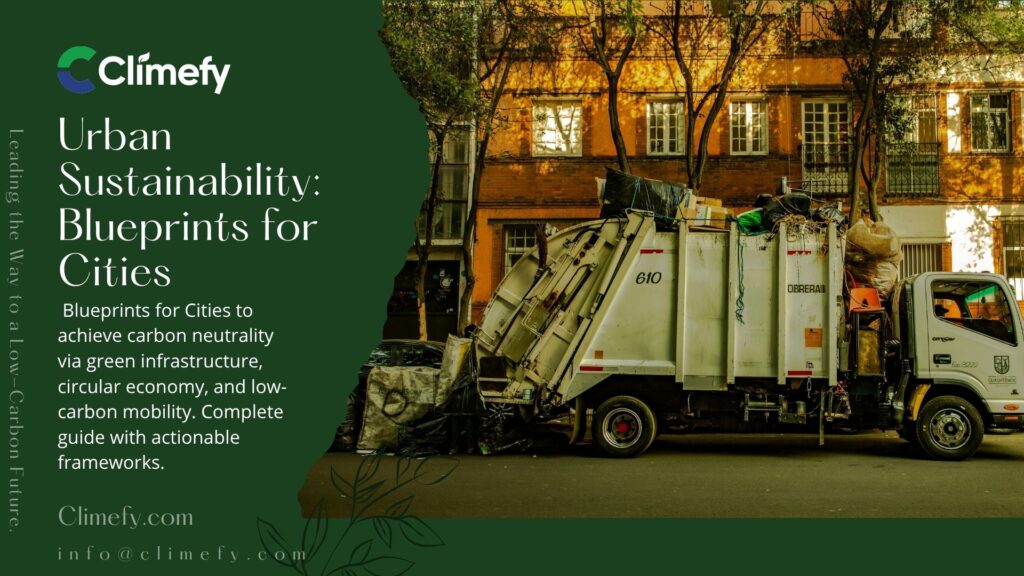
Urban sustainability encompasses far more than parks and recycling bins. It is an integrated systems approach where every component of city life—energy, water, waste, transportation, buildings, and social equity—operates in harmonious balance with natural ecosystems.
At its core, sustainable urban development prioritizes long-term ecological health alongside economic prosperity and social well-being. This means designing cities that generate minimal waste, consume renewable energy, preserve biodiversity, and provide healthy living conditions for all residents regardless of income level.
Key Defining Characteristics of Truly Sustainable Cities:
✅ Carbon Neutrality – Balancing emitted greenhouse gases with equivalent removals or offsets
✅ Resource Circularity – Eliminating landfill waste through reuse, repair, and recycling systems
✅ Energy Positive Buildings – Structures that generate more energy than they consume
✅ Water Security – Closed-loop water management with rainwater harvesting and greywater recycling
✅ Biodiversity Integration – Wildlife corridors, green roofs, and native landscaping throughout urban areas
✅ Equitable Access – Affordable housing, public transit, and green spaces for all socioeconomic groups
✅ Resilient Infrastructure – Systems designed to withstand climate shocks like floods, heatwaves, and storms
The distinction between conventional cities and sustainable ones lies in systems thinking. Traditional urban planning treats water, energy, waste, and transportation as separate silos. Sustainable blueprints connect these systems so that output from one becomes input for another—waste heat warms buildings, rainwater irrigates parks, and organic waste generates biogas.
For organizations seeking to measure and improve their urban sustainability contributions, platforms like Climefy offer comprehensive carbon footprint tracking across Scope 1, 2, and 3 emissions, enabling data-driven decision-making for greener city operations.
Achieving carbon neutrality requires fundamentally reimagining how cities produce, distribute, and consume energy. Traditional centralized grids powered by fossil fuels give way to decentralized, renewable-rich systems with intelligent demand management.
The blueprint for carbon-neutral urban energy begins with aggressive efficiency measures—retrofitting buildings, installing LED lighting, and implementing smart meters that reduce baseline demand by 30-50%. Once efficiency maximizes, remaining energy needs shift entirely to renewable sources.
Essential Components of Carbon-Neutral Urban Energy Systems:
| Component | Function | Emission Reduction Potential |
|---|---|---|
| District Energy Networks | Centralized heating/cooling from renewable sources | 40-60% reduction vs. individual systems |
| Rooftop Solar PV | Building-integrated power generation | 100% of building electricity in sunny climates |
| Urban Wind Turbines | Vertical-axis turbines for built environments | 10-30% of district power needs |
| Geothermal Exchange | Ground-source heating and cooling | 70-80% reduction in HVAC emissions |
| Battery Storage Arrays | Peak load management and backup power | Enables 100% renewable penetration |
| Smart Microgrids | Localized control with islanding capability | 20-40% reduction through demand response |
Beyond generation, carbon-neutral blueprints transform buildings from passive consumers into active prosumers—structures that both produce and store energy while communicating with the grid. Smart inverters, occupancy sensors, and predictive algorithms optimize when buildings draw power, store it, or feed excess back to neighbors.
Energy-positive districts take this further, where clusters of buildings generate surplus renewable energy that powers electric transit, street lighting, and water treatment facilities. Some pioneering districts now achieve net-negative emissions, effectively becoming carbon sinks through integrated bioenergy with carbon capture.
For large organizations operating within urban environments, accurate carbon accounting becomes essential. Climefy’s comprehensive carbon calculator for large organizations helps corporations track emissions from purchased electricity, heating, cooling, and steam—enabling strategic planning for renewable transitions.
Green infrastructure represents a paradigm shift from gray, concrete-heavy urban engineering to living systems that provide ecological services while meeting functional needs. These nature-based solutions manage stormwater, reduce heat, improve air quality, and enhance mental wellbeing simultaneously.
Unlike conventional pipes and pavement that channel problems elsewhere, green infrastructure absorbs, filters, and utilizes environmental inputs onsite. Rain gardens capture stormwater runoff before it overwhelms sewers. Green roofs insulate buildings while filtering pollutants. Urban forests cool neighborhoods by several degrees through evapotranspiration.
Primary Green Infrastructure Systems and Their Benefits:
The economic case for green infrastructure continues strengthening. Every dollar invested in green stormwater systems generates three to five dollars in benefits through reduced flooding damage, lower energy costs, improved public health, and increased property values. Cities implementing comprehensive green infrastructure report maintenance savings of 25-40% compared to conventional gray systems.
Biodiversity corridors represent an advanced application, connecting fragmented habitats across urban landscapes through green bridges, tunnel underpasses, and continuous park networks. These corridors enable wildlife movement, genetic exchange, and ecosystem resilience while providing residents with accessible nature experiences.
Organizations supporting urban greening initiatives can explore verified carbon reduction projects through Climefy’s marketplace, where reforestation and afforestation projects generate measurable climate benefits while enhancing urban biodiversity.
Linear take-make-dispose economics contradicts urban sustainability entirely. Circular blueprints redesign material flows so waste becomes impossible—every output serves as input for another process, mimicking natural ecosystems where nothing goes unused.
Urban circularity operates across multiple scales, from household recycling to industrial symbiosis where one company’s byproduct becomes another’s raw material. The most advanced circular cities achieve 80-90% diversion rates from landfills, with remaining residual waste converted to energy through non-combustion technologies.
Core Strategies for Circular Urban Economies:
Material Flow Mapping and Optimization
Cities first conduct comprehensive material flow analyses tracking every ton of resources entering, moving through, and exiting the urban system. This data reveals the largest waste streams, highest-value recovery opportunities, and most problematic leakage points. Priority materials typically include organics (30-40% of waste streams), construction debris (20-30%), plastics (10-15%), and electronics (2-5%).
Organic Waste Management Systems
Food scraps, yard waste, and other organics represent the single largest landfill component and greatest methane source. Circular blueprints deploy:
Industrial Symbiosis Networks
Manufacturing clusters within cities exchange byproducts for mutual benefit:
Product-as-a-Service Models
Shifting from ownership to access dramatically reduces material throughput. Circular cities encourage:
Construction and demolition debris, accounting for 30-40% of urban waste streams globally, offers tremendous circular potential. Deconstruction replaces demolition, with buildings systematically disassembled for material reuse. Recovered bricks, timber, fixtures, and architectural features enter certified material marketplaces, preserving embedded energy and cultural value.
For businesses committed to circular principles, accurate carbon accounting across supply chains becomes essential. Climefy’s carbon calculator for small and medium companies enables organizations to track emissions from waste generation, transportation, and treatment—identifying circularity opportunities that reduce both environmental impact and operational costs.
Transportation typically accounts for 25-40% of urban carbon emissions, making mobility transformation central to any sustainability blueprint. Low-carbon networks prioritize moving people efficiently rather than moving vehicles, with walking, cycling, and public transit receiving highest infrastructure investment.
The foundational principle is accessibility—ensuring every resident can reach jobs, education, healthcare, and amenities within 15-20 minutes using active or shared transport. This “15-minute city” concept dramatically reduces vehicle kilometers traveled while improving quality of life.
Tiered Mobility Hierarchy for Carbon Reduction:
| Priority Level | Mode | Infrastructure Required | Space Efficiency (people/meter/hour) | Carbon Intensity |
|---|---|---|---|---|
| Highest | Walking | Sidewalks, crosswalks, pedestrian zones | 5,000-7,000 | Zero emissions |
| High | Cycling | Protected bike lanes, bike parking, intersections | 8,000-10,000 | Zero emissions |
| Medium | Public Transit | Bus rapid transit, light rail, subway stations | 15,000-25,000 | 80-95% below private cars |
| Low | Shared Mobility | Car-share, ride-share zones, charging infrastructure | 2,000-4,000 | 50-70% below private cars |
| Lowest | Private Vehicles | Reduced lane capacity, managed parking | 600-1,600 | Baseline comparison |
Essential Components of Low-Carbon Mobility Blueprints:
Complete Streets policies ensure every road redesign accommodates all users, not just drivers. Protected bike lanes, widened sidewalks, pedestrian refuge islands, and accessible curb cuts become standard rather than afterthoughts. Traffic calming measures—narrower lanes, raised crosswalks, chicanes—reduce vehicle speeds to 20-30 km/h in residential areas, making streets safer for all users.
Bus Rapid Transit (BRT) systems deliver subway-level capacity at 10-20% of the cost. Dedicated bus lanes, off-board fare collection, level boarding platforms, and traffic signal priority create reliable, rapid service. Electric buses eliminate tailpipe emissions while reducing noise pollution and operating costs.
Micromobility integration provides first-mile/last-mile connections to transit stations. Dockless e-scooters and shared e-bikes complement public transport, extending catchment areas from 400 meters to 2-3 kilometers. Successful programs require designated parking zones to prevent sidewalk clutter and ensure accessibility.
Congestion pricing and low-emission zones internalize the social costs of driving. Fees for entering dense urban cores during peak periods reduce vehicle trips by 15-30% while funding transit improvements. Revenue-neutral designs return collected fees as dividends to all residents, ensuring equity.
Freight logistics represent a challenging but critical sector. Urban consolidation centers receive deliveries outside city limits, transferring goods to electric cargo bikes or low-emission vans for final delivery. Nighttime delivery programs and automated parcel lockers reduce congestion while maintaining service levels.
Organizations seeking to address their transportation carbon footprint can leverage Climefy’s digital integration solutions to incorporate real-time carbon tracking into logistics platforms, enabling data-driven route optimization and modal shift decisions.
Buildings consume 40-60% of urban energy and generate similar shares of emissions, primarily from heating, cooling, lighting, and appliances. Energy-efficient blueprints transform structures from major emitters into net-zero or energy-positive assets through integrated design approaches.
Passive building strategies minimize energy demand before adding active systems. Building orientation maximizes winter solar gain while minimizing summer overheating. Superinsulation and triple-glazed windows reduce heating needs by 80-90% compared to conventional construction. Airtight construction eliminates drafts and uncontrolled air leakage.
Advanced Energy Efficiency Measures for Urban Buildings:
Retrofitting existing buildings presents both the greatest challenge and largest opportunity, since 80% of buildings standing today will still be occupied in coming decades. Deep energy retrofits achieve 50-70% energy reductions through comprehensive upgrades to insulation, windows, HVAC, and lighting. Phased approaches allow buildings to remain occupied while improvements proceed floor by floor.
Embodied carbon—emissions from building materials and construction—adds another 20-30% to building-related footprints. Low-carbon concrete substitutes fly ash or slag for cement, reducing emissions by 40-70%. Mass timber construction from sustainably harvested wood sequesters carbon while replacing steel and concrete. Recycled steel, reclaimed bricks, and reused fixtures further reduce embodied impacts.
For property owners and developers seeking certification and verification of building sustainability performance, Climefy’s ESG Consultancy services provide expert guidance on green building standards, carbon accounting, and continuous improvement pathways.
Climate resilience ensures cities not only reduce emissions but also withstand unavoidable climate impacts. Even with aggressive mitigation, historical emissions guarantee continued warming, sea level rise, and extreme weather events. Resilient blueprints anticipate these conditions and design accordingly.
Resilience planning begins with climate risk assessments identifying vulnerable populations, infrastructure, and ecosystems. High-resolution modeling projects local hazards—flood zones, heat islands, wildfire corridors, drought risks—under various warming scenarios. This analysis prioritizes interventions where they deliver greatest protection per dollar invested.
Essential Urban Climate Resilience Measures:
Flood Resilience Systems
Extreme Heat Management
Drought and Water Security
Wildfire Resilience in Wildland-Urban Interfaces
Coastal Adaptation for Sea Level Rise
Resilience strategies must address equity explicitly, since climate impacts disproportionately harm low-income communities and communities of color. Green gentrification—where resilience investments drive property values up and long-term residents out—requires anti-displacement policies including rent control, community land trusts, and right-to-return guarantees for temporary relocations.
Nature-based resilience solutions often outperform purely engineered approaches while providing co-benefits. Mangrove restoration protects coastlines at 30-50% the cost of concrete seawalls while sequestering carbon, supporting fisheries, and filtering water. Urban wetlands reduce flood peaks while creating recreation space and wildlife habitat.
Organizations committed to comprehensive climate action can explore Climefy’s Net Zero Journey services, which provide structured pathways for businesses to achieve climate resilience alongside emissions reduction targets.
Without measurement, improvement remains impossible. Sustainable urban blueprints incorporate robust monitoring, reporting, and verification systems that track progress, identify underperforming interventions, and demonstrate accountability to residents and investors.
Greenhouse gas inventories form the foundation, quantifying emissions across all sectors using standardized protocols. Cities typically report using the Global Protocol for Community-Scale Greenhouse Gas Inventories, which categorizes emissions as:
Scope 1 (Direct Emissions)
Scope 2 (Indirect Energy Emissions)
Scope 3 (Other Indirect Emissions)
Beyond carbon accounting, comprehensive sustainability metrics track:
Verification and Certification Frameworks:
CDP (formerly Carbon Disclosure Project) Cities provides standardized reporting used by over 1,000 cities globally. ICLEI’s ClearPath platform supports inventory management and scenario planning. LEED for Cities certification evaluates sustainability performance across energy, water, waste, transportation, and human experience categories.
Carbon offsetting plays an important role for residual emissions that cannot be eliminated through direct action. High-quality urban offset projects include:
For cities and organizations seeking rigorous offset verification, Climefy’s Verified Carbon Standard establishes comprehensive guidelines ensuring offset projects deliver genuine, additional, permanent, and verifiable emission reductions. The Climefy Carbon Offset Registry provides transparent tracking of offset issuance, ownership, and retirement, preventing double-counting and ensuring market integrity.
Performance dashboards and public reporting build trust and accountability. Real-time energy, water, and waste displays in public buildings demonstrate transparency. Annual sustainability reports with third-party verification provide comprehensive assessments. Open data portals enable researchers, journalists, and advocates to conduct independent analysis.
Smart city technologies accelerate sustainability progress through real-time data, predictive analytics, and automated optimization. Digital integration transforms how cities manage energy, water, waste, mobility, and buildings—unlocking efficiencies impossible with manual systems.
Key Digital Enablers for Sustainable Urban Operations:
Internet of Things (IoT) Sensor Networks
Thousands of connected devices monitor city systems continuously. Air quality sensors identify pollution hotspots requiring intervention. Water pressure sensors detect leaks within minutes rather than weeks. Waste bin sensors optimize collection routes, reducing truck emissions by 30-50%. Parking occupancy sensors guide drivers to available spaces, eliminating circling emissions.
Urban Data Platforms and Digital Twins
Comprehensive data aggregators combine information from all city systems into unified platforms. Digital twins—virtual replicas of physical cities—enable scenario testing before real-world implementation. Planners model traffic pattern changes, building energy retrofits, or new transit lines virtually, identifying unintended consequences and optimizing designs before construction begins.
Predictive Analytics and Machine Learning
Historical data trains algorithms forecasting future conditions with increasing accuracy. Energy demand predictions enable optimized grid dispatch and storage management. Flood models combine rainfall forecasts with terrain data to issue block-level warnings. Heat vulnerability predictions identify residents most at risk during extreme temperature events, enabling targeted outreach.
Automated Demand Response Systems
Smart buildings automatically reduce energy consumption when grid stress threatens reliability. Pre-programmed responses include dimming lights by 20%, raising cooling setpoints by 2-3 degrees, and deferring non-urgent processes like dishwashing or electric vehicle charging. These automated reductions occur without occupant awareness or inconvenience.
Blockchain for Transparency and Verification
Distributed ledger technology provides tamper-proof records for carbon offsets, renewable energy credits, and waste diversion claims. Smart contracts automate transactions when verification conditions are met—releasing payment to waste haulers only when scales confirm delivery to recycling facilities. This transparency builds trust across voluntary carbon markets.
Integration Challenges and Solutions
Legacy systems, proprietary data formats, and cybersecurity concerns impede digital integration. Successful cities adopt open standards requiring data interoperability from all vendors. Secure application programming interfaces (APIs) enable controlled data sharing while protecting privacy. Public benefit clauses ensure data collected with public funds remains accessible to researchers and advocates.
For organizations seeking to embed sustainability tracking directly into their operations, Climefy’s digital integration solutions enable real-time carbon tracking, offsetting, and sustainability engagement within existing business systems—from e-commerce checkout to supply chain management platforms.
Transitioning to sustainable urban systems requires substantial upfront investment, even when long-term savings dwarf initial costs. Green financing mechanisms bridge this gap, unlocking capital from public, private, and philanthropic sources.
Municipal Green Bonds
Debt instruments where proceeds fund eligible sustainability projects including renewable energy, energy efficiency, clean transportation, water management, and climate adaptation. Green bonds typically achieve lower interest rates than conventional bonds due to investor demand for environmental impact. The green bond designation requires independent verification that proceeds fund qualifying projects with clear environmental benefits.
Property Assessed Clean Energy (PACE) Financing
Property owners repay efficiency and renewable upgrades through special assessments on property tax bills. Longer repayment terms (typically 15-20 years) align with improvement lifespans. The assessment transfers with property ownership if sold before repayment completes, removing barrier of short-term ownership. PACE works for residential, commercial, and industrial properties.
Energy Performance Contracting
Energy service companies (ESCOs) guarantee efficiency savings sufficient to repay improvement costs. ESCOs finance, install, and maintain upgrades while receiving payment from measured savings. Building owners receive improved comfort and lower bills with zero upfront investment. Performance risk transfers to ESCO, which only profits if savings materialize.
Revolving Loan Funds
Initial capitalization supports first projects; loan repayments replenish the fund for subsequent investments. Once established, revolving funds finance projects indefinitely without additional appropriations. Cities operate funds for energy efficiency, water conservation, brownfield redevelopment, and affordable housing preservation.
Green Banks and Climate Finance Authorities
Publicly capitalized financial institutions dedicated to accelerating clean energy deployment. Green banks use public funds to attract private investment through credit enhancement, co-investment, and securitization. Every dollar of green bank capital leverages three to five dollars of private investment.
Carbon Offset Revenues
Cities generating verified emission reductions can sell offsets to businesses and individuals seeking carbon neutrality. Offset revenues fund further sustainability projects, creating virtuous cycles. Urban forestry, landfill gas capture, and transit-oriented development generate particularly attractive offset projects.
Value Capture Mechanisms
Sustainability investments increase surrounding property values. Value capture tools recover some appreciation to fund the improvements that created it. Tax increment financing dedicates increased property tax revenue from a designated district to repay bonds financing district improvements. Special assessment districts levy fees on benefiting properties for specific infrastructure.
Organizations seeking to finance their own sustainability transitions can explore Climefy’s Eco-Friendly Partner program, connecting businesses with verified carbon reduction projects that deliver measurable climate benefits while supporting corporate sustainability commitments.
What is the difference between green building and sustainable urban development?
Green building focuses on individual structures—energy efficiency, materials, water conservation, and indoor environmental quality. Sustainable urban development encompasses entire city systems including transportation networks, waste management, water infrastructure, energy grids, public spaces, and social equity. Green buildings contribute to sustainable cities, but city-level blueprints require coordination across all sectors beyond individual property boundaries.
How much does it cost for a city to achieve carbon neutrality?
Costs vary dramatically based on starting point, geography, and ambition level. Cities with clean grids and mild climates may achieve neutrality with net savings through efficiency measures. Industrial cities in cold climates face higher costs, typically requiring investments of 2-5% of annual city budget over 20-30 years. However, avoided fossil fuel costs, reduced health expenses, and climate resilience benefits often exceed investment costs over full lifecycles.
Can existing older cities become sustainable without rebuilding everything?
Yes, retrofitting existing cities is not only possible but essential, since most urban fabric already exists. Successful strategies include phased deep energy retrofits of buildings, converting car lanes to bus rapid transit or protected bike lanes, installing green infrastructure within existing rights-of-way, and brownfield redevelopment on underutilized sites. The most effective approach targets highest-impact interventions first—typically building efficiency, transit expansion, and waste diversion.
What are the most cost-effective urban sustainability measures?
LED streetlight retrofits typically pay back within 2-4 years through energy savings alone. Building energy efficiency (insulation, air sealing, efficient HVAC) returns 20-40% annually on investment. Protected bike lanes cost 1-5% of comparable road projects while delivering health and emissions benefits. Organic waste diversion reduces landfill fees while generating revenue from compost and biogas. Traffic signal optimization reduces congestion emissions at near-zero capital cost.
How do urban sustainability blueprints address social equity?
Leading blueprints explicitly center equity through affordable housing requirements, transit access for low-income neighborhoods, community benefits agreements for green development, anti-displacement policies, and inclusive planning processes. Green jobs training programs ensure all residents access emerging employment opportunities. Air quality monitoring and mitigation prioritize historically polluted neighborhoods. Water affordability programs prevent disconnections while funding system improvements.



![Air Capture Technology and Future [Ultimate Guide]](https://climefy.com/wp-content/uploads/2026/04/Air-Capture-Technology-and-Future-Ultimate-Guide-300x169.jpg)