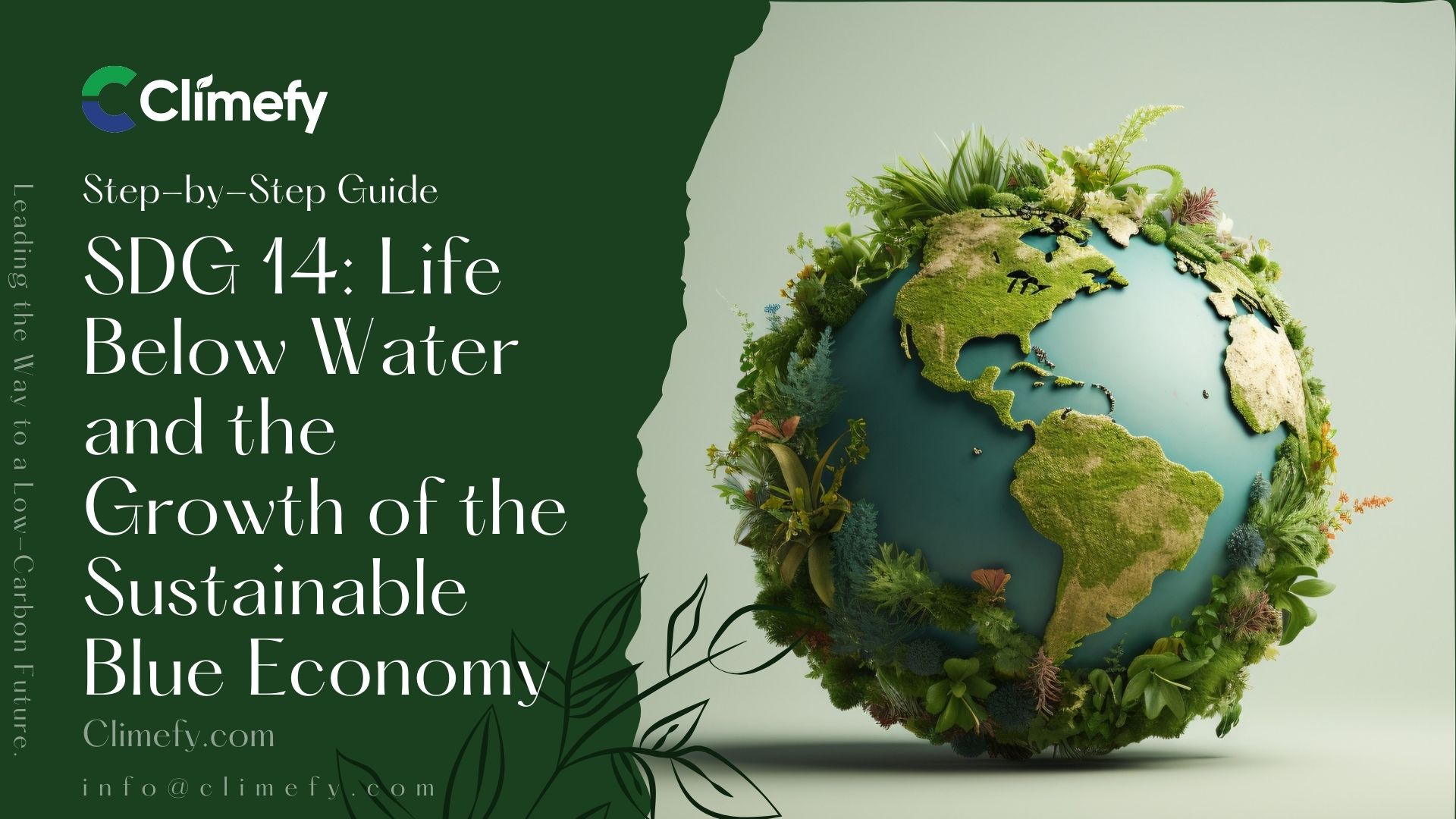
The health of our planet is inextricably linked to the health of our oceans. SDG 14: Life Below Water stands as the United Nations’ dedicated pledge to conserve and sustainably use the oceans, seas, and marine resources for sustainable development. This goal is not an isolated environmental target; it is the fundamental catalyst for the burgeoning Sustainable Blue Economy, a transformative economic model that seeks to derive long-term prosperity from the world’s aquatic ecosystems while preserving their ecological integrity. This comprehensive guide delves into the intricate relationship between SDG 14 targets and the principles of the blue economy, outlining the challenges, innovations, and collective actions required to secure a thriving future for our planet’s blue heart.
In this definitive guide, you will learn:
Read More:
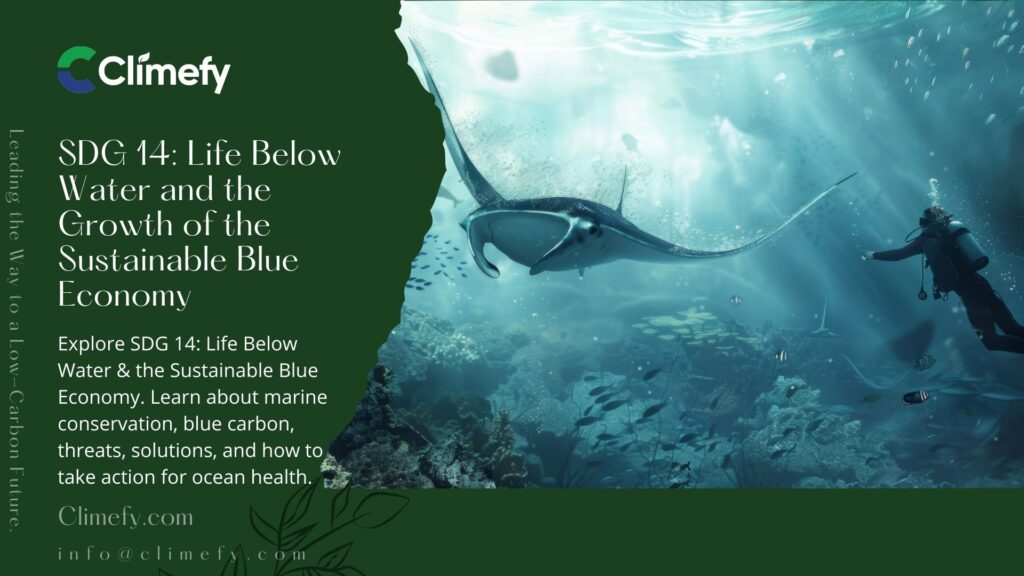
SDG 14: Life Below Water is one of the 17 United Nations Sustainable Development Goals established as a universal call to action to end poverty, protect the planet, and ensure that all people enjoy peace and prosperity by a target date. Specifically, SDG 14 aims to “Conserve and sustainably use the oceans, seas and marine resources for sustainable development.” It recognizes that the ocean is not just a vast body of water but a vital life-support system for the Earth, driving global systems that make our planet habitable for humankind. Its rainwater, drinking water, weather, climate, coastlines, much of our food, and even the oxygen in the air we breathe are ultimately provided and regulated by the sea. Despite its immense importance, the ocean faces unprecedented threats from human activities, making SDG 14 not merely an environmental objective but a prerequisite for achieving all other SDGs related to poverty, hunger, health, and economic growth.
The goal is underpinned by ten specific targets that provide a framework for action. These SDG 14 targets address both conservation needs and the sustainable use of marine resources, creating a direct link to economic activity.
✔ Target 14.1: Prevent and significantly reduce marine pollution of all kinds, particularly from land-based activities.
✔ Target 14.2: Sustainably manage and protect marine and coastal ecosystems to avoid significant adverse impacts.
✔ Target 14.3: Minimize and address the impacts of ocean acidification.
✔ Target 14.4: Effectively regulate harvesting and end overfishing, illegal, unreported and unregulated (IUU) fishing.
✔ Target 14.5: Conserve at least 10% of coastal and marine areas by establishing Marine Protected Areas (MPAs).
✔ Target 14.6: Prohibit certain forms of fisheries subsidies which contribute to overcapacity and overfishing.
✔ Target 14.7: Increase the economic benefits to Small Island Developing States (SIDS) and least developed countries from the sustainable use of marine resources.
✔ Target 14.a: Increase scientific knowledge, develop research capacity, and transfer marine technology.
✔ Target 14.b: Provide access for small-scale artisanal fishers to marine resources and markets.
✔ Target 14.c: Enhance the conservation and sustainable use of oceans through international law.
The criticality of SDG 14 is underscored by alarming ocean health facts:
The Sustainable Blue Economy is the practical economic framework through which the targets of SDG 14 can be realized. It is defined as an economy that promotes sustainable ocean-based economic growth, improved livelihoods, and ocean ecosystem health. It encompasses all industries and sectors related to oceans, seas, and coasts, whether they are established like fisheries, maritime transport, and tourism, or emerging like blue carbon ecosystems, offshore renewable energy, and marine biotechnology. The core principle is to move beyond viewing the ocean solely as a resource to be extracted and instead manage it as a shared asset requiring long-term stewardship. This model seeks to balance economic development with ocean conservation, ensuring that economic activities do not degrade the marine environment upon which they depend.
The pillars of the Sustainable Blue Economy are multifaceted and interconnected:
The economic potential of the blue economy is staggering. According to the OECD, the ocean economy could outperform the growth of the global economy as a whole in the coming decade, doubling its contribution to global value added. However, this growth is entirely contingent on its sustainability. For businesses, this represents both a profound responsibility and a significant opportunity. Adopting sustainable seafood sourcing, investing in ocean-friendly technologies, and incorporating marine health into Environmental, Social, and Governance (ESG) strategies are becoming competitive imperatives. Companies can begin this journey by understanding their full environmental impact, including indirect value chain impacts, using tools like a comprehensive carbon calculator for large organizations.
The path to achieving SDG 14 and a thriving blue economy is obstructed by a confluence of severe anthropogenic threats. These pressures are interconnected, often creating destructive feedback loops that accelerate the degradation of marine ecosystems.
Marine Pollution: A Multifaceted Crisis
Pollution is perhaps the most visible assault on ocean health. It comes in various forms, each with devastating consequences.
Overfishing and Destructive Fishing Practices
The global demand for seafood has pushed many fisheries beyond their biological limits.
Climate Change Impacts on Oceans
The ocean is the planet’s primary buffer against climate change, but this service comes at a great cost.
Habitat Destruction and Coastal Degradation
Critical coastal ecosystems are being lost at an alarming rate.
Addressing the complex challenges facing our ocean requires an equally sophisticated portfolio of solutions, blending traditional knowledge, policy innovation, cutting-edge technology, and market-based mechanisms.
Marine Protected Areas (MPAs) and Ecosystem-Based Management
MPAs are one of the most effective tools for conserving biodiversity and rebuilding fish stocks.
Technological Advancements for Sustainable Ocean Use
Technology is a powerful enabler for monitoring, enforcement, and sustainable practices.
Circular Economy Approaches to Marine Plastic Waste
Combating plastic pollution requires moving from a linear “take-make-dispose” model to a circular one.
Blue Carbon: Harnessing Coastal Ecosystems for Climate Mitigation
Blue carbon ecosystems—mangroves, tidal marshes, and seagrasses—are phenomenal carbon sinks, sequestering carbon at rates far exceeding terrestrial forests. Their conservation and restoration offer a triple win:
The transition to a sustainable blue economy requires action at every level, from multinational corporations to individual citizens. Corporate sustainability is no longer a niche concern but a core business strategy, and individual consumer choices collectively drive market shifts.
Corporate Sustainability and ESG Integration
Businesses have a pivotal role through their operations, supply chains, and investments.
Individual Actions and Responsible Consumer Choices
Every individual can be a steward for the ocean through daily decisions.
The Role of Finance and Blue Bonds
Mobilizing large-scale capital is essential. Blue bonds are a growing instrument where proceeds are exclusively applied to finance or refinance projects that deliver positive environmental, economic, and climate benefits for the ocean and coastal areas. Similarly, sustainable blue economy funds are emerging to de-risk and catalyze investment in ocean-positive enterprises.
Market-based mechanisms are increasingly critical for scaling up finance for ocean conservation, bridging the gap between philanthropic funding and the trillions needed. Carbon markets, both compliance and voluntary, offer a pathway to value the vital ecosystem service of carbon sequestration provided by the ocean.
Blue Carbon in Voluntary Carbon Markets (VCM)
Blue carbon projects protect or restore coastal wetlands, preventing the release of stored carbon and enabling ongoing sequestration. The carbon credits they generate can be purchased by corporations or individuals to offset emissions they cannot yet eliminate. This creates a direct financial flow from polluters to coastal communities and conservationists. For these markets to function with integrity, several elements are crucial:
Certification Schemes for Sustainable Practices
Beyond carbon, certification provides assurance for consumers and businesses that products are sourced sustainably.
Digital Integration for Mainstreaming Marine Action
To truly scale impact, sustainability must be integrated into everyday transactions. Digital Integration Solutions, such as those offered by Climefy, allow banks, e-commerce platforms, and logistics companies to embed real-time carbon tracking and offsetting options into customer journeys. Imagine a shipping company offering customers a “green shipping” option that funds a blue carbon project, or a bank showing the carbon footprint of a purchase with an instant offset feature. This seamless integration is key to democratizing and massively scaling action for Life Below Water.
The primary objective of SDG 14: Life Below Water is to conserve and sustainably use the world’s oceans, seas, and marine resources. It aims to address critical issues like marine pollution, ocean acidification, overfishing, and habitat destruction to ensure the long-term health and productivity of marine ecosystems, which are vital for global food security, climate regulation, and economic prosperity.
The traditional ocean economy focuses primarily on extracting economic value from ocean resources (e.g., fishing, shipping, oil and gas) often without full consideration of long-term environmental costs. The Sustainable Blue Economy, in contrast, explicitly integrates economic development with ocean conservation. It emphasizes sustainability, equity, and ecosystem health, promoting activities like ocean renewable energy, sustainable aquaculture, and blue carbon that aim to generate prosperity while preserving or enhancing marine capital.
The sustainable blue economy creates diverse employment opportunities, including: marine spatial planners, offshore wind turbine technicians, aquaculture managers practicing sustainable methods, marine biologists for ecosystem restoration, data analysts for oceanographic monitoring, sustainability officers in shipping companies, and managers of ecotourism operations that protect coastal ecosystems.
Yes, significantly. Blue carbon ecosystems (mangroves, seagrasses, salt marshes) are immensely efficient at sequestering and storing carbon dioxide from the atmosphere—often at rates higher than terrestrial forests. Protecting existing ecosystems prevents the release of stored carbon, while restoring degraded areas enhances sequestration. Investing in verified blue carbon projects through credible marketplaces channels finance directly to these crucial conservation activities, delivering measurable climate mitigation alongside biodiversity and community benefits.
The most critical first step is measurement and awareness. A business should conduct a thorough assessment to understand its direct and indirect impacts on marine systems. This includes calculating its full carbon footprint—as emissions contribute to ocean acidification and warming—and auditing its supply chain for risks related to plastic pollution, marine ecosystem degradation, or unsustainable seafood sourcing. Utilizing a professional carbon calculator for businesses and engaging in ESG consultancy can establish this baseline, from which a targeted, impactful action plan can be built.