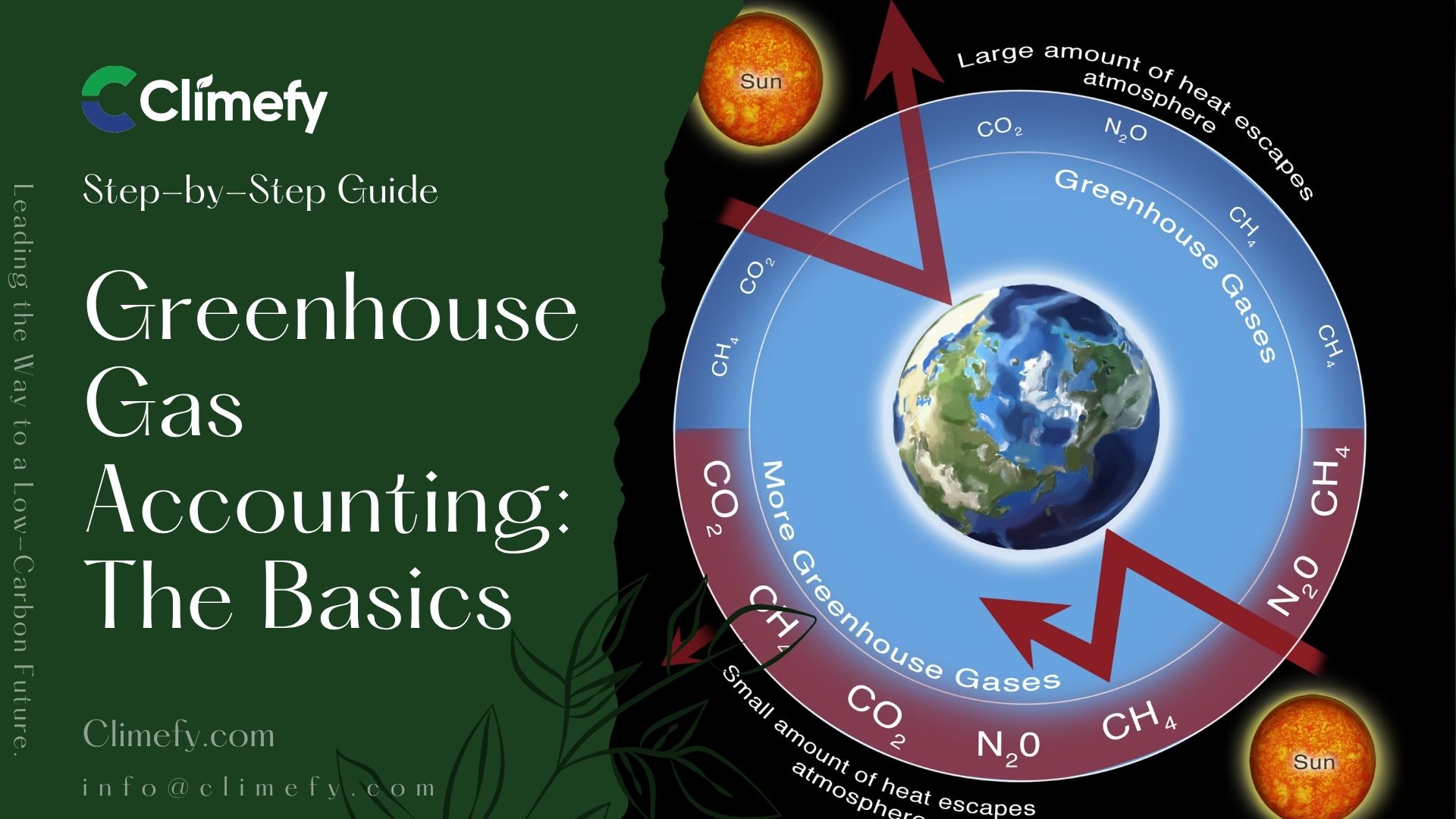
Greenhouse gas accounting is the foundational discipline of measuring, managing, and reporting the emissions that drive climate change, providing the data necessary for credible climate action. This guide explores the core principles, scopes, methodologies, and practical steps for implementing effective GHG accounting across any organization. Readers will gain a clear understanding of how to establish a carbon inventory and leverage this data for strategic sustainability goals.
Defining the Scope: Understanding the difference between Scope 1, Scope 2, and Scope 3 emissions and why a complete inventory is non-negotiable.
Mastering Measurement: Learning the standard methodologies, from direct monitoring to using emission factors and activity data.
The Role of Standards: Exploring the importance of frameworks like the GHG Protocol and ISO standards for ensuring credibility and comparability.
From Accounting to Action: Translating emissions data into a strategic plan for reduction, offsetting, and achieving Net Zero targets.
Leveraging Digital Tools: How modern platforms and calculators simplify the complex process of data collection, verification, and reporting.
What Is Greenhouse Gas Accounting and Why Is It the Cornerstone of Climate Strategy?
At its core, greenhouse gas accounting is the systematic process of quantifying the amount of greenhouse gases an entity—be it an individual, a company, or a nation—releases into the atmosphere. It’s the critical first step in any serious climate action plan, transforming a vague concept of “environmental impact” into concrete, actionable data. Without this foundational accounting, efforts to reduce emissions are akin to navigating a ship without a compass; you might be moving, but you have no idea if you’re heading in the right direction.
The importance of this discipline extends far beyond simple compliance. For businesses, robust greenhouse gas accounting is becoming a prerequisite for market access, investor confidence, and stakeholder trust. It allows organizations to identify inefficiencies, uncover cost savings in energy and resource use, and manage risks associated with carbon pricing and shifting regulations. Moreover, it provides the evidence base for setting science-based targets and communicating genuine progress to customers who increasingly demand transparency.
Risk Management: Identifies operational and regulatory risks associated with carbon-intensive activities.
Operational Efficiency: Pinpoints areas of energy waste, leading to significant cost reductions.
Stakeholder Trust: Provides verifiable data to support ESG reports and claims, building credibility with investors and consumers.
Strategic Planning: Forms the basis for setting realistic and impactful emission reduction targets.
How Are Greenhouse Gas Emissions Classified?
A standardized classification system is essential for ensuring consistency in greenhouse gas accounting. The most widely adopted framework divides emissions into three distinct categories, known as Scopes. This system, established by the GHG Protocol, prevents double-counting and provides a clear picture of an organization’s total carbon footprint, from direct operations to the broader value chain.
Scope 1 (Direct Emissions): These are emissions from sources that are directly owned or controlled by the reporting entity. This includes emissions from combustion in owned boilers, furnaces, and vehicles, as well as fugitive emissions from refrigeration and air conditioning equipment. For a manufacturing company, Scope 1 would be the emissions from its factory smokestacks and company delivery trucks.
Scope 2 (Indirect Emissions from Energy): These are emissions from the generation of purchased energy, primarily electricity, steam, heating, and cooling. While the emissions occur at the power plant, they are accounted for by the organization that uses that energy. A business purchasing electricity to power its offices is responsible for its Scope 2 emissions.
Scope 3 (Other Indirect Emissions): This is the broadest and often most complex category, encompassing all other indirect emissions that occur in a company’s value chain. Scope 3 is divided into 15 categories, including purchased goods and services, business travel, employee commuting, transportation and distribution, use of sold products, and end-of-life treatment of sold products. For most organizations, Scope 3 emissions represent the largest share of their total carbon footprint.
Why Is the Distinction Between Scopes So Critical?
The separation of emissions into Scope 1, Scope 2, and Scope 3 is not merely an academic exercise; it serves as a strategic tool for understanding an organization’s true environmental impact and identifying levers for change. By classifying emissions in this way, companies can pinpoint exactly where their responsibility begins and ends and where they have the greatest influence to act.
Clarifies Responsibility: A company cannot reduce what it does not measure. Scope classification helps organizations understand which emissions they control directly (Scope 1), which they influence through energy choices (Scope 2), and which are tied to their value chain partners (Scope 3). This clarity is essential for setting boundaries for greenhouse gas accounting and for developing effective reduction strategies.
Drives Targeted Action: Knowing that 90% of your footprint lies in Scope 3, for example, forces a shift in strategy from only optimizing internal operations to engaging suppliers, redesigning products, and influencing customer behavior. This is where comprehensive greenhouse gas accounting reveals its true strategic value.
Ensures Credible Reporting: Investors and regulators increasingly require detailed disclosures by scope. This level of detail prevents “greenwashing” by ensuring that a company claiming to be “carbon neutral” has accounted for all relevant categories of emissions, not just the easy ones.
What Are the Core Principles of Greenhouse Gas Accounting?
For a greenhouse gas inventory to be credible and useful, it must be built upon a foundation of core accounting principles. These principles, drawn from financial accounting and tailored for environmental data, ensure that the information reported is a faithful representation of an entity’s emissions. Adhering to these principles is the hallmark of high-quality greenhouse gas accounting.
Relevance: The inventory should reflect the emissions that matter to the organization and its stakeholders. This means including all sources that are material to the business and that could influence decisions made by users of the report.
Completeness: Account for all emission sources and activities within the defined organizational and operational boundaries. Any omissions or exclusions must be clearly disclosed and justified.
Consistency: Use consistent methodologies and data sources over time to allow for meaningful comparisons. Any changes in methodology must be clearly documented and, if possible, restated in previous inventories to maintain a consistent trend line.
Transparency: All aspects of the accounting process, including data sources, methodologies, assumptions, and boundaries, should be documented in a clear and factual manner. This allows for independent verification and builds trust in the reported information.
Accuracy: Ensure that the quantification of emissions is systematic and neither over nor under the true value. Accuracy is improved by using high-quality activity data and appropriate emission factors, and by reducing uncertainty wherever possible.
How Do You Establish the Organizational Boundary for GHG Accounting?
Before any data is collected, an organization must define its “organizational boundary”—essentially, which parts of the business will be included in the greenhouse gas accounting. This is a critical first step that sets the scope of the inventory. The GHG Protocol offers two primary approaches for determining this boundary.
Equity Share Approach: This method accounts for emissions based on the organization’s percentage of ownership in an operation. If a company owns 50% of a joint venture, it accounts for 50% of that venture’s emissions. This approach provides a direct link to financial ownership.
Control Approach: Under this method, the organization accounts for 100% of the emissions from operations over which it has either financial or operational control. This is the most commonly used approach in voluntary and mandatory reporting programs. An entity has financial control if it has the ability to direct the financial and operating policies of the operation. Operational control means it has the full authority to implement its own policies at the operation.
The choice of approach will significantly impact the final emissions total. Most organizations opt for the operational control approach because it aligns with their ability to make management decisions and implement reduction strategies.
What Is the Operational Boundary and How Is It Set?
Once the organizational boundary is defined, the next step in greenhouse gas accounting is to establish the operational boundary. This involves identifying and classifying all emission sources associated with the operations within the chosen organizational boundary. This process results in a clear categorization of all relevant Scope 1, Scope 2, and Scope 3 activities.
Identifying Scope 1 Sources: This is a straightforward process of listing all direct sources, such as:
Mobile combustion (company cars, trucks, forklifts)
Fugitive emissions (refrigerants from AC units, methane leaks)
Process emissions (chemical reactions during manufacturing)
Identifying Scope 2 Sources: This involves identifying all purchased energy contracts, including:
Purchased electricity
Purchased steam
Purchased heating
Purchased cooling
Identifying Scope 3 Sources: This requires mapping the value chain and selecting which of the 15 categories are relevant. Key categories often include:
Purchased goods and services
Capital goods
Fuel- and energy-related activities (not included in Scope 1 or 2)
Upstream transportation and distribution
Waste generated in operations
Business travel
Employee commuting
Downstream transportation and distribution
Use of sold products
End-of-life treatment of sold products
What Are the Key Methodologies for Calculating Emissions?
With boundaries set and sources identified, the core technical work of greenhouse gas accounting begins: calculation. The fundamental formula underpinning almost all emissions calculations is the multiplication of activity data by an emission factor. The accuracy of the final figure depends entirely on the quality of these two inputs.
Activity Data: This represents the quantitative measure of a level of activity that results in emissions. Examples include:
Liters of diesel fuel consumed
Kilowatt-hours of electricity purchased
Kilometers traveled by a company vehicle
Tons of waste sent to landfill
Emission Factors: This is a coefficient that quantifies the emissions per unit of activity data. For example, an emission factor for diesel might be 2.68 kg of CO2e per liter. These factors are derived from complex scientific models and are often provided by national environmental agencies or industry bodies.
For most organizations, the calculation process is as follows: Activity Data × Emission Factor = GHG Emissions. There are different tiers of calculation methodologies, offering a trade-off between accuracy and ease of implementation. The simplest approach uses generic, default emission factors, while more advanced methods involve direct monitoring or the use of facility-specific, custom-developed factors.
How Do You Ensure Data Quality in GHG Accounting?
The credibility of any greenhouse gas accounting effort rests on the quality of the underlying data. Poor data leads to inaccurate emissions totals, which can undermine reduction strategies and expose an organization to accusations of greenwashing. Implementing robust data quality management is therefore a non-negotiable part of the process.
Prioritize Primary Data: The gold standard for activity data is direct measurement. This can include fuel receipts from a gas pump, utility bills from an electricity meter, or telematics data from a fleet of vehicles. Primary data is more accurate and verifiable than secondary or estimated data.
Manage Secondary Data: When primary data is unavailable, secondary data sources such as industry averages, proxy data from similar facilities, or financial data can be used. However, the use of secondary data introduces uncertainty, and this should be clearly documented and disclosed.
Apply a Data Quality Hierarchy: Develop a clear hierarchy for data sources. For example:
Tier 1: Direct, continuously monitored data (e.g., from a gas flow meter).
Tier 2: Purchase records and utility bills (e.g., fuel invoices, electricity bills).
Tier 3: Engineering estimates based on equipment specifications.
Tier 4: Industry averages or proxy data.
Implement Internal Verification: Establish internal review processes to check for errors, inconsistencies, and missing data before finalizing the inventory. This is a critical step in ensuring the reliability of the greenhouse gas accounting output.
What Role Do Digital Tools and Calculators Play in GHG Accounting?
In the past, greenhouse gas accounting was a manual, spreadsheet-intensive process prone to error and inefficiency. Today, a range of digital tools and specialized calculators have revolutionized the field, making it more accessible, accurate, and actionable. These tools automate complex calculations, manage vast datasets, and facilitate seamless reporting.
For individuals and organizations looking to begin their climate journey, using a dedicated carbon calculator is the most effective starting point. These tools simplify the process by guiding users through data input and applying the correct emission factors automatically. Climefy offers a suite of advanced carbon footprint calculators designed for different user needs.
For individuals, the Carbon Calculator for Individuals provides a thorough analysis of personal emissions, helping to understand the impact of daily choices like transportation, home energy use, and diet. It translates complex data into actionable insights for a greener lifestyle.
Small and medium companies can leverage the Carbon Calculator for Small & Medium Companies to manage their emissions with ease and precision. This tool is designed to help businesses set reduction targets, track progress over time, and generate reports that support sustainability efforts and competitive positioning.
For large corporations with complex operations and extensive value chains, the Carbon Calculator for Large Organizations offers comprehensive tracking and reporting. It supports detailed data analysis and strategic planning to meet ambitious corporate sustainability goals and navigate regulatory requirements effectively.
How Does the GHG Protocol Standardize the Process?
The Greenhouse Gas Protocol (GHG Protocol) is the undisputed global standard for greenhouse gas accounting and reporting. Developed by the World Resources Institute (WRI) and the World Business Council for Sustainable Development (WBCSD), it provides the comprehensive framework that underpins nearly every other corporate reporting standard, including the CDP, the GRI, and the TCFD. For any organization serious about its climate impact, understanding and applying the GHG Protocol is the foundational step.
The GHG Protocol provides a suite of standards that cover different aspects of accounting. The two most critical are the Corporate Accounting and Reporting Standard, which provides the overarching framework for companies to prepare a corporate-level emissions inventory, and the Corporate Value Chain (Scope 3) Accounting and Reporting Standard, which provides detailed guidance for measuring and managing Scope 3 emissions. By following these standards, organizations ensure their greenhouse gas accounting is consistent, transparent, and globally comparable.
Ensures Consistency: The protocol provides a common language and methodology, allowing stakeholders to compare the emissions performance of different companies on a like-for-like basis.
Builds Credibility: An inventory prepared in accordance with the GHG Protocol is more credible to investors, regulators, and the public than a self-created, non-standardized approach.
Supports Verification: Following the protocol’s rigorous requirements for data quality and documentation makes it significantly easier to undergo third-party verification, a crucial step for establishing trust in public reports.
What Is the Importance of Third-Party Verification?
Third-party verification is the process of having an independent, qualified external auditor review an organization’s greenhouse gas accounting and its associated report. It is the ultimate stamp of credibility, providing an objective assurance that the reported emissions data is accurate, complete, and conforms to the stated standard. Without verification, emissions reports remain self-declarations, which, while useful, lack the same level of stakeholder trust.
Verification is not just about catching errors; it signals a commitment to transparency and accountability. For many companies, especially those that make public claims about their environmental performance or that participate in carbon markets, verification is a mandatory requirement. The verification process typically involves:
A Review of Boundaries: Ensuring the organizational and operational boundaries are appropriately defined and applied.
Data Quality Assessment: Scrutinizing the data sources, emission factors, and calculation methodologies used.
System and Control Evaluation: Assessing the internal processes and controls used to collect, manage, and report emissions data.
Materiality Assessment: Evaluating any omissions or misstatements to determine if they materially affect the overall emissions total.
How Do You Move from Accounting to Action with Your GHG Inventory?
The ultimate purpose of greenhouse gas accounting is not simply to produce a report, but to drive meaningful climate action. Once an organization has a complete and verified inventory of its emissions by scope, it has the strategic intelligence needed to develop and implement a robust reduction plan. This transition from accounting to action is where the real value of the process is realized.
Identify Hotspots: The first step is to analyze the inventory to identify the “hotspots”—the activities or categories that contribute the most to the total footprint. For most companies, these hotspots will be found in Scope 3 categories like purchased goods or the use of sold products.
Set Science-Based Targets: With a baseline established, organizations can set credible emission reduction targets. Science-Based Targets initiative (SBTi) provides a framework for setting targets that align with the level of decarbonization required to meet the goals of the Paris Agreement. This moves companies beyond incremental improvements to transformative change.
Develop a Reduction Roadmap: The next step is to create a detailed, time-bound plan for achieving the targets. This roadmap should include specific initiatives for each scope, such as energy efficiency projects, renewable energy procurement, fleet electrification, supplier engagement programs, and circular economy initiatives for product design.
Offset Remaining Emissions: After implementing all feasible reduction measures, organizations will likely have residual emissions that are technically or economically impossible to eliminate. At this stage, they can turn to high-quality carbon offsets. Climefy’s Marketplace connects organizations with verified GHG reduction projects, such as afforestation and renewable energy initiatives, that actively remove or reduce emissions elsewhere. By supporting these projects, companies can take responsibility for their remaining footprint and contribute to a greener future.
What Is the Difference Between Carbon Neutrality and Net Zero?
These two terms are often used interchangeably, but in the context of climate strategy and greenhouse gas accounting, they represent distinctly different levels of ambition. Understanding the difference is crucial for setting credible goals and communicating them effectively to stakeholders.
Carbon Neutrality: Typically refers to a state where an organization’s CO2 emissions are balanced by an equivalent amount of carbon offsets. Historically, carbon neutrality claims have often focused primarily on Scope 1 and Scope 2 emissions, with less emphasis on deep reductions across the value chain. The focus is on balancing the emissions account.
Net Zero: This is a more ambitious and comprehensive framework. A Net Zero target, as defined by the SBTi, requires an organization to achieve deep, systemic reductions in its value chain emissions (typically 90-95% across Scopes 1, 2, and 3) and then use permanent carbon removals to neutralize any residual, unavoidable emissions. The focus is on transformation, not just balancing.
Achieving Net Zero requires a long-term strategy that fundamentally rethinks business models and value chains. It is the gold standard for corporate climate action, and robust greenhouse gas accounting is the only way to measure progress along this journey.
How Can ESG Consultancy Enhance Your GHG Accounting?
For many organizations, especially those navigating complex value chains or preparing for regulatory mandates, the intricacies of greenhouse gas accounting can be overwhelming. This is where expert guidance becomes invaluable. Specialized ESG Consultancy services provide the strategic and technical expertise needed to build a world-class emissions management program.
ESG consultants bring a depth of experience that goes beyond basic calculation. They can help an organization:
Define a Robust Strategy: Moving beyond compliance to develop a climate strategy that aligns with business goals, manages risks, and unlocks new opportunities.
Navigate Scope 3 Complexity: Designing and implementing a plan to engage hundreds of suppliers and collect the data needed for a comprehensive Scope 3 inventory.
Prepare for Disclosure: Ensuring the inventory meets the requirements of major reporting frameworks like the CDP, TCFD, and the incoming CSRD.
Integrate with Business Systems: Moving data collection from manual spreadsheets to automated systems by leveraging Digital Integration Solutions that connect carbon data directly with existing enterprise resource planning (ERP) or financial software.
What Are the Key Requirements for High-Quality Carbon Offsets?
When an organization chooses to use carbon offsets as part of its climate strategy, the quality of those offsets is paramount. Purchasing low-quality or “junk” offsets does not represent real climate action and can lead to significant reputational damage. Understanding the criteria for a high-quality offset is an essential part of responsible greenhouse gas accounting.
A high-quality carbon offset is one that represents a real, measurable, and permanent emission reduction or removal that is additional to what would have happened anyway. Key criteria to look for include:
Additionality: The emission reduction would not have occurred without the financial incentive provided by the carbon credit.
Permanence: The reduction or removal is not reversible. For nature-based solutions like afforestation, this requires long-term monitoring and safeguards against risks like fire or disease.
Verification: The project and its emission reductions are verified by a reputable third party against a recognized standard.
No Double-Counting: The emission reduction is claimed by only one entity. Robust registries, such as the Climefy Carbon Offset Registry, track the issuance, ownership, and retirement of credits to ensure this integrity.
Sustainable Development Co-benefits: The best projects also contribute to local sustainable development goals, such as job creation, biodiversity protection, or community well-being.
What Is the Future of Greenhouse Gas Accounting?
The field of greenhouse gas accounting is evolving rapidly, driven by technological innovation, increased regulatory pressure, and a growing demand for transparency. Several key trends are shaping its future, making it more precise, dynamic, and integrated into mainstream business operations.
Regulatory Mandates: We are moving from a world of voluntary disclosure to one of mandatory reporting. Regulations like the EU’s Corporate Sustainability Reporting Directive (CSRD) and emerging SEC rules in the US are making rigorous greenhouse gas accounting a legal requirement for a growing number of companies.
Real-Time Data: The era of annual, backward-looking inventories is giving way to near-real-time emissions tracking. Digital Integration Solutions are enabling organizations to automatically capture activity data from meters, fleets, and supply chains, providing a dynamic and current view of their emissions performance.
AI and Machine Learning: Advanced technologies are being deployed to address the “Scope 3 problem.” AI can analyze vast datasets to estimate emissions from thousands of suppliers where primary data is unavailable, using proxies like spend data and industry averages with increasing accuracy.
Focus on Removals: As Net Zero targets become more common, the focus is shifting from avoidance-only offsets to a combination of deep reductions and high-quality carbon removals. Standards are being developed to ensure the integrity of removal credits, particularly those from nature-based and technological solutions.
How Can Companies Integrate GHG Accounting into Their Core Business?
For greenhouse gas accounting to be truly effective, it cannot remain an isolated activity within a sustainability department. It must be integrated into the core business functions that drive decision-making, risk management, and financial performance. This integration ensures that climate considerations are not an afterthought but a core part of corporate strategy.
Finance: The finance department plays a crucial role. They can integrate carbon pricing into capital expenditure decisions to favor low-carbon investments. They can also use the emissions inventory to assess climate-related financial risks and opportunities as part of the TCFD framework.
Operations: Operational managers can use real-time emissions data to optimize energy use in manufacturing, logistics, and facility management. This turns emissions data into a lever for operational efficiency and cost reduction.
Procurement: The procurement team is on the front line of Scope 3 emissions. By setting sustainability criteria for supplier selection and engaging key suppliers on their own greenhouse gas accounting, they can drive significant reductions across the value chain.
Product Development: R&D and product teams can use lifecycle assessment data, derived from granular greenhouse gas accounting, to design products that use less energy, contain lower-carbon materials, and are easier to recycle.
What Role Does the Climefy Verified Carbon Standard Play?
To ensure the credibility of carbon projects and the integrity of the offsets generated, robust standards are essential. The Climefy Verified Carbon Standard (CVCS) establishes a comprehensive set of guidelines for designing, developing, and implementing projects that achieve genuine GHG emission reductions or removals. It is a testament to Climefy’s commitment to quality and transparency in the voluntary carbon market.
The CVCS is designed to uphold the highest principles of environmental integrity. It mandates rigorous project documentation, independent third-party verification, and transparent tracking of carbon credits from issuance to retirement. By adhering to this standard, Climefy ensures that every credit sold on its platform represents a real, additional, and permanent climate benefit. This commitment to quality provides buyers in the Marketplace with the confidence that their investment is driving meaningful impact and contributing to global climate change mitigation efforts.
Summary: The Strategic Value of Robust Greenhouse Gas Accounting
In the modern business landscape, greenhouse gas accounting has transcended its origins as a niche environmental exercise to become a core strategic function. It is the bedrock upon which credible climate action is built, providing the transparency, accountability, and data-driven insights necessary for navigating the transition to a low-carbon economy.
It is a Risk Management Tool: Identifying exposure to carbon pricing, regulatory changes, and climate-related physical risks.
It Drives Operational Excellence: Pinpointing inefficiencies and cost-saving opportunities across energy and resource use.
It Builds Stakeholder Trust: Enabling transparent and verifiable ESG reporting that meets the demands of investors, customers, and regulators.
It Enables Strategic Transformation: Providing the baseline for setting science-based targets, developing a reduction roadmap, and achieving Net Zero.
It is a Journey, Not a Destination: Continuous improvement in data quality, scope expansion, and reduction ambition is the hallmark of a leading climate strategy.
By embracing rigorous greenhouse gas accounting, organizations can move beyond simply measuring their impact to actively shaping a more sustainable and resilient future.
Frequently Asked Questions (FAQs)
What is the primary difference between Scope 1, Scope 2, and Scope 3 emissions? Scope 1 covers direct emissions from sources an organization owns or controls, like company vehicles. Scope 2 covers indirect emissions from the generation of purchased energy, primarily electricity. Scope 3 covers all other indirect emissions in the value chain, both upstream and downstream, such as purchased goods, business travel, and the use of sold products.
How often should a company perform its greenhouse gas accounting? At a minimum, a company should perform a full greenhouse gas accounting inventory annually to track progress, report to stakeholders, and meet regulatory requirements. However, leading organizations are increasingly moving toward more frequent, even quarterly or real-time, tracking using digital tools to gain more dynamic insights and enable more agile management.
Why is Scope 3 accounting so challenging for most companies? Scope 3 accounting is challenging because it involves gathering data from sources outside a company’s direct control, such as hundreds or thousands of suppliers. Data availability is often limited, and companies must rely on a mix of primary data from suppliers, industry averages, and spend-based calculations, which introduces complexity and uncertainty into the greenhouse gas accounting process.
What is the role of a carbon registry in greenhouse gas accounting? A carbon registry is a secure digital platform that tracks and manages carbon credits. It ensures the integrity of carbon markets by recording the issuance, transfer, and retirement of credits. A registry like the Climefy Carbon Offset Registry prevents double-counting, ensuring that each carbon credit represents a unique and verifiable emission reduction, which is a critical part of credible greenhouse gas accounting for offsetting purposes.
Do I need a third party to verify my greenhouse gas emissions report? While third-party verification is not always mandatory for internal use or for initial reporting, it is highly recommended for any public-facing report or for emissions data used in carbon markets. Verification by an independent auditor adds a layer of credibility and assurance, confirming that the greenhouse gas accounting has been conducted accurately and in accordance with the relevant standards.