
Life on Land, encapsulated in Sustainable Development Goal 15, represents a global imperative to protect, restore, and promote the sustainable use of terrestrial ecosystems. This comprehensive guide delves into the intricate web of biodiversity and conservation, exploring the profound importance of forests, wetlands, and mountains, the dire threats they face, and the actionable solutions that can secure a viable future for all living beings on our planet. From individual action to corporate strategy, understanding and engaging with SDG 15 is critical for climate resilience, economic stability, and the very air we breathe.
In this definitive guide, you will learn:
Read More:
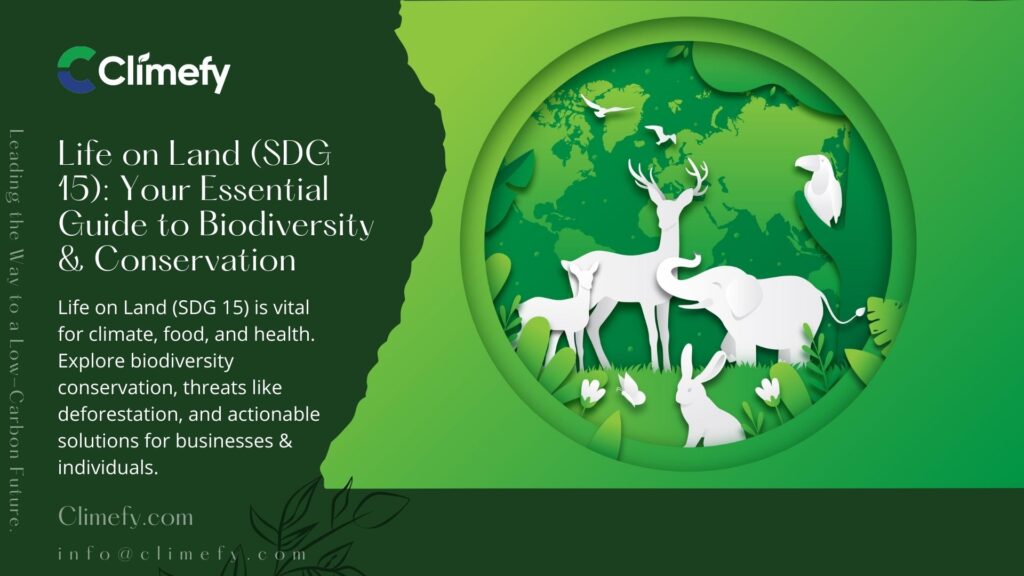
Sustainable Development Goal 15: Life on Land is one of the 17 interlinked global goals established by the United Nations to achieve a better and more sustainable future for all by the year 2030. Its official wording is to “Protect, restore and promote sustainable use of terrestrial ecosystems, sustainably manage forests, combat desertification, and halt and reverse land degradation and halt biodiversity loss.” This goal is not an isolated environmental concern; it is the bedrock upon which food security, clean water, climate regulation, and economic prosperity are built. Terrestrial ecosystems, including forests, grasslands, drylands, and mountains, cover approximately 30% of the Earth’s surface, yet they are home to the vast majority of the planet’s biodiversity on land. These ecosystems provide indispensable “ecosystem services”—tangible and intangible benefits that nature offers humanity for free. The critical importance of SDG 15 stems from its role in sustaining these services, which are fundamental to life and the global economy.
The urgency of advancing Life on Land targets cannot be overstated. We are currently in the midst of a sixth mass extinction event, driven not by natural cataclysms but by human activity. The loss of biodiversity and the degradation of land are progressing at an unprecedented rate, undermining the very foundations of our societies. Achieving SDG 15 is paramount because:
✔ Climate Change Mitigation and Adaptation: Forests are colossal carbon sinks, absorbing billions of tonnes of CO2 annually. Deforestation and land degradation release this stored carbon, exacerbating global warming. Healthy, biodiverse ecosystems are also more resilient to climate impacts like floods and droughts.
✔ Food and Water Security: Healthy soils are essential for agriculture, while forests and wetlands filter and regulate freshwater supplies for billions of people.
✔ Human Health and Medicine: Terrestrial biodiversity is a vital source for pharmaceuticals, with many modern medicines derived from plant compounds.
✔ Economic Livelihoods and Poverty Eradication: Over 1.6 billion people depend directly on forests for their livelihoods. Sustainable land management is key to sustainable economies.
✔ Preservation of Cultural Heritage and Intrinsic Value: Countless cultures and spiritual traditions are intertwined with nature. Beyond utilitarian value, species and wild places have a right to exist.
The interconnectedness of SDG 15 with other SDGs, particularly SDG 13 (Climate Action), SDG 6 (Clean Water and Sanitation), and SDG 2 (Zero Hunger), creates a synergistic framework. Progress on terrestrial ecosystem health amplifies progress across the entire sustainable development agenda, making it a pivotal investment for our collective future.
SDG 15 is operationalized through 12 specific targets and multiple indicators that guide national and international action. These targets provide a measurable roadmap for conservation and sustainable use.
✔ Target 15.1: Ensure conservation, restoration, and sustainable use of terrestrial and inland freshwater ecosystems.
✔ Target 15.2: Promote sustainable forest management, halt deforestation, and increase afforestation and reforestation globally.
✔ Target 15.3: Combat desertification, restore degraded land and soil, including land affected by desertification, drought, and floods.
✔ Target 15.4: Ensure conservation of mountain ecosystems, including their biodiversity, to enhance their capacity to provide benefits essential for sustainable development.
✔ Target 15.5: Take urgent and significant action to reduce degradation of natural habitats, halt the loss of biodiversity, and protect and prevent the extinction of threatened species.
✔ Target 15.6: Promote fair and equitable sharing of benefits arising from genetic resources.
✔ Target 15.7: Take urgent action to end poaching and trafficking of protected species of flora and fauna.
✔ Target 15.8: Introduce measures to prevent the introduction and significantly reduce the impact of invasive alien species.
✔ Target 15.9: Integrate ecosystem and biodiversity values into national and local planning and development processes.
✔ Targets 15.a, 15.b, 15.c: Mobilize and increase financial resources, support sustainable forest management in developing countries, and enhance global support for combating poaching and trafficking.
Key indicators monitoring progress include forest area as a proportion of total land area, the Red List Index of species survival, the proportion of degraded land, and financial flows for conservation. Understanding these targets helps policymakers, businesses like Climefy, and civil society align their efforts with the global framework for land and biodiversity protection.
Biodiversity, a contraction of “biological diversity,” refers to the variety of life on Earth at all its levels, from genes to ecosystems. It encompasses the evolutionary, ecological, and cultural processes that sustain life. Biodiversity is not merely a count of species; it is the complex, interconnected web of life that provides the resilience and adaptability ecosystems need to withstand shocks and stresses. It is the foundation of the ecosystem services that make human life possible and prosperous. The concept is typically broken down into three hierarchical levels: genetic diversity (the variation of genes within a species), species diversity (the variety of species within a habitat or region), and ecosystem diversity (the assortment of different habitats, biological communities, and ecological processes). Each level contributes uniquely to the overall health and functionality of the biosphere.
The role of biodiversity in supporting ecosystem services is profound and multifaceted. These services are categorized into four main types:
The loss of biodiversity, therefore, directly undermines the capacity of ecosystems to provide these services, posing a direct threat to global economic stability, food security, and human health. For businesses engaging in ESG Consultancy, understanding and reporting on biodiversity impact is becoming a critical component of risk management and long-term viability.
In the context of Life on Land, the terms conservation, preservation, and restoration are often used. While related, they have distinct meanings and applications in environmental management.
Conservation is the sustainable use and management of natural resources, including wildlife, water, air, and earth deposits. The philosophy aims to ensure these resources are used wisely and remain available for future generations. It often involves a balance between human use and protection. Sustainable forestry, where trees are harvested at a rate that allows the forest to regenerate, is a prime example of conservation in action.
Preservation, in contrast, emphasizes protecting nature from human use and interference. The goal is to maintain areas of the Earth in their pristine, untouched state. Wilderness areas and strict nature reserves where logging, mining, and motorized vehicles are prohibited are established under a preservationist ethic. Both approaches are vital: preservation protects critical habitats and benchmarks for ecological health, while conservation guides sustainable interaction with the broader landscape.
Restoration (or Ecological Restoration) is the active process of assisting the recovery of an ecosystem that has been degraded, damaged, or destroyed. It goes beyond mere protection to actively intervene and rebuild ecological structure and function. This can involve:
✔ Replanting native vegetation (Afforestation and Plantation on degraded lands).
✔ Removing invasive species.
✔ Recontouring land and reintroducing native fauna.
✔ Restoring natural fire or water flow regimes.
Companies committed to a Net Zero Journey often invest in high-quality restoration projects, such as those verified under the Climefy Verified Carbon Standard, to compensate for unavoidable emissions and contribute directly to SDG 15 targets. These actions represent a proactive commitment to not just reducing harm, but actively healing the planet.
The alarming rate of biodiversity decline and ecosystem degradation is driven by a complex interplay of human-induced pressures. These threats are often synergistic, meaning their combined impact is greater than the sum of their parts. Identifying and understanding these primary drivers is the first step toward developing effective mitigation strategies. The leading direct threats are frequently summarized by the acronym HIPPO, though they are all underpinned by broader systemic issues like unsustainable consumption and governance failures.
The most significant direct threats include:
✔ Habitat Loss, Degradation, and Fragmentation: This is the single largest threat to terrestrial biodiversity. The conversion of forests, grasslands, and wetlands for agriculture, urban expansion, and infrastructure severs ecological connections, reduces habitat size, and creates “islands” of nature surrounded by human-dominated landscapes. This fragmentation isolates populations, reduces genetic diversity, and makes species more vulnerable to extinction.
✔ Climate Change: As a pervasive threat multiplier, climate change alters temperature and precipitation patterns, forcing species to migrate, adapt, or perish. It increases the frequency and intensity of wildfires, droughts, and storms, which can devastate ecosystems. Shifting climatic zones can also create mismatches in ecological relationships, such as between pollinators and flowering plants.
✔ Overexploitation of Natural Resources: This refers to the harvesting of species from the wild at rates faster than their populations can recover. It includes:
* Overhunting and Poaching for bushmeat, trophies, and the illegal wildlife trade.
* Unsustainable Logging for timber and pulp.
* Overfishing (impacting coastal and freshwater systems).
* Excessive harvesting of plants for medicine, horticulture, or fuel.
✔ Pollution: Terrestrial ecosystems are contaminated by a cocktail of pollutants, including agricultural runoff (fertilizers and pesticides), industrial chemicals, plastic waste, and heavy metals. Pollution can poison wildlife, cause reproductive failure, eutrophicate water bodies, and degrade soil health, disrupting entire food webs.
✔ Invasive Alien Species: Non-native species introduced deliberately or accidentally to new regions can become invasive, outcompeting native species for resources, preying on them, or introducing diseases. Invasive plants, animals, and pathogens are a major cause of extinction and ecosystem transformation, often with no natural predators to control them.
Underlying these direct threats are indirect drivers such as population growth, unsustainable economic models that fail to account for environmental costs, weak governance, and lack of enforcement of environmental laws. Addressing biodiversity loss requires tackling both the direct symptoms and these root causes.
Deforestation—the permanent removal of forest cover and conversion of the land to a non-forest use—is a crisis at the nexus of SDG 15 and SDG 13 (Climate Action). Its impacts are devastating and far-reaching, creating a vicious cycle that accelerates both climate change and biodiversity collapse. Forests, particularly tropical rainforests like the Amazon, Congo Basin, and Southeast Asian forests, are among the most biodiverse places on Earth and critical carbon vaults.
The dual-faceted impact of deforestation is profound:
1. Impact on Climate Change:
* Carbon Emissions: Forests store massive amounts of carbon in their biomass and soils. When forests are cleared and burned, this carbon is rapidly released into the atmosphere as carbon dioxide (CO2), a primary greenhouse gas. Deforestation and forest degradation are responsible for approximately 11-15% of global annual GHG emissions.
* Altered Water Cycles: Forests play a crucial role in the hydrological cycle, absorbing rainfall and releasing water vapor through transpiration. Large-scale deforestation can reduce regional rainfall, contributing to longer dry seasons and increased drought risk, which in turn makes forests more susceptible to fires.
2. Impact on Biodiversity Loss:
* Habitat Destruction: An estimated 80% of terrestrial species live in forests. Deforestation directly destroys their homes, leading to population declines and extinctions.
* Ecosystem Fragmentation: Remaining forest patches become isolated, hindering species movement, gene flow, and adaptation.
* Loss of Ecosystem Services: Deforestation diminishes the forest’s capacity to regulate climate, purify water, pollinate crops, and control pests, impacting human communities locally and globally.
Combating deforestation requires a multi-pronged approach: strengthening land tenure rights for indigenous peoples (who are often the best forest stewards), promoting sustainable agricultural practices, enforcing anti-logging laws, and creating economic value for standing forests. For corporations, using tools like Climefy’s carbon calculator for large organizations to understand supply chain-driven deforestation (a Scope 3 emission) and investing in verified forest conservation projects through a marketplace for GHG reduction projects are essential steps toward being part of the solution.
Halting and reversing the degradation of terrestrial ecosystems demands a comprehensive toolkit of strategies, ranging from legal protections and economic incentives to community-led initiatives and technological innovation. Effective conservation is rarely achieved through a single method; instead, it requires integrated approaches that are tailored to local ecological, social, and economic contexts. These strategies work to address the threats outlined previously while creating positive feedback loops for sustainable development.
A robust framework for terrestrial conservation includes:
1. Establishing and Effectively Managing Protected Areas: National parks, wildlife reserves, wilderness areas, and marine protected areas are cornerstones of biodiversity conservation. Their success depends on adequate funding, effective anti-poaching patrols, scientific management, and, increasingly, the inclusion and leadership of local and indigenous communities. The goal is to create ecologically representative and well-connected networks of protected areas.
2. Sustainable Land Management (SLM) and Agroecology: This involves using land resources—soil, water, animals, and plants—for production while ensuring the long-term ecological health of the land. Practices include:
✔ Crop rotation and agroforestry (integrating trees with crops/livestock).
✔ Conservation tillage to prevent soil erosion.
✔ Organic farming and integrated pest management to reduce chemical inputs.
✔ Sustainable grazing practices to prevent rangeland degradation.
3. Forest Landscape Restoration (FLR): FLR is a proactive process that aims to regain ecological functionality and enhance human well-being in deforested or degraded forest landscapes. It goes beyond planting trees to include a mosaic of interventions: natural regeneration, assisted regeneration, afforestation and plantation of native species, and improving livelihoods so communities don’t need to degrade forests. The Bonn Challenge is a global effort to bring 350 million hectares of degraded land into restoration by 2030.
4. Combating Desertification and Land Degradation: Strategies include building check dams and contour trenches to capture rainwater, planting drought-resistant vegetation to stabilize soil, practicing sustainable irrigation, and implementing the “Land Degradation Neutrality” (LDN) target, which aims to avoid, reduce, and reverse land degradation.
5. Corporate and Financial Sector Action: Businesses have a pivotal role through:
* Conducting Biodiversity Assessments: Measuring and managing impacts across operations and supply chains.
* Adopting Sustainable Sourcing: Committing to deforestation-free supply chains for commodities like palm oil, soy, beef, and timber.
* Investing in Nature-Based Solutions (NbS): Financing projects that protect, sustainably manage, and restore ecosystems to address societal challenges, such as climate change, while benefiting biodiversity. Platforms like the Climefy Marketplace for GHG reduction projects enable such direct investment in verified conservation and restoration initiatives.
* Disclosure and Reporting: Aligning with frameworks like the Taskforce on Nature-related Financial Disclosures (TNFD).
6. Empowering Indigenous Peoples and Local Communities (IPLCs): IPLCs manage or have tenure over a significant portion of the world’s most biodiverse lands. Recognizing their rights, respecting their traditional knowledge, and involving them as equal partners in conservation planning and benefits-sharing is one of the most effective and equitable conservation strategies.
Nature-Based Solutions (NbS) are actions to protect, sustainably manage, and restore natural and modified ecosystems that address societal challenges effectively and adaptively, simultaneously providing human well-being and biodiversity benefits. In the context of climate change, NbS are powerful tools for both mitigation (capturing and storing carbon) and adaptation (reducing vulnerability to climate impacts). They are a critical pillar of holistic climate action strategies, often offering more cost-effective and co-benefit-rich alternatives to purely technological approaches.
Key NbS for climate include:
✔ Reforestation and Afforestation: Planting trees on previously forested or non-forested land to create new carbon sinks. It is crucial to use native, climate-resilient species to ensure long-term success and biodiversity benefits.
✔ Forest Conservation: Preventing deforestation and forest degradation avoids massive carbon emissions. Projects that provide alternative livelihoods to communities to reduce pressure on forests (REDD+ projects) are a key NbS.
✔ Peatland and Wetland Restoration: Peatlands are the most carbon-dense ecosystems on Earth. Restoring drained peatlands by re-wetting them halts ongoing emissions and restores their carbon sequestration function.
✔ Sustainable Agroforestry and Agriculture: Integrating trees into farming systems sequesters carbon in biomass and soil, improves crop resilience, and enhances biodiversity.
✔ Urban Greening: Creating parks, green roofs, and urban forests helps cool cities (reducing the “urban heat island” effect), manages stormwater, and improves air quality, while storing carbon.
For companies on a Net Zero Journey, high-integrity NbS projects provide a means to address residual emissions through high-quality carbon offsets. It is essential that these projects adhere to rigorous standards to ensure real, additional, and permanent carbon removal, alongside verifiable social and biodiversity safeguards. The Climefy Verified Carbon Standard is designed to ensure projects meet these high-integrity criteria, providing confidence for buyers and real impact for the planet. Furthermore, Climefy’s Digital Integration Solutions allow businesses to seamlessly integrate support for such projects into their customer-facing platforms, democratizing access to climate action.
The scale of the challenge posed by terrestrial ecosystem degradation can feel overwhelming, but meaningful action is possible at every level, from multinational corporations to individual citizens. Collective action, driven by informed choices and strategic investment, is the engine for achieving SDG 15. Businesses have the capital, innovation capacity, and supply chain influence to drive large-scale change, while individuals wield power through consumption, advocacy, and lifestyle choices.
Actionable Steps for Businesses and Organizations:
Actionable Steps for Individuals:
The journey toward sustaining Life on Land is a collective endeavor. By leveraging tools, education, and strategic action offered by mission-driven organizations, every entity—from a global corporation to a single person—can become a steward for the terrestrial ecosystems that sustain us all.
While ground-level action is crucial, systemic change requires robust enabling environments at national and international levels. Strong policies, aligned financial flows, and unwavering international cooperation are the scaffolding upon which successful biodiversity conservation is built. Without them, isolated actions risk being undermined by broader perverse incentives or lack of scale.
Policy and Governance: Effective environmental legislation is fundamental. This includes:
* Laws establishing and protecting conservation areas.
* Regulations limiting pollution and land conversion.
* Policies that recognize and secure land tenure for indigenous peoples and local communities.
* National Biodiversity Strategies and Action Plans (NBSAPs) aligned with the UN Convention on Biological Diversity (CBD).
* Mainstreaming biodiversity values into all sectoral policies (agriculture, forestry, fisheries, energy, trade).
Finance and Economics: Currently, global spending on biodiversity conservation is a fraction of what is needed. Closing this funding gap requires:
* Reforming Harmful Subsidies: Redirecting the estimated $500+ billion in annual government subsidies that harm biodiversity (e.g., for fossil fuels, unsustainable agriculture) toward sustainable practices.
* Blended Finance: Using public funds to de-risk and catalyze private investment in nature-positive businesses and projects.
* Biodiversity Offsets and Credits: Where development causes unavoidable harm, requiring investment in equivalent conservation gains elsewhere, following a strict “mitigation hierarchy” (avoid, minimize, restore, offset).
* Sustainable Debt Instruments: Green bonds, sustainability-linked bonds, and debt-for-nature swaps, where a portion of a nation’s foreign debt is forgiven in exchange for commitments to fund conservation.
International Cooperation: No country can solve biodiversity loss alone. Key frameworks include:
* The UN Convention on Biological Diversity (CBD): The primary international treaty, with its landmark Kunming-Montreal Global Biodiversity Framework (GBF) adopted in 2022. The GBF sets 23 targets for 2030, including protecting 30% of land and sea (30×30), reducing harmful subsidies by $500 billion per year, and cutting food waste in half.
* The UN Convention to Combat Desertification (UNCCD): Focuses on land degradation neutrality.
* The Paris Agreement on Climate Change: Explicitly recognizes the role of forests and ecosystems as sinks.
Businesses must navigate this evolving policy landscape. Engaging with Climefy’s ESG Consultancy can help organizations understand regulatory risks and opportunities, align with international frameworks, and develop compliant, forward-looking sustainability strategies that contribute meaningfully to these global goals.
Biodiversity is all around us. It’s the variety of birds in your local park, the different types of grasses and wildflowers in a meadow, the assortment of insects in a garden, and the genetic variation within a single species of tree that allows some individuals to resist disease. It encompasses everything from soil microbes and fungi to large mammals and canopy trees, all interacting in a complex web.
Biodiversity loss impacts daily life in tangible ways. It can lead to increased food prices due to pollinator declines and soil degradation, higher risks of waterborne diseases from polluted waterways, reduced availability of natural medicines, and greater vulnerability of your community to floods or landslides as protective ecosystems like wetlands and forests disappear. It also diminishes cultural and recreational experiences tied to nature.
While systemic change is key, one of the most powerful individual actions is to make informed consumption choices, particularly regarding diet and product sourcing. Reducing meat consumption, especially from industrial sources linked to deforestation, and choosing certified sustainable products (like FSC wood) directly reduces demand-driven habitat loss. Concurrently, calculating and managing your personal carbon footprint connects your lifestyle to broader land-use impacts.
Full restoration to a pristine “original” state is often impossible, as historical conditions and species compositions may not be fully replicable. However, ecological restoration aims to recover the fundamental structure, function, and resilience of an ecosystem. Success is measured by the return of native biodiversity, re-establishment of ecological processes (like nutrient cycling), and the ecosystem’s ability to provide services. A restored forest may not be identical to its pre-degradation self, but it can become a healthy, functioning, and carbon-sequestering forest again.
Forest carbon offset projects, such as Avoided Deforestation (REDD+) or Reforestation initiatives, work by quantifying the amount of carbon dioxide emissions that are prevented or removed compared to a “business-as-usual” scenario. Independent standards verify this carbon additionality. When a company or individual buys a carbon credit from such a project, they are financing this climate action to compensate for their own emissions. It is critical to choose credits from high-integrity programs with strong social and biodiversity safeguards, such as those adhering to the Climefy Verified Carbon Standard, to ensure real and positive impact.

![Air Capture Technology and Future [Ultimate Guide]](https://climefy.com/wp-content/uploads/2026/04/Air-Capture-Technology-and-Future-Ultimate-Guide-300x169.jpg)