

The zero-waste shop represents a transformative retail model, fundamentally challenging the linear “take-make-dispose” economy by pioneering a circular, package-free, and low-impact shopping experience. This business case study delves deep into the operational, financial, and community-driven facets of establishing and running a successful refill store, analyzing its viability as both a sustainable venture and a catalyst for widespread environmental change.
In this definitive guide, you will learn:
Read More:
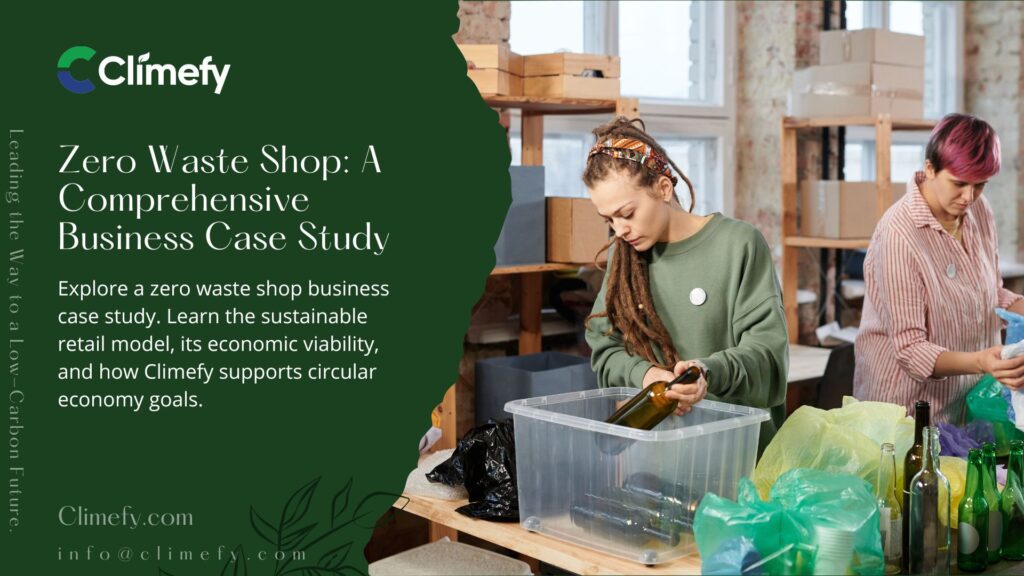
A zero waste shop, also commonly known as a refill station, package-free store, or bulk grocery store, is a retail establishment dedicated to eliminating consumer packaging waste. Its core operational principle is a bring-your-own-container (BYOC) model, where customers bring clean, reusable containers from home, weigh them (tare weight), fill them with the desired quantity of product, and pay by weight.
This model directly tackles the critical issue of single-use plastic pollution and packaging waste reduction by design. It is a tangible manifestation of the circular economy, where resources are kept in use for as long as possible, and waste is designed out of the system.
Beyond just retail, these shops serve as community hubs for sustainability, offering education and products that support a low waste lifestyle.
The business model is built on several key pillars that distinguish it from conventional retail:
✔ Elimination of Primary Packaging: The store purchases goods in large-scale, reusable, or compostable bulk containers from suppliers, breaking the cycle of disposable packaging at the commercial level.
✔ Refill System Infrastructure: Investment in durable, hygienic gravity bins, scoop bins, jerry cans for liquids, and accurate weighing scales is fundamental.
✔ Product Sourcing and Curation: Stock focuses on high-quality, often organic or locally sourced dry bulk foods, eco-friendly cleaning products, plastic-free personal care items, and sustainable household goods.
✔ Waste-Led Design: Every aspect, from store fit-out using reclaimed materials to the use of compostable bags as a backup, is chosen to minimize environmental footprint.
✔ Transparency and Education: Ingredient sourcing, carbon footprint information, and waste reduction tips are openly shared, building consumer trust.
Financially, this model transforms inventory management. Capital is tied up in product, not in myriad packaged SKUs with associated packaging costs. While startup costs for specialized dispensers can be higher, the long-term savings on packaging and alignment with a growing consumer base seeking ethical consumption create a compelling value proposition.
For a business, understanding its own operational footprint is crucial. Utilizing tools like Climefy’s carbon calculator for small & medium companies can provide a baseline for emissions from energy use, logistics, and waste, forming the first step in a comprehensive net zero journey.
The rise of the zero waste shop is not an isolated trend but a direct response to a powerful confluence of environmental awareness, shifting consumer values, and regulatory pressures. The market viability of this sustainable business is underpinned by robust, data-driven trends that indicate a permanent shift in a significant segment of the retail landscape.
Established Market Drivers:
Consumer Psychology and the Target Demographic:
The core demographic extends beyond a niche. It includes:
✔ Eco-Conscious Families: Seeking non-toxic, bulk organic foods and natural cleaning products for their households.
✔ Minimalists: Attracted to the simplicity and reduced clutter of a package-free lifestyle.
✔ Budget-Aware Shoppers: Who appreciate the long-term savings of buying staples in bulk and avoiding branded packaging premiums.
✔ Health-Conscious Individuals: Drawn to the whole, unprocessed foods and transparent ingredient sourcing.
✔ Corporate & Hospitality: Restaurants, cafes, and offices pursuing sustainable procurement to meet their own ESG (Environmental, Social, and Governance) goals.
This movement is a key component of the broader circular economy transition, which is projected to represent a multi-trillion-dollar economic opportunity. A zero waste business positions itself at the intersection of ethical consumption and smart economics.
For businesses looking to understand their customers’ climate concerns or to offset unavoidable emissions from their supply chain, platforms like Climefy’s Marketplace for GHG reduction projects offer a credible pathway to take tangible climate action.
Launching a successful package-free store requires meticulous planning across location, design, sourcing, and day-to-day management. This section breaks down the critical operational components.
The location must balance visibility, accessibility, and alignment with community values. High-footfall areas near complementary businesses (e.g., health food stores, farmers’ markets) are ideal. The store layout must be intuitive and hygienic.
This is the most complex part of the operation. Building a sustainable supply chain involves finding suppliers willing to deliver in large, returnable containers or compostable sacks.
Key Sourcing Categories:
Inventory Management Tips:
✔ Forecast Demand: Track sales data meticulously to predict refill cycles and avoid stock-outs of popular items.
✔ Build Supplier Relationships: Partner with local producers, co-ops, and regional distributors who share your values. This reduces food miles and strengthens your local economy narrative.
✔ Storage Solutions: Ensure you have adequate, pest-proof, and organized storage for backstock of bulk containers.
Daily tasks focus on maintaining hygiene, customer service, and inventory.
Operational efficiency directly impacts the bottom line and environmental claim integrity. For the residual emissions that cannot be eliminated—from electricity to transport—businesses can pursue carbon offset issuance & certification through rigorous standards like the Climefy Verified Carbon Standard to ensure their net impact is credibly positive.
A thorough financial analysis is critical to transition from a passion project to a thriving ethical business. While passion drives the mission, numbers ensure its longevity.
Initial investment varies by size and location but typically includes:
Pricing strategy must cover costs, ensure a profit, and remain attractive to customers. The pay-by-weight model offers flexibility.
Margins differ by product category. Non-food items like reusable products often have higher margins than staple foods. Revenue streams can be diversified:
✔ In-Store Retail: The core refill model for food, detergents, and personal care.
✔ Online Sales & Subscriptions: Offering curated zero waste kits, refill pouches (with deposit return schemes), or subscription boxes for staples.
✔ Workshops & Events: Hosting paid workshops on composting, DIY natural cleaners, or mending clothes.
✔ Wholesale: Supplying bulk ingredients or refill stations to local cafes, restaurants, or offices pursuing corporate sustainability.
To manage this financial complexity and embed sustainability into their core accounting, businesses can benefit from ESG consultancy services. Experts can help structure reporting, identify efficiency savings, and align financial performance with environmental and social governance goals, creating a resilient and future-proof business model.
Marketing a zero waste shop relies on authentic storytelling, community engagement, and digital savvy. It’s about building a movement, not just a customer base.
Marketing should seamlessly integrate the tools that help your community act. For instance, encouraging customers to understand their personal impact through Climefy’s carbon calculator for individuals and then take action through the same platform creates a powerful, closed-loop engagement that deepens their connection to your brand’s mission.
Despite its promise, operating a zero waste shop presents unique hurdles. Acknowledging and strategically addressing these is key to resilience.
The trajectory of the zero waste shop points toward greater integration and innovation. The future is not just standalone stores, but the infusion of refill models into mainstream retail.
For any business on this journey, continuous learning is vital. Resources like the Climefy Sustainability Academy provide accessible education on the latest in carbon accounting, sustainable supply chain management, and circular economy principles, empowering entrepreneurs and their teams to lead the charge effectively.
The ultimate success metric for a zero waste shop extends beyond its balance sheet; it lies in the cumulative reduction of packaging waste, the shift in consumer mindsets it inspires, and its contribution to a systemic transition towards a circular economy. By measuring, managing, and mitigating its full climate impact through credible partners, such a business can truly claim to be a leader in the sustainable economy of the future.
Bring clean, dry, reusable containers from home (jars, bottles, cloth bags). When you arrive, weigh each empty container and note its “tare” weight. Fill your containers with the products you need, then weigh them again at checkout. You’ll only pay for the weight of the product inside.
While some specialty or organic items may carry a premium, staple goods like rice, oats, and lentils are often comparable or cheaper than their packaged counterparts because you’re not paying for the branding and packaging. The pay-by-weight model also reduces food waste, saving you money in the long run.
In practice, achieving 100% zero waste is extremely challenging due to upstream supply chain packaging and unavoidable operational waste. The term “zero waste” is an aspirational goal and philosophy focused on radical reduction and circularity. The most honest shops are transparent about their challenges and commit to continuous improvement, often using carbon offset programs for residual impacts.
Begin with high-waste, frequently purchased items: swap disposable plastic bottles for refillable cleaning products and package-free toiletries, use a reusable coffee cup and water bottle, and choose bulk dry goods like pasta and spices. Gradual changes are more sustainable than an overnight overhaul.
Businesses can start with a waste audit to identify major streams, switch to bulk purchasing for office supplies, implement reusable dishware, and choose suppliers with take-back programs for packaging. For a comprehensive strategy, seek ESG consultancy to align waste reduction with broader sustainability and net zero journey targets, and consider digital integration solutions to engage customers and employees in your efforts.



![Air Capture Technology and Future [Ultimate Guide]](https://climefy.com/wp-content/uploads/2026/04/Air-Capture-Technology-and-Future-Ultimate-Guide-300x169.jpg)