Sustainable infrastructure represents the foundational framework for achieving long-term economic prosperity, environmental stewardship, and social equity. It moves beyond traditional “build-and-forget” models by integrating life-cycle thinking, climate resilience, and resource efficiency into the planning, design, construction, and decommissioning of assets.
Here is what you will learn from this comprehensive guide:
Read More:
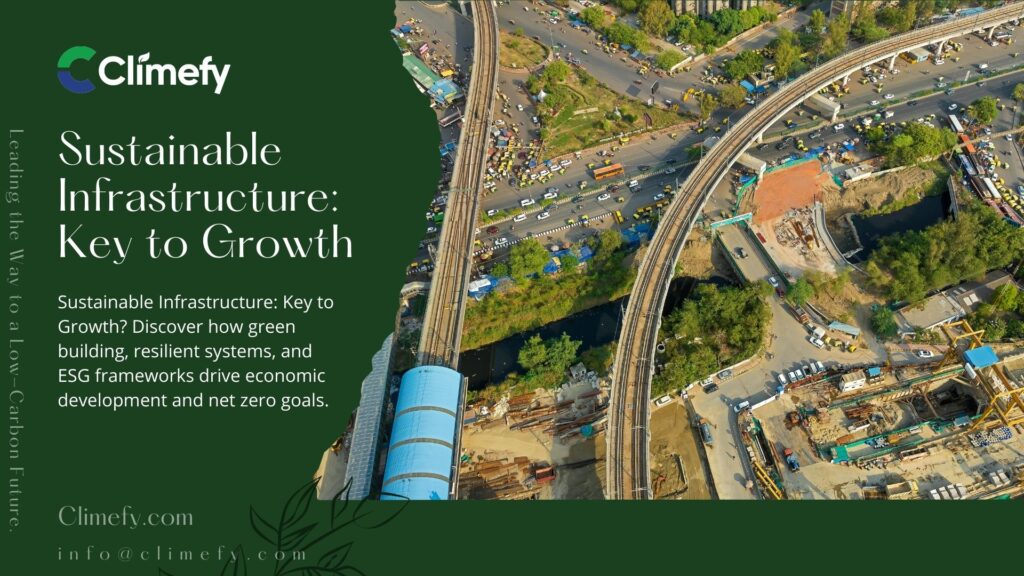
Infrastructure—the network of facilities and systems that underpin a functioning society—includes transportation networks, energy grids, water and waste facilities, buildings, and digital communications . When we apply the lens of sustainability, we transform these essential assets from passive contributors to active drivers of a healthier planet and a more equitable society.
Sustainable infrastructure is designed with a holistic, life-cycle perspective. It considers not only the initial capital expenditure but also the long-term operational costs, social impacts, and environmental externalities over the entire life of the asset, from resource extraction to decommissioning . This approach ensures that the infrastructure of today does not become the liability or stranded asset of tomorrow.
Conventional infrastructure projects have historically been evaluated on a narrow set of criteria: functionality, engineering feasibility, and immediate economic return. The environmental and social costs—such as pollution, habitat destruction, or community displacement—were often treated as unfortunate but unavoidable externalities. The durability of conventional infrastructure, while a strength, paradoxically creates long-term risks if it locks in carbon-intensive practices or proves vulnerable to a changing climate .
Sustainable infrastructure, in contrast, is designed to be resilient and adaptable. It proactively addresses climate risks such as extreme temperatures, flooding, and storms, which are increasingly threatening the reliability of our built environment . It combines three critical aspects: higher resistance to damage from natural or man-made disasters, reduced human and material loss from such events, and faster recovery . This shift from a purely functional asset to a resilient, multi-functional system that provides co-benefits—like cleaner air, biodiversity corridors, and social inclusion—is the fundamental difference. It is an investment in certainty and long-term value rather than short-term cost savings.
To properly assess and implement a sustainable infrastructure project, it must be evaluated across four interconnected dimensions :
By embedding these four dimensions into every stage of a project, we move beyond simple compliance and begin to build infrastructure that is truly fit for the future. This integrated approach is at the heart of modern ESG consultancy, helping organizations navigate the complexities of sustainable development and report on their performance with integrity.
The narrative that environmental sustainability is a drag on economic growth has been thoroughly debunked. In fact, sustainable infrastructure is now recognized as a primary engine for job creation, innovation, and long-term economic resilience. It represents a massive investment opportunity, redirecting capital towards assets that will define the 21st-century economy. Delaying this transition, conversely, creates significant financial risks from climate change impacts and stranded assets.
The economic case is clear: investing in sustainable infrastructure is not just an environmental good; it is a fundamental strategy for robust and durable economic growth.
The transition to a sustainable economy requires a monumental upgrade of our global infrastructure, particularly in the energy sector. The International Renewable Energy Agency (IRENA) estimates that around USD 670 billion of investment is needed annually between 2025 and 2030 just to strengthen electricity grids to accommodate the renewable energy surge . This level of investment creates a powerful market signal, driving innovation and attracting private capital. Leading utilities and power sector companies have already reinforced their commitment, with around 48% of their planned investment directed towards grid infrastructure .
This capital flow translates directly into job creation. Building new renewable energy plants, retrofitting existing buildings for energy efficiency, constructing sustainable transport links, and installing new grid infrastructure are all labor-intensive activities. They create a wide range of jobs, from high-skilled engineering and project management roles to local manufacturing and construction positions. By prioritizing these projects, governments can stimulate economic activity and build a skilled workforce for the future.
Perhaps the most compelling economic argument for sustainable infrastructure is its ability to reduce long-term costs and build resilience. The principle of “spending more to save more” is central here. While a sustainable building or a climate-resilient road may have higher upfront capital costs, its operational and social costs over its lifetime are significantly lower.
The principles of sustainability are being applied across all types of infrastructure, with each sector presenting unique challenges and opportunities for transformation. From how we power our cities to how we build our homes, innovation is reshaping the landscape.
The energy sector is at the heart of the global transition. The goal of tripling renewable capacity by 2030 is ambitious, but it is unattainable without a corresponding and urgent upgrade to the world’s power grids . The challenge is no longer just about adding more solar and wind farms; it’s about building a power system that is secure, affordable, and resilient .
Currently, grid infrastructure is struggling to keep pace. Long lead times for projects, complex permitting processes, and supply chain bottlenecks mean that gigawatts of renewable energy projects are stuck in connection queues, unable to deliver power to consumers . Building a modern grid involves several critical components:
For businesses, navigating this complex landscape is a challenge. Climefy’s Digital Integration Solutions can help organizations incorporate real-time carbon tracking and energy management into their operations, providing the data needed to make strategic decisions and report on progress.
The transport sector is undergoing a profound shift towards electrification and multi-modal integration. Sustainable transport infrastructure goes beyond just building roads; it’s about creating intelligent, efficient, and low-impact mobility systems. This includes public transit, electric vehicle (EV) charging networks, and infrastructure for active mobility like cycling and walking .
Innovative projects are demonstrating how transport can become a net contributor to sustainability. For instance, China’s Zaozhuang-Heze Expressway project integrates a 124-megawatt distributed photovoltaic system along its slopes and in service areas . This “transportation and energy integration” model generates clean electricity to power the expressway, reducing both energy costs and carbon emissions. To date, the project has generated over 83 million kWh of clean electricity, saving thousands of tons of coal and reducing CO2 emissions by tens of thousands of tons .
Such projects highlight a future where infrastructure is multi-functional: a road is no longer just a thoroughfare but also a clean power plant. This integration requires new standards and a full life-cycle approach to planning, design, and operation .
Sustainable water and waste infrastructure is critical for public health, economic activity, and environmental protection. The focus here is shifting from linear “take-make-dispose” models to circular systems that treat resources as valuable and finite.
The building and construction sector is a major contributor to global emissions, accounting for a significant percentage of the world’s energy use and resource consumption . Transforming this sector is therefore paramount. Sustainable infrastructure in the built environment encompasses both the construction of new green buildings and the deep renovation of existing stock.
Key strategies include:
To achieve the ambitious goals of the Paris Agreement and the Sustainable Development Goals (SDGs), we must embrace new ways of thinking about and building infrastructure. Two of the most powerful and complementary approaches are Nature-based Solutions (NbS) and the principles of the circular economy.
Nature-based Solutions (NbS) are actions to protect, sustainably manage, and restore natural or modified ecosystems to address societal challenges effectively and adaptively, while simultaneously benefiting human well-being and biodiversity . In the context of infrastructure, NbS use natural processes to deliver a service that would otherwise require a purely engineered (“grey”) solution, often at a lower cost and with multiple added benefits.
Instead of building a concrete levee, for instance, a city might restore a coastal mangrove or a upstream wetland to absorb storm surges and floodwaters. The benefits of NbS are extensive:
✔ Enhanced Resilience: Mangroves and coastal wetlands act as natural buffers against hurricanes and erosion, protecting communities and infrastructure .
✔ Cost-Effectiveness: They often have lower capital and maintenance costs compared to grey infrastructure and deliver a high economic return on investment .
✔ Climate Mitigation: Forests, wetlands, and soils are significant carbon sinks, absorbing CO2 from the atmosphere.
✔ Biodiversity Conservation: NbS create and restore habitats for wildlife, countering the trend of biodiversity loss.
✔ Improved Human Well-being: Access to urban green spaces improves public health, reduces heat island effects, and provides recreational opportunities .
The application of NbS is growing rapidly. In Xalapa, Mexico, the CityAdapt project created parks and green corridors, planted thousands of trees, and built an artificial wetland for wastewater treatment to improve water regulation and reduce flood and landslide risks . Similarly, projects in the Dominican Republic are combining coral and mangrove restoration with engineered structures to protect coastlines from erosion . Implementing NbS successfully requires a Social-Ecological-Technological Systems (SETS) framework, recognizing that cities are complex systems where social, ecological, and technological factors are deeply interconnected .
The circular economy offers a blueprint for decoupling economic growth from resource consumption and waste generation. In the infrastructure sector, this means moving away from the linear model of extracting materials, building an asset, and then demolishing it to create waste. Instead, a circular approach aims to design out waste, keep materials in use, and regenerate natural systems.
This can be achieved by:
By adopting circular principles, the construction sector can dramatically reduce its 37% contribution to global emissions and transform itself from a major consumer of resources to a steward of them.
Turning the vision of sustainable infrastructure into reality requires a robust toolkit of standards, metrics, and financial mechanisms. These tools provide the transparency, accountability, and common language needed to guide investment and ensure projects deliver on their promises.
Environmental, Social, and Governance (ESG) criteria have become the global benchmark for assessing the sustainability and ethical impact of an investment. For infrastructure projects, integrating ESG factors is no longer optional; it is increasingly demanded by investors, regulators, and the public. Taking ESG into account can reduce financial risk and enhance returns, making projects more attractive to a wider pool of capital .
International standards are critical in this process. They provide a common framework for defining, measuring, and reporting on sustainability, helping to prevent “greenwashing” and ensuring that projects marketed as “green” are genuinely sustainable . Standards cover everything from project design and impact assessment to construction protocols and operational performance. For example, a clear standard is needed for emerging areas like transport and energy integration to ensure safety and replicability .
Organizations seeking to demonstrate the credibility of their carbon reduction efforts can turn to robust verification frameworks. The Climefy Verified Carbon Standard (CVCS) , for instance, provides comprehensive guidelines for designing and implementing projects that achieve real, verifiable GHG emission reductions or removals, ensuring integrity and transparency in the voluntary carbon market.
You cannot manage what you do not measure. Accurate carbon accounting is the foundation of any credible climate action plan. It involves quantifying an organization’s or individual’s greenhouse gas emissions, categorized into three “scopes”:
For businesses of all sizes, understanding their full carbon footprint—especially the often-dominant Scope 3 emissions—is the first step towards setting science-based targets and identifying reduction opportunities. Climefy provides a range of tools to simplify this complex process. Our advanced Carbon Calculator for Small & Medium Companies and Carbon Calculator for Large Organizations enable businesses to track emissions with precision across all three scopes, providing the data needed for strategic planning and regulatory reporting. Individuals can also take action by using the Carbon Calculator for Individuals to understand and manage their personal environmental impact.
The sheer scale of investment required for the global infrastructure upgrade—hundreds of billions of dollars annually—cannot be met by public finance alone. Mobilizing private capital is essential. This requires creating a stable and predictable investment environment, with clear policies, streamlined permitting, and risk-mitigation instruments .
The voluntary carbon market plays an increasingly important role in channeling private finance to climate mitigation projects. By purchasing high-quality carbon offsets, organizations and individuals can compensate for their unavoidable emissions while directly funding projects that reduce or remove greenhouse gases. These projects range from Afforestation and Plantation initiatives that sequester carbon to renewable energy and Solid Waste Management projects that avoid emissions.
A credible and transparent marketplace is vital for ensuring that these investments drive real climate action. Climefy’s Marketplace connects project developers with buyers seeking verified GHG reduction projects. Every project listed undergoes strict verification to ensure its climate benefits are measurable and additional, allowing buyers to confidently invest in initiatives that align with their values, from reforestation to community-based energy access.
Despite the clear imperative and growing momentum, the path to a fully sustainable global infrastructure is fraught with challenges. These obstacles must be addressed head-on to accelerate the transition.
One of the most significant barriers to infrastructure development, whether sustainable or conventional, is the slow and complex process of permitting and regulatory approval. Long lead times for permits can delay projects for years, stalling critical grid expansions and renewable energy deployments . Streamlining these processes while maintaining robust environmental and social safeguards is a critical task for governments worldwide.
Closely related are persistent supply chain bottlenecks. The global demand for key components like transformers, cables, and even skilled labor often outstrips supply, leading to cost overruns and project delays . Building resilient and diversified global supply chains, along with investing in workforce upskilling, is essential to deliver the pipeline of projects on time and within budget .
No single entity can deliver the sustainable infrastructure transition alone. It requires unprecedented collaboration between governments, private developers, financial institutions, multilateral development banks, and local communities. Public-private partnerships (PPPs) are crucial for pooling resources and expertise. International cooperation is needed to harmonize standards and share best practices, ensuring that successful models can be replicated and scaled globally .
Digital solutions are a powerful enabler of this collaboration and efficiency. Advanced data analytics, AI, and digital twins can optimize infrastructure planning, simulate performance under different climate scenarios, and manage complex systems in real-time. They also empower consumers and businesses to participate actively in the energy transition. For example, digital tools that allow customers to track their carbon footprint or choose eco-friendly options at checkout can drive demand for sustainable goods and services.
Climefy is at the forefront of providing these enabling digital tools. Our Digital Integration Solutions are designed to help businesses and financial institutions embed real-time carbon tracking, offsetting, and sustainability engagement directly into their existing systems, making climate action a seamless part of everyday operations.
Sustainable infrastructure is the indispensable foundation for a prosperous, equitable, and resilient future. It represents a fundamental shift in how we conceive, build, and manage the assets that power our societies. By integrating environmental stewardship, social equity, economic viability, and strong governance, we can create infrastructure that not only serves its primary function but also actively restores ecosystems, strengthens communities, and drives long-term growth.
The transition is complex and requires overcoming significant hurdles in permitting, financing, and collaboration. However, with the power of innovative approaches like nature-based solutions and circular economy principles, and the support of robust digital tools and verification standards, the path forward is clear. For businesses and individuals ready to be part of this transformation, the tools and expertise are available to measure, manage, and mitigate their impact, turning the challenge of climate change into the greatest opportunity for sustainable growth.
Sustainable infrastructure refers to the planning, design, construction, and operation of physical assets—like roads, power grids, and water systems—in a way that minimizes environmental damage, promotes social well-being, and is economically viable over its entire life cycle. It aims to meet the needs of the present without compromising the ability of future generations to meet their own needs.
It combats climate change in two main ways: mitigation and adaptation. Mitigation involves building infrastructure that produces low or zero emissions, such as renewable energy plants and energy-efficient buildings. Adaptation involves making infrastructure resilient to the effects of climate change, such as building seawalls or restoring mangroves to protect against storm surges, ensuring that essential services continue to function in a changing climate.
These are categories used in carbon accounting to understand an organization’s full climate impact. For an infrastructure project, Scope 1 covers direct emissions from on-site equipment. Scope 2 covers indirect emissions from the energy it purchases. Scope 3, often the largest, covers all other indirect emissions in its value chain, like the carbon footprint of the concrete and steel used in construction. Ignoring Scope 3 means missing the majority of a project’s potential impact.
Carbon offsetting allows infrastructure developers and investors to compensate for the unavoidable emissions generated during construction or operation. They do this by purchasing credits from projects that reduce or remove emissions elsewhere, such as reforestation or community biogas programs. This channels crucial private finance to climate solutions and can help a project achieve a “net-zero” or “carbon neutral” status, although it should always be pursued after direct emissions reductions.
Both individuals and small businesses can play a powerful role. For individuals: You can reduce your personal carbon footprint using tools like Climefy’s carbon calculator, support businesses with strong sustainability records, and advocate for green infrastructure projects in your community. For small businesses: You can start by measuring your company’s carbon footprint with a dedicated tool, set reduction targets, engage your employees and customers in your sustainability journey, and consider purchasing verified carbon offsets for any remaining emissions. This not only helps the planet but can also enhance your brand reputation and operational efficiency.