
The Sustainable Forestry Initiative (SFI) is a comprehensive forest certification program that promotes sustainable forest management through rigorous standards, independent audits, and community engagement. This guide explores the intricate details of the SFI program, its standards, certification processes, and its critical role in combating climate change, while providing actionable insights for organizations and individuals committed to environmental stewardship.
What You Will Learn in This Guide:
Read More:
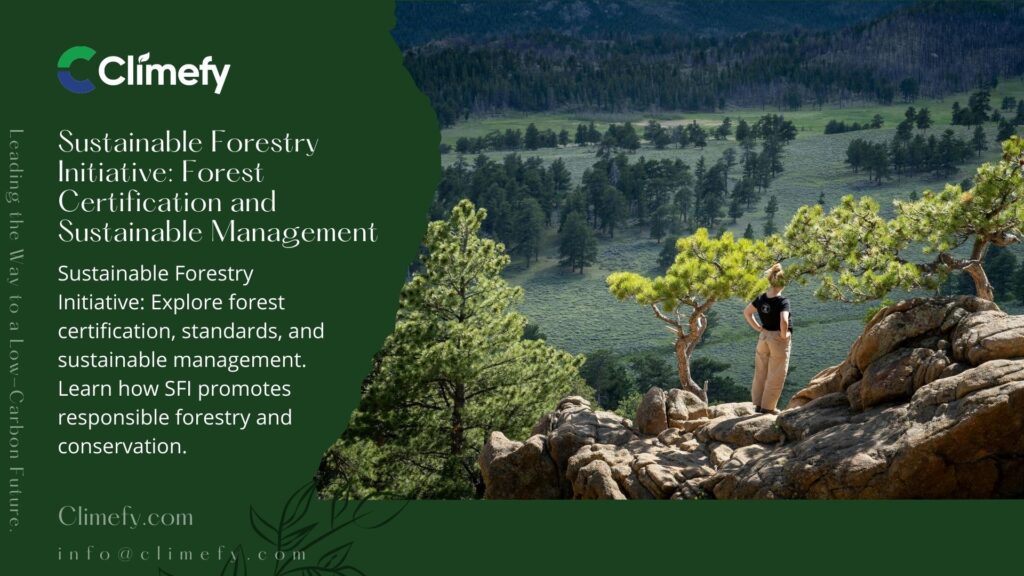
The Sustainable Forestry Initiative (SFI) is an independent, non-profit organization dedicated to promoting sustainable forest management across North America and beyond. It operates one of the world’s largest forest certification programs, ensuring that forests are managed in a way that protects water quality, biodiversity, wildlife habitat, and recreational opportunities, while also respecting the rights of Indigenous Peoples and local communities. SFI certification provides a framework for forest landowners, product manufacturers, and brand owners to demonstrate their commitment to responsible forestry.
At its core, SFI matters because forests are a critical line of defense against climate change. They act as massive carbon sinks, absorbing approximately 2.6 billion metric tons of carbon dioxide each year. However, unsustainable logging, deforestation, and poor management practices threaten this capacity. The SFI program addresses this by setting clear, measurable objectives for forest conservation, productivity, and social responsibility. By choosing SFI-certified products, businesses and consumers directly support practices that maintain forest health, mitigate climate risks, and ensure that forests continue to provide essential ecosystem services for generations.
The program is built on a foundation of continuous improvement, with standards updated every five years to reflect the latest science and market demands. This adaptive management approach ensures that SFI remains relevant and effective in addressing emerging environmental challenges. For companies like Climefy, which are dedicated to enabling impactful climate action through carbon offset issuance, certification, and digital integration, understanding and promoting programs like SFI is essential. They provide a tangible pathway for businesses to align their operations with global sustainability targets and contribute to a net-zero future.
The Sustainable Forestry Initiative was launched in 1994 as a grassroots effort by the American Forest & Paper Association (AF&PA) to address growing public concern about forest practices. Initially, it was a code of conduct for AF&PA members, but it quickly evolved into a comprehensive, third-party certification program. In 2007, SFI became an independent non-profit organization, separating from the AF&PA to enhance its credibility and align more closely with global certification standards like those of the Programme for the Endorsement of Forest Certification (PEFC). Today, the SFI program is one of the largest single forest certification standards in the world, with certified forests spanning millions of acres across North America. This evolution demonstrates a significant shift from industry-led self-regulation to a multi-stakeholder governed program that includes environmental, social, and economic representatives.
The SFI program rests on several core pillars that define its approach to forest management. These include sustainable harvest levels that ensure long-term forest productivity, protection of water resources through the establishment of riparian buffers, and the conservation of biological diversity, including threatened and endangered species. Another crucial pillar is the requirement for prompt reforestation after harvest, ensuring that forest cover is maintained. Furthermore, SFI standards mandate the use of best management practices to protect soil and water quality. Critically, the program also emphasizes community engagement and respect for Indigenous Peoples’ rights, requiring forest managers to consider traditional knowledge and involve local communities in decision-making processes. These pillars collectively ensure that forest management under SFI is not just about timber production, but about holistic ecosystem stewardship.
The SFI Forest Management Standard is the cornerstone of the entire program. It sets forth a comprehensive set of requirements that forest organizations must meet to achieve and maintain certification. The standard is performance-based, meaning it defines desired outcomes (e.g., protection of water quality) while allowing forest managers the flexibility to determine the best local practices to achieve those outcomes. This adaptability is crucial given the vast ecological and social diversity of forests across North America. The standard is built around 14 core principles, often referred to as Objectives, which cover everything from legal compliance and sustainable harvesting to research and climate-smart forestry.
The standard is rigorously updated through a multi-stakeholder process. The most recent iteration, the SFI 2022 Forest Management Standard, places an even greater emphasis on critical issues like climate change adaptation, carbon sequestration, and fire resilience. It requires certified organizations to have programs in place that address these risks and contribute to landscape-level conservation. This forward-thinking approach ensures that SFI-certified forests are not just managed for today, but are resilient to the environmental challenges of tomorrow.
A fundamental requirement of the SFI Forest Management Standard is that harvest levels must be sustainable. This means the rate of timber harvesting cannot exceed the long-term capacity of the forest to regenerate and continue providing wood and fiber. SFI mandates that certified organizations have a written management plan based on adequate resource inventories that detail sustainable harvest calculations. Following harvest, the standard requires prompt reforestation—either through natural regeneration, seeding, or planting—using native species or those adapted to the site. This commitment to regeneration ensures that the forest’s carbon sequestration potential is restored and that the land continues to produce forest products indefinitely.
Protecting water resources is a non-negotiable element of sustainable forest management under SFI. The standard requires the implementation of best management practices (BMPs) to protect water quality in streams, lakes, and other water bodies. A key practice is the establishment and maintenance of riparian zones—the vegetated areas alongside water bodies. SFI standards mandate that these buffers are of adequate width and composition to filter sediment, provide shade to regulate water temperature, and supply organic matter and large woody debris that are essential for aquatic life. Compliance with water quality BMPs is a critical indicator used during SFI audits.
The SFI Forest Management Standard contains robust provisions for the conservation of biological diversity. Certified organizations must have programs in place to maintain or enhance the variety of wildlife habitats and species on their land. This includes identifying and protecting specific habitat elements such as snags (standing dead trees), den trees, and downed logs that are crucial for many species. The standard also requires the management of forests in a way that contributes to the conservation of native species, including those that are rare, threatened, or endangered. Landscape-level planning is encouraged, meaning forest managers consider how their lands connect to broader ecosystems, facilitating wildlife movement and genetic exchange.
The SFI certification process is a rigorous, multi-step journey that provides independent, third-party verification that an organization’s forest management or sourcing practices meet the SFI standards. It’s designed to be transparent and credible, giving confidence to consumers, investors, and regulators. The process is applicable to a wide range of organizations, from family forest owners and public land managers to large timber companies and manufacturers of paper, packaging, and wood products. There are three main types of SFI certification: Forest Management certification, Fiber Sourcing certification (for mills that source fiber from non-certified lands), and Chain of Custody certification (for tracking certified material through the supply chain).
The journey begins with a gap analysis, where the organization compares its current practices against the SFI standard. Following any necessary adjustments, they engage an accredited, independent certification body to conduct a thorough audit. This audit includes document reviews, field visits, and interviews with stakeholders. If the organization meets all requirements, a certificate is issued, which is valid for a fixed term, typically five years, with annual surveillance audits to ensure ongoing compliance.
The SFI Chain of Custody (CoC) standard is a critical mechanism for tracking certified content through the production and distribution chain. It applies to manufacturers, brands, printers, and distributors who want to make claims about the SFI-certified content in their products. The CoC standard ensures that certified material is separated from non-certified material or that a percentage-based claim system is used. It requires robust accounting systems, supplier verification, and annual audits. For companies using significant amounts of forest products, achieving SFI CoC certification allows them to credibly market their products as supporting responsible forestry. This is particularly relevant for businesses looking to meet their own sustainability reporting requirements, which can be seamlessly integrated with services like those offered by Climefy, including ESG consultancy and digital integration solutions to track and manage these certified inputs.
Recognizing that many mills source fiber from a vast array of non-certified small landowners, the SFI Fiber Sourcing standard provides a mechanism to promote responsible practices across the broader landscape. This standard applies to mills and facilities that do not own the forests from which they source their raw material. It requires the facility to have a program in place to promote sustainable forestry practices among the landowners they purchase from. This includes providing education and outreach on best management practices for water quality, protecting threatened and endangered species, and encouraging the use of qualified logging professionals. This standard acts as a powerful lever, extending the influence of SFI principles beyond certified lands and improving forestry practices on millions of additional acres.
Navigating the world of forest certification often involves understanding the differences between the major players: the Sustainable Forestry Initiative (SFI), the Forest Stewardship Council (FSC), and the Programme for the Endorsement of Forest Certification (PEFC). All three are credible, third-party certification systems with the shared goal of promoting responsible forest management, but they have different origins, governance structures, and emphases. PEFC is an umbrella organization that endorses national certification systems, including SFI in North America and many others globally. Therefore, SFI is an endorsed member of the PEFC framework, meaning SFI certification is recognized under the PEFC brand internationally.
FSC, on the other hand, is a separate, globally unified standard-setting body. The choice between them often comes down to market preferences, geographic relevance, and specific organizational values. For companies operating primarily in North America, SFI’s standards are often seen as more tailored to the region’s large-scale, diverse forest ownership patterns, including the significant proportion of family-owned forests. Both systems are robust, but understanding their nuances is key for businesses looking to make informed sourcing decisions. Companies like Climefy, through their ESG consultancy services, can help organizations navigate these complex choices to align their procurement policies with their sustainability goals.
| Feature | Sustainable Forestry Initiative (SFI) | Forest Stewardship Council (FSC) |
|---|---|---|
| Origin & Governance | Originated in North America; governed by a tripartite board including environmental, social, and economic chambers. | Founded internationally; governed by a global membership divided into environmental, social, and economic chambers with equal voting power. |
| Geographic Focus | Primarily North American standards, but recognized globally via PEFC endorsement. | A single international standard adapted through national working groups. |
| Approach to Pesticides | Promotes the use of integrated pest management and reduces reliance on chemical pesticides. | Generally has more restrictive criteria for chemical pesticide use, with a strong emphasis on prohibition of certain “highly hazardous” pesticides. |
| Scale of Certification | Well-suited for large industrial landowners as well as smaller entities through group certification. | Has a strong focus on small and low-intensity managed forests, though applicable to all scales. |
There is significant overlap in the on-the-ground requirements of SFI and FSC. Both mandate protection of water quality, biodiversity conservation, reforestation, and respect for Indigenous Peoples’ rights. The most important point of connection is through the PEFC. As SFI is endorsed by PEFC, SFI-certified material is widely accepted in global markets that require PEFC certification. This means a company with SFI Chain of Custody can sell products into markets that recognize PEFC. This mutual recognition simplifies supply chains for multinational companies. However, there is no mutual recognition between SFI and FSC; they remain separate systems, and some markets or customers have a specific preference for one over the other. For a business, this might mean holding dual certification to meet diverse customer demands.
Forests are one of the most powerful, natural solutions to climate change, and the SFI program directly enhances this capacity. Through its rigorous standards, SFI ensures that certified forests are managed in ways that maximize their role as carbon sinks, while also making them more resilient to climate-induced stresses like wildfire, drought, and pest outbreaks. The connection between forest certification and climate action is now more explicit than ever, particularly with the SFI 2022 standards incorporating climate-smart forestry objectives.
Sustainable forest management practices required by SFI, such as maintaining forest cover, prompt reforestation, and improving forest health, all contribute to robust carbon sequestration. Trees absorb CO2 from the atmosphere as they grow, storing it in their biomass and in the soil. By preventing deforestation and degradation, SFI-certified management keeps this carbon stored. Furthermore, the use of wood products from certified forests offers a climate advantage: wood stores carbon throughout its life, and when sourced sustainably, it can displace more energy-intensive materials like concrete and steel, leading to significant avoided emissions.
The SFI Forest Management Standard explicitly requires certified organizations to address climate change in their management planning. This includes identifying risks to forest carbon stocks from potential climate change impacts and implementing strategies to mitigate those risks. For example, promoting a diversity of tree species and age classes can make a forest more resilient to pests or diseases that may become more prevalent with a changing climate. The standard also encourages management practices that enhance carbon storage, such as extending harvest rotations where appropriate or retaining more coarse woody debris on site after harvest. This proactive, risk-based approach ensures that SFI-certified forests continue to provide vital carbon benefits for the long term.
The climate benefits derived from improved forest management on SFI-certified lands can be quantified and converted into high-quality carbon offsets. These offsets represent verified reductions or removals of greenhouse gas emissions that can be bought and sold in voluntary carbon markets. For forest landowners, this creates a potential new revenue stream that incentivizes conservation and sustainable practices beyond timber production. This is where organizations like Climefy play a crucial role. Through its Carbon Offset Issuance & Certification services and its Climefy Verified Carbon Standard (CVCS) , Climefy provides the framework for project developers to rigorously quantify, monitor, and verify the carbon benefits of their forestry projects, turning sustainable management into tangible climate assets. These offsets can then be listed on platforms like the Climefy Marketplace for GHG reduction projects, connecting forest carbon projects with businesses and individuals looking to neutralize their residual emissions.
While the environmental benefits of the SFI program are often the primary focus, its social and economic pillars are equally fundamental to its definition of sustainability. The program is designed to balance ecological integrity with the needs of communities and the economy. This triple bottom-line approach ensures that forestry remains a viable livelihood while contributing positively to societal well-being. SFI certification requires organizations to recognize and respect the legal, customary, and traditional rights of Indigenous Peoples and local communities. It also mandates support for logger and forester training programs, ensuring a skilled and safe workforce that uses best management practices.
Economically, SFI certification helps maintain market access for forest products. Many large purchasers of paper and packaging, including publishers, retailers, and corporations with strong net zero journey commitments, prefer or require certified materials. Certification can therefore be a competitive advantage, allowing producers to access premium markets and demonstrate their environmental credentials to environmentally conscious consumers. This market signal supports the economic viability of sustainable forest management, creating a positive feedback loop where good practices are rewarded.
A unique and critical component of the SFI program is its requirement for certified organizations to support logger and professional forester training and education. SFI funds and promotes programs that ensure logging professionals are knowledgeable about best management practices, safety standards, and emerging forest management techniques. This investment in the workforce is essential because the quality of forest management on the ground depends directly on the skills and expertise of the people doing the work. Well-trained loggers are more likely to implement practices that protect soil, water, and residual trees, leading to better environmental outcomes across all forest lands, not just certified ones.
The SFI Forest Management Standard places a strong emphasis on transparency and community engagement. Certified organizations are required to engage with local communities and consider their interests in forest management decisions. This can include maintaining recreational access, protecting scenic views, or considering local economic needs. More importantly, the standard requires respect for Indigenous Peoples’ rights and traditional knowledge. This involves consulting with Indigenous communities whose traditional territories overlap with the managed forest, seeking to understand and accommodate their values and uses of the forest. This commitment to social responsibility helps build trust and fosters collaborative approaches to landscape conservation.
No major certification program is without its critics, and the Sustainable Forestry Initiative has faced scrutiny from some environmental groups over the years. The primary criticisms often revolve around perceptions that SFI standards are less stringent than competing programs like the FSC, particularly in areas such as pesticide use, the conversion of natural forests to plantations, and the protection of “intact forest landscapes.” Some critics argue that because SFI was originally industry-founded, it may have a pro-industry bias, despite its now-independent governance structure.
Proponents of SFI counter that these criticisms are often outdated and fail to acknowledge the program’s continuous improvement and rigorous, multi-stakeholder governance. They point to the fact that SFI is endorsed by the PEFC, meeting international benchmarks for credibility. Furthermore, they argue that SFI’s scale and focus on North American family forests allow it to have a broader, landscape-level impact than more prescriptive systems might achieve. For an organization like Climefy, which operates within the voluntary carbon market and promotes verified standards through its Climefy Verified Carbon Standard (CVCS) , understanding these nuances is crucial. It highlights the importance of choosing certification and verification bodies that maintain integrity, transparency, and adaptability. Climefy’s commitment to best practices and industry standards aligns with the need for credible, high-quality environmental claims, whether in forestry or carbon offset projects.
SFI has actively worked to address concerns about its rigor over successive standard revisions. The transition to an independent non-profit in 2007 was a major step. Subsequent updates have strengthened requirements related to biodiversity, climate change, and Indigenous relations. The SFI 2022 standards, for example, include new requirements for climate-smart forestry and enhanced measures to conserve biodiversity. The program’s reliance on independent, third-party audits, where non-conformities must be addressed for certification to be maintained, provides a critical check. While debate may continue, the trend is clearly toward greater stringency and alignment with global best practices.
The term “greenwashing” is sometimes raised in discussions about forest certification, with critics suggesting that certification can be used by companies to appear environmentally responsible without making fundamental changes to harmful practices. For SFI, this criticism often ties back to the perceived lower rigor compared to FSC. However, for a certification to be meaningful, it must be backed by robust, enforceable standards. SFI’s system of annual surveillance audits and public summaries of audit reports provides transparency and accountability. Organizations like Climefy help cut through potential greenwashing by offering services like ESG consultancy and digital tools for accurate carbon footprint tracking. These tools empower businesses to move beyond marketing claims and engage in verifiable, data-driven sustainability action, such as purchasing high-quality offsets from vetted projects on the Climefy Marketplace.
For a company interested in demonstrating its commitment to sustainable forestry, getting started with SFI certification involves a clear, phased approach. The first step is self-education and commitment from leadership. Understanding which SFI standard applies (Forest Management, Fiber Sourcing, or Chain of Custody) is crucial. A forest products manufacturer, for example, may need both Fiber Sourcing (for its wood procurement) and Chain of Custody (for its product sales). A large forest landowner would pursue Forest Management certification.
The process requires a significant investment of time and resources, but the long-term benefits for market access, risk management, and brand reputation are substantial. Leveraging external expertise can streamline this process. For instance, Climefy’s ESG consultancy can guide a company through the preparatory phases, helping to align internal policies with the standard’s requirements and prepare for the rigorous third-party audit.
The future of the Sustainable Forestry Initiative is inextricably linked to the global response to climate change and biodiversity loss. As awareness of forests’ critical role grows, so too will the importance of credible certification systems that verify responsible management. SFI is well-positioned to evolve, with its recent standard updates already incorporating forward-looking concepts like climate-smart forestry and forest resilience. We can expect future iterations of the standard to place even greater emphasis on quantifying ecosystem services, such as carbon storage and water filtration.
Technology will also play a larger role. The integration of digital tools, such as remote sensing, satellite monitoring, and blockchain for supply chain transparency, will enhance the credibility and efficiency of certification. This aligns perfectly with the services offered by companies like Climefy, whose Digital Integration Solutions allow businesses to incorporate real-time carbon tracking and sustainability engagement into their systems. The convergence of robust certification programs like SFI with advanced digital verification tools will create a more transparent, data-driven, and impactful ecosystem for sustainable forest management and climate action. For any organization on a net zero journey, understanding and supporting programs like SFI will be a non-negotiable part of a credible, long-term strategy for environmental stewardship.
Is the Sustainable Forestry Initiative the same as the Forest Stewardship Council?
No, they are separate, independent organizations with their own standards and governance structures. While both promote responsible forest management, the Sustainable Forestry Initiative is a North America-originated standard that is endorsed by the Programme for the Endorsement of Forest Certification (PEFC). The Forest Stewardship Council (FSC) is a separate global standard. Both are credible, but they have different requirements and market recognitions.
What does it mean when a product is SFI-certified?
When you see the SFI label on a wood or paper product, it means the fiber content has been tracked through the supply chain (Chain of Custody) back to forests that are managed according to the rigorous SFI Forest Management Standard, or sourced in compliance with the SFI Fiber Sourcing Standard. It assures you that the materials come from responsible sources committed to protecting water quality, biodiversity, and wildlife habitat.
How does SFI certification benefit wildlife?
SFI standards require certified forest managers to maintain or enhance the diversity of wildlife habitats. This includes specific measures like protecting snags and den trees for cavity-nesting animals, retaining downed logs for shelter, establishing riparian buffers along streams for aquatic life, and planning at a landscape level to maintain habitat connectivity, allowing wildlife to move and thrive across large areas.
Can small, family-owned forests get SFI certified?
Yes, absolutely. The SFI program recognizes the importance of family forests, which make up a significant portion of forest land in North America. Small landowners can achieve certification through group certification programs, where a group manager holds the master certificate and helps individual landowners meet the standard’s requirements. The SFI Fiber Sourcing standard also encourages large mills to promote sustainable practices among the many small landowners they purchase from.
What is the relationship between SFI and the PEFC?
The Programme for the Endorsement of Forest Certification (PEFC) is an international umbrella organization that endorses national forest certification systems. The Sustainable Forestry Initiative is the PEFC-endorsed standard for the United States and Canada. This means that SFI certification is internationally recognized under the PEFC brand, allowing SFI-certified products to be accepted in markets that require PEFC certification globally.