

Partnerships for the Goals, encapsulated in Sustainable Development Goal 17, represent the fundamental linchpin for achieving the entire 2030 Agenda for Sustainable Development. This guide provides a comprehensive exploration of SDG 17, detailing its mechanisms, challenges, and practical strategies for fostering the multi-stakeholder collaborations essential for global progress. You will learn how finance, technology, capacity-building, trade, and systemic policy coherence converge to create actionable pathways for a sustainable future, and how entities from individuals to large corporations can actively engage in and strengthen this global partnership framework.
In this practical guide to SDG 17, you will learn:
Read More:
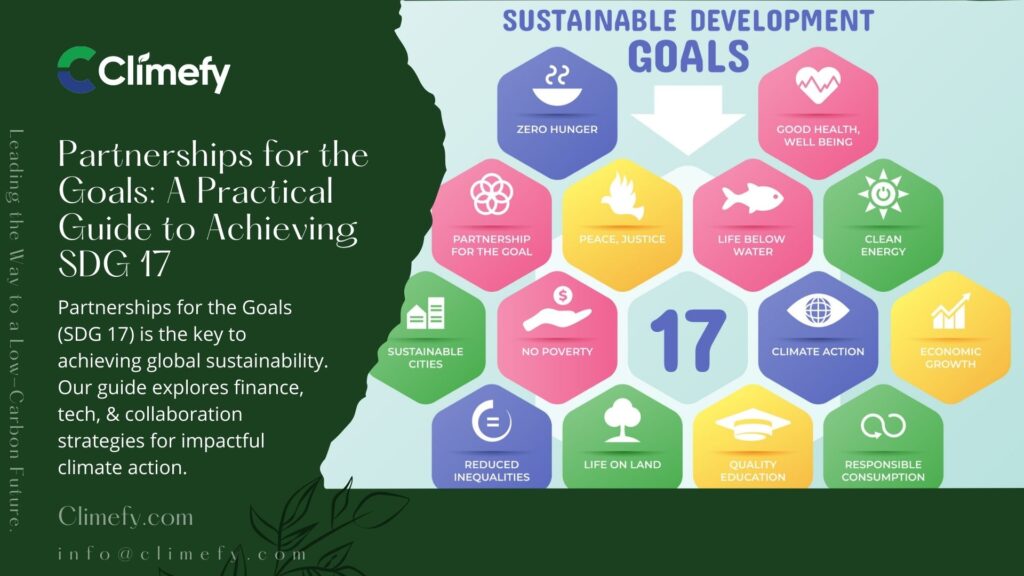
Sustainable Development Goal 17: Strengthen the means of implementation and revitalize the Global Partnership for Sustainable Development, is universally acknowledged as the enabling goal that makes all other 16 SDGs possible. It is not a standalone objective but rather the essential infrastructure for collaboration. Without effective partnerships, the ambitious targets related to poverty eradication, climate action, quality education, and clean water remain aspirational. SDG 17 recognizes that the scale and complexity of modern global challenges—from climate change and biodiversity loss to inequality and public health crises—transcend the capacity of any single government, institution, or sector to solve alone. It is a formal commitment to shared responsibility, mutual accountability, and collaborative problem-solving on a planetary scale. This goal operationalizes the principle that sustainability is a collective endeavor requiring integrated resources, knowledge, and action.
Established Facts about SDG 17:
✔ SDG 17 is the only goal explicitly about the “means of implementation” for the entire 2030 Agenda.
✔ It comprises 19 outcome-oriented targets, organized into five critical pillars: Finance, Technology, Capacity Building, Trade, and Systemic Issues.
✔ The goal emphasizes both North-South and South-South cooperation, recognizing the value of shared learning and support across all geographies.
✔ It calls for multi-stakeholder partnerships that engage civil society, the private sector, academia, and philanthropic organizations alongside governments.
The Five Core Pillars of SDG 17 Explained:
Multi-stakeholder partnerships are the practical engine of SDG 17, translating lofty goals into on-the-ground impact. In the context of climate action and environmental sustainability, these partnerships pool diverse resources, mitigate risks, foster innovation, and scale solutions faster than any actor could alone. A technology firm might partner with a non-profit and a local government to deploy solar microgrids in an off-grid region—combining technical expertise, community trust, and regulatory facilitation. For a business, engaging in such partnerships is no longer merely philanthropic; it is a strategic imperative for risk management, securing supply chains, accessing new markets, and meeting the growing demands of investors and consumers for corporate responsibility. These collaborations create synergies where the whole becomes greater than the sum of its parts, accelerating the transition to a net-zero and circular economy.
Key Benefits of Effective Multi-Stakeholder Partnerships:
✔ Resource Mobilization: Combines financial capital, human expertise, technological assets, and data from different entities.
✔ Risk Sharing: Distributes the technical, financial, and political risks associated with large-scale sustainable development projects.
✔ Enhanced Legitimacy and Trust: Partnerships that include civil society and local communities foster greater social license and project acceptability.
✔ Innovation through Diversity: Bringing together different perspectives from the public sector, private industry, and academia sparks innovative solutions to complex problems.
✔ Improved Policy Implementation: Partnerships can help “road-test” policies and provide feedback loops for more effective governance.
A Framework for Building Successful Sustainability Partnerships:
The private sector and financial institutions are indispensable partners in achieving the SDGs, providing the bulk of investment, innovation, and operational scale required. Their role extends far beyond philanthropy to core business integration. This involves aligning corporate strategies with sustainability principles, investing in green technologies, adopting sustainable supply chain practices, and providing the vast amounts of private capital needed to fill the SDG financing gap—estimated in the trillions of dollars annually. Financial institutions, including banks, asset managers, and insurers, are critical through mechanisms like green bonds, sustainability-linked loans, and ESG (Environmental, Social, and Governance) investing. By integrating climate risk into their portfolios and directing capital towards sustainable development projects, they act as powerful levers for change. Companies can start their journey by accurately measuring their environmental footprint. Tools like Climefy’s carbon calculator for large organizations provide the foundational data needed to set science-based targets and identify partnership opportunities for reduction and offsetting.
Concrete Actions for Private Sector Engagement in SDG 17:
✔ Embed Sustainability into Core Strategy: Move from CSR silos to integrating SDG-aligned goals into business models, product development, and operational efficiency.
✔ Foster Green Innovation: Invest in R&D for low-carbon technologies, circular economy solutions, and sustainable materials.
✔ Enable Sustainable Consumption: Provide customers with transparent information and eco-friendly choices, potentially through Digital Integration Solutions that embed carbon tracking into user experiences.
✔ Engage in Policy Dialogue: Collaborate with governments to advocate for stable, long-term policy frameworks that enable sustainable investment.
✔ Mobilize Private Finance: Issue green bonds, participate in blended finance facilities (mixing public and private capital), and develop investment products that channel funds toward the SDGs.
The Business Case for SDG Alignment:
Technology transfer and capacity building are two intertwined pillars of SDG 17 that address the global inequity in access to tools and skills needed for sustainable development. Technology transfer involves the sharing of knowledge, hardware, and software related to environmentally sound technologies (ESTs)—such as renewable energy systems, water purification tech, or sustainable agricultural practices—from developed to developing countries. However, simply transferring hardware is insufficient without parallel capacity building. This is the process of strengthening the skills, competencies, and abilities of individuals, organizations, and societies so they can effectively identify, adapt, deploy, and maintain these technologies. Effective capacity building encompasses education, training, institutional strengthening, and knowledge sharing platforms. Initiatives like the Climefy Sustainability Academy exemplify this by providing accessible education on carbon markets, ESG, and sustainability management, thereby building the human capital required to drive the green transition globally.
Barriers to Effective Technology Transfer and How to Overcome Them:
✔ Barrier: Intellectual Property (IP) Rights and Costs. High licensing fees can prohibit access.
Key Areas for Capacity Building in Climate Action:
Policy Coherence for Sustainable Development (PCSD) and robust data systems are the “glue” that binds the various elements of SDG 17 together, ensuring efficiency and accountability. Policy coherence means that governmental policies across different sectors—such as agriculture, energy, trade, and finance—are aligned and mutually reinforcing towards sustainable development outcomes, rather than contradictory. For example, a policy subsidizing fossil fuels directly undermines policies aimed at promoting renewable energy. Without coherence, progress in one area can trigger regression in another. Simultaneously, the mantra “what gets measured, gets managed” is central to SDG 17. High-quality, accessible, timely, and disaggregated data is required to track progress, make informed decisions, ensure transparency, and hold all stakeholders accountable. This includes data on finance flows, technology diffusion, trade patterns, and partnership outcomes. Robust monitoring frameworks prevent “partnering for partnering’s sake” and ensure collaborations deliver real, verifiable impact.
Strategies to Enhance Policy Coherence:
✔ Establish Whole-of-Government Approaches: Create inter-ministerial committees or SDG units to coordinate policy design and implementation across all relevant departments.
✔ Conduct Integrated Impact Assessments: Mandate sustainability impact assessments for all major policies, regulations, and trade agreements to identify and mitigate negative spillovers.
✔ Align Budgetary Processes: Ensure national budgets reflect and resource SDG priorities, making financing a tool for coherence.
✔ Engage in Regular Stakeholder Dialogue: Use multi-stakeholder platforms to identify policy conflicts and co-create solutions.
The Critical Role of Data in Partnership Accountability:
For an organization—whether a business, NGO, or city government—wanting to move from theory to practice, engaging in SDG 17 requires a structured approach. It begins with internal alignment and extends to strategic external collaboration. The process is not about adding a standalone partnership initiative but about weaving partnership logic into the organization’s sustainability DNA. The first step is always understanding your own footprint and impact, which serves as a credibility baseline and identifies areas where external collaboration is most needed. From there, organizations can strategically seek partners that complement their strengths and address their weaknesses, focusing on creating shared value for all parties involved and for the planet.
A Step-by-Step Action Plan for Organizations:
How to Leverage Carbon Markets as a Partnership Tool: Carbon offsetting, when used as part of a comprehensive “measure, reduce, then offset” strategy, can be a powerful partnership mechanism. A company can partner with a project developer on an afforestation and plantation or renewable energy project in a developing country. The company provides finance and a demand guarantee (via carbon credit purchases), enabling the project to secure additional funding and proceed. This creates climate, community, and biodiversity benefits, directly operationalizing SDG 17’s finance and technology transfer pillars. Engaging through a trusted platform like the Climefy Marketplace for GHG reduction projects ensures the partnerships support verified, high-impact initiatives.
Despite the clear imperative for Partnerships for the Goals, the path is often fraught with challenges that can derail even the best-intentioned collaborations. Recognizing these pitfalls in advance is the first step toward mitigating them. Common issues include misaligned objectives between partners, power imbalances where one entity dominates decision-making, lack of long-term commitment and resources, poor communication, and “greenwashing” where partnerships are used for reputational gain without substantive action. Furthermore, in the context of carbon and environmental projects, a lack of transparency and rigorous verification can undermine the credibility of the entire partnership. Navigating these challenges requires diligence, transparent protocols, and a commitment to equity and genuine impact over superficial association.
Top Challenges and Proactive Solutions:
✔ Challenge: Misaligned Incentives and “Talking Past Each Other.”
The Greenwashing Pitfall: To avoid partnerships that are merely cosmetic, stakeholders must demand and provide evidence of additionality (would the outcome have happened without the partnership?), measurability, and long-term sustainability. Partners should ask tough questions about the primary motivation for the collaboration and ensure it is rooted in delivering tangible impact, not just positive headlines.
The main purpose of SDG 17 is to strengthen global solidarity and cooperation to achieve the other 16 Sustainable Development Goals. It provides the practical framework for implementation by focusing on mobilizing financial resources, transferring technology, building capacity, promoting fair trade, and ensuring policy coherence through multi-stakeholder partnerships.
A small business can contribute significantly by first measuring and managing its own sustainability impact using tools like a carbon footprint calculator. It can then partner with local NGOs on community projects, collaborate with other businesses in its sector to address shared supply chain challenges, choose suppliers with strong ESG credentials, and advocate for supportive local policies. Engaging with platforms that simplify sustainability action makes the process accessible.
North-South cooperation refers to traditional development assistance and partnerships between developed countries (Global North) and developing countries (Global South), often focusing on financial aid and technology transfer. South-South cooperation refers to the exchange of resources, technology, and knowledge between developing countries in the Global South. SDG 17 values both, recognizing that countries at similar stages of development can share highly relevant solutions and foster mutual learning.
Multi-stakeholder partnerships are considered more effective because they bring together the unique strengths, resources, and perspectives of different sectors. Governments provide regulatory authority and scale, the private sector offers innovation and efficiency, civil society ensures community grounding and accountability, and academia contributes research and critical analysis. This diversity leads to more holistic, innovative, and sustainable solutions that have broader buy-in.
Carbon offsetting, when practiced responsibly, is a direct application of SDG 17’s finance and technology pillars. It creates a partnership where an entity (a company or individual) provides finance to a carbon reduction project (e.g., a wind farm or forest conservation) in another location. This financial flow enables technology transfer and capacity building in the host community. For it to be a genuine partnership for the goals, it must be part of a broader reduction strategy and use credits verified to high standards of environmental and social integrity.



![Air Capture Technology and Future [Ultimate Guide]](https://climefy.com/wp-content/uploads/2026/04/Air-Capture-Technology-and-Future-Ultimate-Guide-300x169.jpg)