


Sustainable product design methodology represents a fundamental paradigm shift in how we conceive, create, and deliver goods to the market. It is a systematic, holistic framework that integrates environmental considerations into every single stage of the product development process, from the initial idea and material selection to manufacturing, distribution, use, and end-of-life. This guide will deconstruct this essential methodology, providing a comprehensive roadmap for designers, engineers, business leaders, and sustainability advocates to transition from traditional linear models to regenerative, circular, and low-impact design. By embracing this approach, we can mitigate climate change, conserve finite resources, and build a resilient economy that operates within planetary boundaries.
In this definitive guide, you will learn:
Read More:
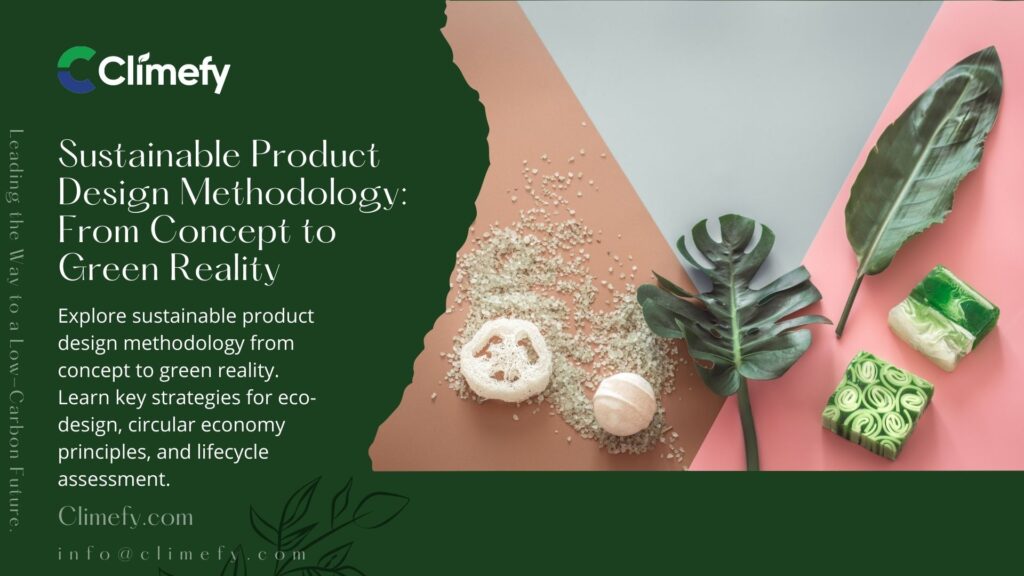
Sustainable product design, also known as eco-design, green design, or environmentally conscious design, is a proactive methodology that seeks to minimize a product’s negative environmental and social impacts across its entire lifecycle. It moves beyond simple compliance or end-of-pipe solutions, embedding sustainability as a core design parameter from the very outset. This approach is no longer a niche trend but a critical business and ethical imperative driven by climate urgency, resource scarcity, evolving regulations, and powerful consumer demand for transparent, responsible products. The ultimate goal is to create products that are not just “less bad,” but actively contribute to a restorative and regenerative economic system. This involves meticulous consideration of embodied carbon, energy efficiency, renewable material sourcing, non-toxic chemistry, durability, repairability, and seamless recyclability or biodegradability.
✅ Established Facts and Drivers:
✅ Core Objectives of Sustainable Product Design Methodology:
The journey from a green concept to a market-ready reality is structured, iterative, and requires cross-functional collaboration. This process integrates environmental benchmarks alongside traditional metrics of cost, performance, and desirability. Let’s explore each critical phase in detail.
This foundational phase is about aligning the project with a clear sustainability vision. It begins with establishing a leadership mandate and forming a cross-disciplinary team. The team then conducts a preliminary scoping exercise to identify the product’s primary purpose, target market, and potential environmental hotspots. Crucially, this is where Sustainable Design Principles like the Hannover Principles or Cradle to Cradle® concepts are adopted as a guiding framework. Teams set measurable, ambitious goals using frameworks like Science-Based Targets (SBTs) to ensure their product’s lifecycle emissions are aligned with keeping global warming below 1.5°C. Understanding your baseline is key; for many organizations, this starts with calculating their corporate carbon footprint using tools like the carbon calculator for large organizations offered by Climefy to inform product-level strategies.
✅ Key Activities in the Conceptualization Phase:
This phase is dedicated to deep analysis and informed decision-making. The cornerstone tool is Life Cycle Assessment (LCA), a systematic, data-driven method for evaluating the environmental impacts associated with all stages of a product’s life. A comprehensive LCA examines:
Conducting an LCA, even a simplified screening, reveals “hotspots” where design intervention will be most effective. Concurrently, teams research alternative materials (e.g., recycled content, bio-polymers, low-carbon aluminum), innovative production techniques (e.g., additive manufacturing/3D printing to reduce waste), and circular design strategies. This research-heavy phase ensures all subsequent decisions are evidence-based.
Here, concepts take tangible form. Sustainability parameters become active constraints in the design process, alongside aesthetics, ergonomics, and cost. This phase leverages specific Design for Sustainability (DfS) strategies:
Engineers and designers use tools like CAD software with material databases and LCA plugins to iterate and simulate environmental performance in real-time. Prototyping is crucial to test both functional and sustainability attributes—such as repairability scores or disassembly times. For the carbon emissions that cannot be designed out, exploring high-integrity offset projects through a marketplace for GHG reduction projects can be part of a holistic carbon management strategy.
A beautifully sustainable design is meaningless if the supply chain and production processes are polluting. This phase involves engaging suppliers early to secure verified sustainable materials. This requires:
Validation involves rigorous testing against the KPIs set in Phase 1. This includes physical testing for durability, third-party verification of environmental claims, and a final detailed LCA to quantify the achieved reductions in carbon footprint, water use, and waste generation. Tools like the Climefy Verified Carbon Standard can provide a rigorous framework for ensuring the integrity of any associated carbon claims or projects.
Launching a sustainably designed product requires transparent and credible communication to avoid greenwashing. Use clear labels (e.g., carbon footprint labels, material passports), detailed sustainability reports, and certifications like Cradle to Cradle Certified™ or B Corp to build trust. Crucially, the designer’s responsibility extends beyond the sale. Companies must develop and support take-back schemes, repair networks, and recycling infrastructure to fulfill the circular promise of their design. Offering spare parts, repair manuals, and upgrade kits is essential. Digital platforms, like those enabled by Climefy’s digital integration solutions, can facilitate product tracking, connect users to repair services, or integrate carbon offsetting at the point of sale, creating a seamless sustainable experience for the customer.
To operationalize the methodology, practitioners rely on a suite of established tools and conceptual frameworks.
LCA software (e.g., SimaPro, GaBi, openLCA) provides the database and calculation engine to model impacts across categories like global warming potential, acidification, eutrophication, and resource depletion. It is the gold standard for making comparative assertions and identifying hotspots.
Databases like the Materially Smart Guide or Granta EduPack provide curated information on material properties, including environmental and social data. Certifications (e.g., OEKO-TEX for textiles, Cradle to Cradle Certified for materials) provide trusted verification.
Precisely tracking the carbon footprint is non-negotiable. This starts at the organizational level. Businesses can measure their operational and value-chain emissions using tailored tools like the carbon calculator for small & medium companies or the comprehensive suite for large organizations. For individuals looking to understand their personal impact, the carbon calculator for individuals provides a crucial starting point. These calculations inform reduction targets and offsetting strategies, which can be actioned through vetted carbon credit marketplaces.
Even the most optimized product will have a residual carbon footprint. Within a robust corporate climate action strategy, high-quality carbon offsetting plays a critical role in addressing unavoidable emissions, on the path to net-zero. Sustainable product design methodology aims to minimize the footprint to the greatest extent technically and economically feasible. The remaining emissions can then be neutralized by investing in verified projects that remove or avoid an equivalent amount of CO2e from the atmosphere.
✅ Best Practices for Integrating Carbon Offsetting:
For businesses embarking on this complex journey, partnering with an experienced ESG consultancy like Climefy can provide the strategic guidance needed to align product design with overarching net-zero ambitions, ensuring credibility and maximum impact.
Despite its importance, the path is fraught with challenges: higher upfront costs for sustainable materials, complex supply chain traceability, regulatory fragmentation, and the risk of greenwashing accusations. However, the future is bright with innovation.
✅ Emerging Trends Shaping the Future:
To stay ahead of these trends, continuous education is vital. Resources like the Climefy Sustainability Academy offer courses and training to equip professionals with the latest knowledge and skills in sustainable design, carbon markets, and corporate sustainability.
Sustainable design is a broad umbrella term for reducing overall environmental impact. Circular design is a specific, powerful subset focused explicitly on eliminating waste and keeping products and materials in continuous use loops. All circular design is sustainable, but not all sustainable design is fully circular.
While sustainable materials and processes can have higher initial costs, they often lead to significant long-term savings through material efficiency, reduced energy and waste disposal costs, enhanced brand value, and compliance with future regulations. The cost of not adopting sustainable design—in terms of regulatory fines, reputational damage, and resource insecurity—is far greater.
Absolutely. Many principles, like designing for durability, repairability, and material efficiency, are cost-neutral or cost-saving. Starting with a simple screening LCA to find the biggest leverage point is a low-cost first step. Leveraging tools like the carbon calculator for small & medium companies can provide an affordable entry point into understanding and managing their footprint.
Rely on third-party verified data (from LCAs), obtain reputable certifications, and be specific and transparent. Use clear, factual language about achievements and avoid vague terms like “eco-friendly.” Follow guidelines from the FTC Green Guides or ISO 14021. Services like Climefy’s carbon offset issuance & certification provide the verification backbone for credible climate claims.
Consumers are powerful drivers through their purchasing choices and use behaviors. Designers can empower them by creating products that are easy to repair, maintain, and properly dispose of. Consumers further influence the market by demanding transparency, supporting take-back schemes, and choosing products designed with circularity in mind, thereby creating a positive feedback loop that rewards sustainable innovation.



![Air Capture Technology and Future [Ultimate Guide]](https://climefy.com/wp-content/uploads/2026/04/Air-Capture-Technology-and-Future-Ultimate-Guide-300x169.jpg)