
Sustainable business models represent a fundamental transformation in how companies create, deliver, and capture value, moving beyond profit to include environmental stewardship and social equity. This comprehensive guide delves into the core principles, frameworks, and implementation strategies that define this new paradigm, demonstrating how businesses can thrive by prioritizing planetary and societal health. You will gain a detailed understanding of the mechanisms that allow modern enterprises to be both profitable and regenerative.
In this definitive guide, you will learn:
Read More:
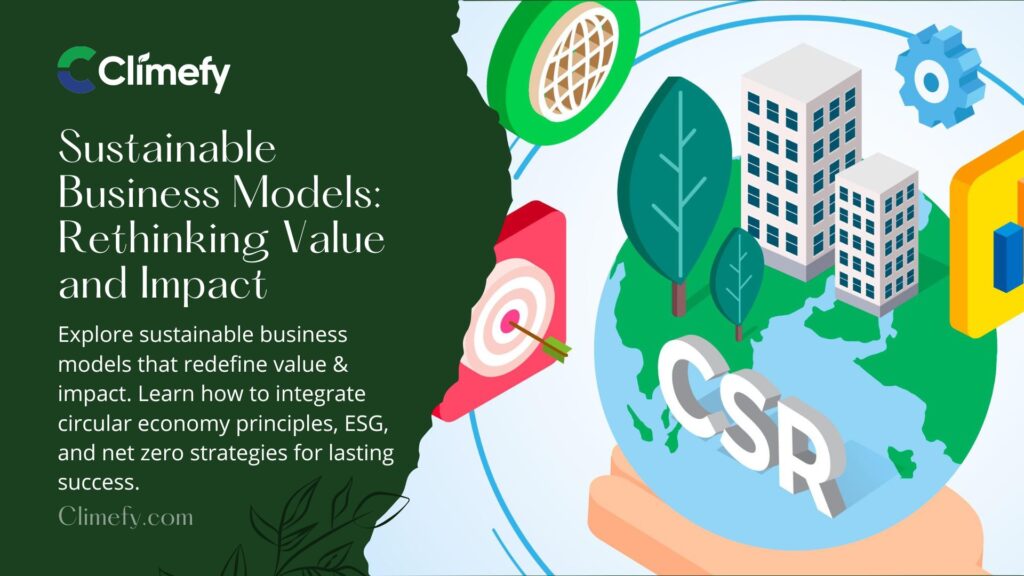
A sustainable business model is an organizational framework that strategically integrates environmental, social, and economic considerations into its core value proposition, operations, and stakeholder relationships to create long-term resilience and shared value.
Unlike traditional models focused solely on financial profit extracted from society and the environment, sustainable models are designed to be regenerative, aiming to restore ecological health and enhance social capital while remaining economically viable.
This paradigm shift is driven by the urgent realities of climate change, resource depletion, biodiversity loss, and rising demands for corporate transparency and responsibility from consumers, investors, and regulators. It is no longer a niche differentiator but a fundamental requirement for risk mitigation, innovation, talent attraction, and securing a social license to operate in the 21st century.
The imperative for adopting such models is supported by established facts:
✔ Climate Science Consensus: Overwhelming scientific evidence confirms that human activities, primarily greenhouse gas emissions from fossil fuels and deforestation, are driving global warming at an unprecedented rate, leading to severe climate disruptions.
✔ Resource Scarcity: The World Bank and UNEP reports highlight that global material consumption has tripled since the 1970s, pushing extraction rates beyond planetary boundaries and threatening supply chain stability.
✔ Economic Imperative: Studies by institutions like the World Economic Forum consistently rank climate action failure and biodiversity loss as top long-term global risks, with the potential to trigger trillions in economic damage.
✔ Market Demand Shift: Consumer preferences are rapidly evolving, with a significant majority, especially among younger generations, preferring to buy from and work for companies with strong environmental and social commitments.
✔ Regulatory Pressure: Governments worldwide are implementing stricter regulations on carbon emissions, waste, and corporate sustainability disclosures, such as the EU’s Corporate Sustainability Reporting Directive (CSRD).
The core components that differentiate a sustainable business model include:
The circular economy is a systemic framework that decouples economic activity from the consumption of finite resources, aiming to eliminate waste and pollution, circulate products and materials at their highest value, and regenerate nature. It directly challenges the dominant linear economic model of “take, make, dispose” by designing out waste from the outset.
For a business, this means rethinking every stage of a product’s lifecycle—from sourcing and design to use, recovery, and reuse. This transition is not merely about recycling more; it is a transformative strategy that unlocks new revenue streams, reduces dependency on volatile virgin material markets, fosters innovation, and builds deeper customer relationships through services like leasing, repair, and refurbishment.
Key strategies for circular business model innovation include:
✔ Design for Longevity and Disassembly: Creating durable, repairable, and modular products whose components can be easily separated and recovered at end-of-life.
✔ Incorporate Recycled and Bio-Based Materials: Shifting material inputs to post-consumer recycled content or renewable, sustainably sourced biological materials that can be safely returned to the biosphere.
✔ Implement Product-as-a-Service (PaaS) Models: Retaining ownership of products and selling the service or performance they deliver (e.g., lighting as a service, cloud computing). This aligns the company’s incentive with product durability and efficiency.
✔ Develop Robust Take-Back and Reverse Logistics Systems: Creating efficient channels to recover used products, components, and materials for refurbishment, remanufacturing, or high-quality recycling.
✔ Utilize Digital Platforms for Resource Optimization: Leveraging AI, IoT, and blockchain to track materials, optimize product use through sharing platforms, and provide transparency in material flows.
For instance, a company transitioning to a circular model might:
ESG (Environmental, Social, and Governance) and the Triple Bottom Line (TBL) are complementary frameworks used to measure and manage a company’s holistic impact. The Triple Bottom Line, coined by John Elkington, expands the traditional financial accounting framework to include People, Planet, and Profit.
It posits that a company’s ultimate success should be measured by its social equity, environmental responsibility, and economic prosperity. ESG, meanwhile, has evolved as the dominant set of criteria used by investors to evaluate corporate behavior and future financial performance based on these three pillars.
ESG metrics provide the standardized, often quantifiable, data that investors, ratings agencies, and stakeholders use to assess a company’s TBL performance. Robust ESG performance is increasingly correlated with lower cost of capital, reduced regulatory risk, stronger brand loyalty, and better operational performance.
A deeper analysis of the three pillars reveals:
Environmental (Planet):
Social (People):
Governance (Profit & Principles):
For businesses seeking to navigate this complex landscape, expert guidance is invaluable. Climefy’s ESG Consultancy offers tailored support to help organizations develop, measure, and communicate their ESG and TBL performance effectively, turning sustainability data into a strategic asset.
Carbon accounting, the process of measuring an organization’s direct and indirect greenhouse gas (GHG) emissions, is the non-negotiable quantitative foundation for any credible climate strategy and a core component of a sustainable business model. It translates the abstract concept of “climate impact” into concrete, actionable data.
The journey to net zero—achieving a balance between the greenhouse gases emitted into the atmosphere and those removed from it—starts with this precise measurement. Comprehensive carbon accounting covers all three scopes: direct emissions from owned sources (Scope 1), indirect emissions from purchased electricity (Scope 2), and all other indirect emissions embedded in the value chain, from purchased goods to employee commuting and end-of-life product treatment (Scope 3).
For most companies, Scope 3 emissions constitute the vast majority of their carbon footprint, making value chain collaboration essential.
The established scientific and economic facts supporting this pillar are clear:
✔ The Carbon Budget: The Intergovernmental Panel on Climate Change (IPCC) has calculated a remaining global carbon budget to limit warming to 1.5°C, making rapid emission reductions mandatory.
✔ Financial Materiality: Carbon-intensive assets are at risk of becoming stranded, and carbon pricing mechanisms are expanding globally, making emissions a direct financial liability.
✔ Investor Scrutiny: Initiatives like the Task Force on Climate-related Financial Disclosures (TCFD) mandate that companies disclose climate risks, making robust carbon data a requirement for accessing capital.
A strategic net zero journey follows a clear hierarchy of actions:
Understanding and managing your footprint is the first step. Climefy’s Net Zero Journey service provides a structured pathway for businesses to navigate from measurement to reduction to credible offsetting, ensuring a scientifically sound and strategically coherent approach to climate neutrality.
A powerful convergence of external pressures and internal opportunities propels the adoption of sustainable business models. The drivers are multifaceted, ranging from regulatory mandates and investor expectations to evolving consumer consciousness and the tangible risks posed by climate change to physical assets and supply chains.
Beyond mere compliance or risk mitigation, the benefits are empirically proven to contribute directly to financial performance, competitive advantage, and long-term organizational resilience. Companies that proactively integrate sustainability into their core strategy often discover new markets, drive innovation, enhance brand loyalty, and attract and retain top talent who seek purpose-driven employment.
The primary drivers can be categorized as follows:
| Driver Category | Specific Examples |
|---|---|
| Regulatory & Policy | Carbon pricing (taxes, cap-and-trade), mandatory ESG reporting (EU CSRD, SEC proposals), plastic taxes, extended producer responsibility (EPR) laws. |
| Financial & Investor | Growing ESG assets under management, lender covenants linked to sustainability KPIs, shareholder activism on climate resolutions, risk of stranded assets. |
| Market & Consumer | Demand for sustainable products (B Corp certification preference), green supply chain requirements from large corporates, transparency via digital platforms. |
| Physical & Operational | Supply chain disruptions from climate events, rising costs of raw materials and energy, water scarcity impacting operations. |
| Social & Talent | Employee demand for meaningful work, public pressure from NGOs and communities, the need for a social license to operate. |
The tangible business benefits are significant and measurable:
✔ Enhanced profitability and Cost Savings: Through radical resource efficiency, waste reduction, energy savings, and circular design that lowers material costs.
✔ Risk Mitigation and Resilience: By future-proofing against regulatory changes, resource scarcity, and climate-related physical disruptions.
✔ Accelerated Innovation and Market Access: Sustainability challenges spur R&D into new materials, services, and technologies, opening up new customer segments and business lines.
✔ Strengthened Brand Equity and Customer Loyalty: Building trust and differentiation in a crowded market, leading to higher customer retention and premium pricing potential.
✔ Improved Access to Capital: Attracting investment from the growing pool of ESG-focused funds and securing better loan terms from green-finance-savvy banks.
✔ Talent Attraction and Retention: Becoming an employer of choice for a motivated, skilled workforce that aligns with the company’s values.
To build internal competency and realize these benefits, continuous learning is key. The Climefy Sustainability Academy offers courses and training to empower teams with the knowledge needed to drive this transformation from within.
Digital technologies are the critical enablers that allow sustainable business models to be implemented at scale, with transparency, efficiency, and measurable impact. From the Internet of Things (IoT) sensors that optimize energy use in real-time to blockchain platforms that provide immutable traceability for sustainable supply chains, technology bridges the gap between intention and execution.
Artificial Intelligence (AI) and machine learning can analyze vast datasets to identify emission hotspots, predict maintenance needs to extend product life, and optimize complex circular logistics networks. Furthermore, digital integration allows companies to embed sustainability directly into customer-facing platforms, enabling choices like carbon-neutral shipping or real-time footprint tracking, thus democratizing climate action.
Key technological applications include:
✔ IoT and Smart Infrastructure: Sensors monitoring energy, water, and waste flows in buildings and factories, enabling predictive maintenance and automated efficiency.
✔ AI for Predictive Analytics: Modeling climate risks to assets and supply chains, optimizing renewable energy grid integration, and designing new materials with lower environmental footprints.
✔ Blockchain for Traceability and Transparency: Creating tamper-proof records for conflict-free minerals, sustainable forestry products, organic cotton, and carbon credit transactions, ensuring provenance and integrity.
✔ Digital Twins: Creating virtual replicas of physical systems (a factory, a city) to simulate and optimize for sustainability outcomes before implementing changes in the real world.
✔ Platforms for the Circular Economy: Online marketplaces for material exchanges, product-life-extension services (repair, resale), and sharing economy models that maximize asset utilization.
For businesses looking to seamlessly embed these capabilities, Climefy’s Digital Integration Solutions offer APIs and tools to integrate real-time carbon tracking and offsetting options directly into e-commerce checkouts, banking apps, and operational software, making sustainable choices frictionless for end-users and operational managers alike.
Despite the clear imperative and benefits, the transition to a sustainable business model is fraught with challenges. These obstacles range from internal organizational resistance and short-term financial pressures to systemic issues like the lack of standardized metrics and the complexity of transforming global value chains.
A common barrier is the perceived trade-off between sustainability and profitability, especially when upfront investments are required for retrofits, new technologies, or supplier audits.
Additionally, “greenwashing”—making misleading environmental claims—poses a reputational risk if commitments are not backed by robust, verified action and transparent reporting. Overcoming these hurdles requires strategic leadership, a long-term perspective, and a willingness to collaborate across industries.
The major challenges and pragmatic solutions include:
1. Upfront Costs and Financial Hurdles:
2. Complexity of Value Chain (Scope 3) Engagement:
3. Data Measurement and Management:
4. Organizational Silos and Lack of Expertise:
5. Ensuring Credibility and Avoiding Greenwashing:
Initiating the transition to a sustainable business model is a strategic process that requires systematic planning and execution. It begins with a fundamental shift in mindset—viewing sustainability not as a cost center or PR exercise, but as a core driver of innovation, resilience, and long-term value creation.
The following framework provides a actionable, step-by-step pathway for organizations of any size to begin this journey, from initial assessment to embedding sustainability into the corporate culture and business DNA. The key is to start where you are, use available tools, and commit to continuous improvement.
Phase 1: Foundation & Assessment (Months 1-3)
Phase 2: Strategy & Goal Setting (Months 4-6)
4. Define Vision & Ambition: Articulate a clear sustainability vision aligned with your corporate mission. What does success look like?
5. Set SMART Goals: Establish Specific, Measurable, Achievable, Relevant, and Time-bound goals based on your materiality assessment. For climate, this should include a net zero target with interim milestones.
6. Develop an Action Roadmap: Create a detailed plan outlining key initiatives, responsible parties, resources required, and timelines for the next 1-3 years.
Phase 3: Implementation & Integration (Months 7-24)
7. Integrate into Operations: Launch high-impact projects like energy efficiency upgrades, waste reduction programs, and sustainable procurement policies.
8. Engage the Value Chain: Communicate expectations to suppliers, offer support, and collaborate on reduction initiatives. Consider requirements for key partners.
9. Develop Sustainable Products/Services: Innovate your offerings based on circular design principles or new service models that reduce environmental impact.
10. Manage and Offset Residual Emissions: For emissions you cannot yet eliminate, invest in high-integrity carbon removal projects. Explore vetted options on the Climefy Marketplace for GHG reduction projects.
Phase 4: Monitoring, Reporting & Culture (Ongoing)
11. Track, Measure, and Report: Regularly monitor KPIs, report progress transparently (e.g., annual sustainability report), and audit results for credibility.
12. Embed into Culture and Incentives: Train employees, celebrate successes, and link executive and departmental bonuses to sustainability performance metrics.
13. Iterate and Scale: Review progress annually, learn from successes and failures, and set more ambitious goals for the next cycle.
A green business typically focuses on reducing its direct environmental impact, often through specific products or operational changes (e.g., using recycled packaging). A sustainable business model is a more holistic, systemic approach that redesigns the entire way the business creates value. It integrates environmental, social, and economic considerations into its core strategy, value chain, and stakeholder relationships, aiming for long-term regeneration rather than just reduced harm.
Absolutely not. Small and medium-sized enterprises (SMEs) are often more agile and can integrate sustainability into their core operations more quickly. Many sustainable business models, like local circular systems or niche product-as-a-service offerings, are ideally suited for SMEs. Tools like Climefy’s carbon calculator for small & medium companies are specifically designed to make the journey accessible and manageable for businesses of this scale.
ROI should be calculated both in traditional financial terms and in broader value creation. Financially, consider cost savings (energy, waste, materials), new revenue streams (from sustainable products/services), risk mitigation (avoided fines, supply chain stability), and improved access to capital (green loans). Non-financial ROI includes enhanced brand reputation, employee satisfaction and retention, customer loyalty, and future-proofing the business against regulatory changes.
The most critical first step is to measure your impact. You cannot manage what you do not measure. Conduct a carbon footprint assessment across Scopes 1, 2, and 3 to understand your climate impact. Perform a materiality assessment to identify your most significant environmental and social issues. This data-driven foundation is essential for setting credible goals and crafting an effective strategy.
Carbon offsetting is a legitimate and necessary tool within a comprehensive climate strategy, but it is not a substitute for direct emission reductions. Best practice follows the “mitigation hierarchy”: first, measure and reduce your emissions as much as possible through efficiency and transition to clean energy. Then, for residual emissions that are currently unavoidable, use high-quality, verified carbon removal or avoidance offsets from projects like those on the Climefy Marketplace. Offsets should be used responsibly to complement, not replace, reduction efforts.