
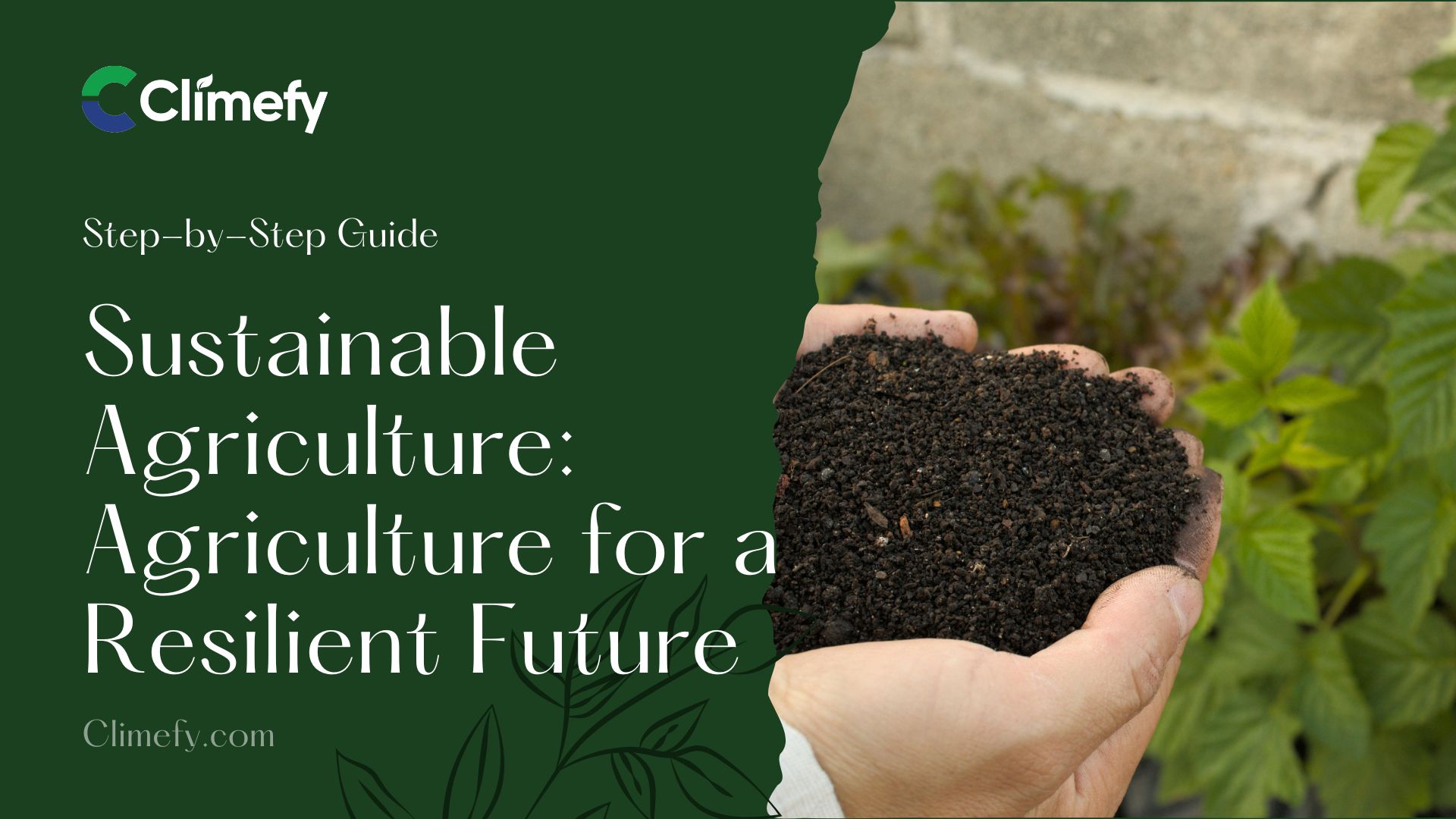
Sustainable agriculture represents a fundamental paradigm shift in how we produce food, fiber, and fuel. Moving beyond mere production efficiency, it is a holistic management system that prioritizes environmental health, economic profitability, and social equity for current and future generations. This comprehensive guide delves into the revolution that is Sustainable Ag, exploring its core principles, innovative practices, and the critical role of technology and carbon markets in creating a truly regenerative food system.
In this definitive guide, you will learn:
Read More:
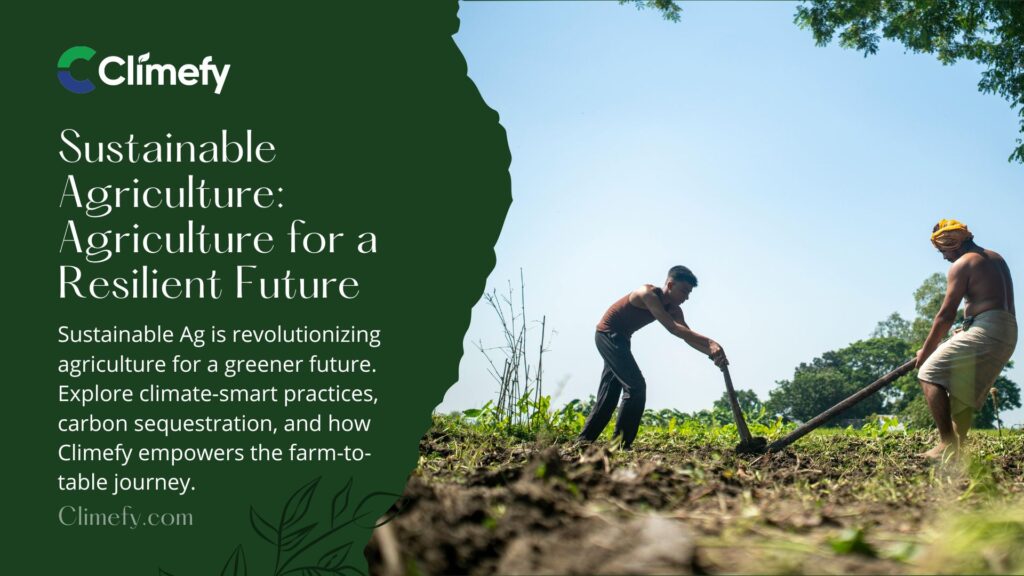
Sustainable agriculture is an integrated system of plant and animal production practices that satisfy human food needs, enhance environmental quality and natural resources, make the most efficient use of non-renewable resources, sustain the economic viability of farm operations, and enhance the quality of life for farmers and society as a whole.
It is not a single practice but a dynamic continuum that seeks to balance ecological resilience, economic stability, and social well-being. The urgency stems from the convergence of multiple crises: conventional, input-intensive farming is a major contributor to biodiversity loss, freshwater depletion, soil degradation, and greenhouse gas emissions.
With a global population to feed and climate change destabilizing growing conditions, Sustainable Ag is no longer an alternative but a necessity for food security and planetary health.
The transition involves moving from extractive to restorative models. Key semantic terms and concepts central to this section include: regenerative agriculture, agroecology, climate-smart agriculture, conservation agriculture, organic farming, food security, ecosystem services, biodiversity, soil degradation, and greenhouse gas (GHG) emissions from farming.
The revolution of Sustainable Ag is operationalized through a suite of interlinked principles and practices designed to work with natural systems rather than against them. These methodologies aim to create closed-loop systems that minimize external inputs, maximize resource efficiency, and build farm resilience.
Regenerative agriculture is an outcome-based approach focused on rehabilitating the entire farm ecosystem, with a prime emphasis on soil health. It goes beyond sustainability—seeking not just to maintain but to actively improve resources. Its core principles include minimizing soil disturbance, keeping soil covered, maintaining living roots, increasing biodiversity, and integrating livestock.
Practices like no-till farming, cover cropping, diverse crop rotations, and managed grazing are hallmarks. The end goal is to enhance carbon sequestration, improve the water cycle, increase biodiversity, and bolster farm profitability.
✔ Minimizes Soil Disturbance: Reduces erosion and preserves soil microbial life.
✔ Maximizes Crop Diversity: Disrupts pest cycles and improves soil structure.
✔ Integrates Livestock: Mimics natural grazing patterns, enhancing nutrient cycling.
✔ Maintains Living Roots: Feeds soil biology year-round and prevents erosion.
✔ Context-Specific Design: Recognizes that practices must be adapted to local ecology and culture.
Agroecology applies ecological concepts and principles to the design and management of sustainable agricultural systems. It is both a scientific discipline and a social movement, emphasizing knowledge sharing, farmer autonomy, and food sovereignty. It views the farm as an agroecosystem and leverages biological interactions (like pollination and natural pest predation) to enhance productivity and resilience.
Both are pillars of Sustainable Ag, with distinct standards and overlapping goals. Conservation Agriculture is built on three core principles: continuous minimal soil disturbance (no-till), permanent organic soil cover (mulch/cover crops), and species diversification (rotations). Its primary focus is on soil and water conservation.
Organic Farming, governed by formal certifications (like USDA Organic), prohibits the use of synthetic fertilizers, pesticides, GMOs, and often antibiotics. It emphasizes natural inputs and processes. All organic farming is inherently sustainable, but not all sustainable farming is certified organic. Many farms blend practices from both paradigms to achieve their sustainability targets.
Healthy soil is the foundation of Sustainable Ag. It is not merely an inert growing medium but a living, breathing ecosystem teeming with bacteria, fungi, protozoa, nematodes, and microarthropods. This soil food web is responsible for nutrient cycling, water infiltration and storage, disease suppression, and carbon sequestration.
Practices that build soil organic matter (SOM) are critical for climate resilience, as each 1% increase in SOM can hold an additional 20,000 gallons of water per acre, reducing drought and flood impacts.
✔ Carbon Sink: Soils are the largest terrestrial carbon pool, holding more carbon than the atmosphere and vegetation combined.
✔ Water Management: Healthy soil acts like a sponge, reducing runoff and irrigation needs.
✔ Nutrient Availability: Microbial life makes nutrients bioavailable to plants, reducing fertilizer dependency.
✔ Erosion Control: Aggregated soil structure resists wind and water erosion.
✔ Basis for Productivity: Ultimately, long-term crop yields depend on the health of the soil.
Measuring soil health involves key indicators: Soil Organic Carbon (SOC) levels, aggregate stability, water infiltration rate, and microbial activity. Tools like the Climefy Carbon Standard provide frameworks for verifying the carbon sequestration outcomes of soil health practices, turning regenerative actions into quantifiable assets.
The modern Sustainable Ag movement is powerfully augmented by AgTech and Precision Agriculture. These technologies enable farmers to manage variability within fields, applying the right input, in the right amount, at the right time, and in the right place. This precision reduces waste, lowers environmental impact, and improves economic returns.
Precision farming uses GPS, GIS, sensors, drones, and satellite imagery to collect high-resolution data on crop health, soil conditions, and microclimates. This data, processed through analytics platforms and farm management software, allows for variable-rate seeding, fertilizing, and irrigation. The result is a drastic reduction in input over-application, lowering GHG emissions from fertilizer production and runoff, and optimizing resource use.
Artificial Intelligence (AI) and the Internet of Things (IoT) are the next frontier. AI algorithms can predict pest outbreaks, diagnose plant diseases from images, and optimize harvest schedules. IoT sensors provide real-time, continuous data on soil moisture, temperature, and nutrient levels, enabling automated, responsive irrigation and micro-climate management. These tools democratize deep agricultural insight, making advanced Sustainable Ag management accessible to more farmers.
For businesses looking to integrate sustainability into their core operations, Climefy’s Digital Integration Solutions offer a pathway to embed real-time carbon tracking and sustainable engagement directly into customer and operational platforms, bridging the gap between sustainable production and conscious consumption.
Despite its benefits, the transition to Sustainable Ag faces significant headwinds. Understanding these barriers is crucial for developing effective policies, financial instruments, and support systems.
Overcoming these challenges requires innovative financing, risk-sharing mechanisms, technical assistance, and policy reform. Payment for Ecosystem Services (PES) schemes, where farmers are compensated for the public goods they provide (like clean water and carbon storage), are a promising model. This is where verified carbon markets and ESG Consultancy services, like those provided by Climefy, become vital, creating new revenue streams that support the economic case for sustainable practices.
Carbon markets and Environmental, Social, and Governance (ESG) frameworks are powerful economic engines accelerating the adoption of Sustainable Ag. They create mechanisms to value the positive externalities—particularly carbon sequestration and emission reduction—that sustainable farms generate.
Agricultural carbon sequestration is the process of capturing atmospheric carbon dioxide (CO2) and storing it in soil organic matter and perennial plant biomass. Practices like cover cropping, agroforestry, and no-till increase the rate of sequestration.
Measurement, Reporting, and Verification (MRV) is the critical process that quantifies this sequestration using soil sampling, remote sensing, and modeled data according to rigorous scientific protocols. Standards like the Climefy Verified Carbon Standard ensure the integrity, transparency, and additionality of carbon credits generated from agricultural projects.
Farmers can participate by enrolling in programs offered by carbon project developers or registries. They implement approved practices, and the resulting carbon removals or emission reductions are quantified, verified, and issued as tradeable carbon offsets. These credits can then be sold to corporations or individuals looking to offset their unavoidable emissions.
This provides farmers with a vital additional income stream, de-risking their transition. For organizations seeking high-quality agricultural carbon credits, exploring Climefy’s Marketplace for verified GHG reduction projects is an excellent starting point.
For agribusinesses, food processors, and retailers, ESG performance is increasingly linked to investment, market access, and consumer trust. Sustainable sourcing is a key component of the ‘Environmental’ pillar.
Companies can use tools like the Carbon Calculator for Large Organizations or for Small & Medium Companies to measure their Scope 3 emissions from their agricultural supply chains. Developing a credible Net Zero Journey with the help of expert partners is essential for long-term resilience and compliance with evolving regulations.
The revolution requires action from all stakeholders. Here is a concise guide for key actors:
For Individuals & Consumers:
✔ Support local farmers’ markets and Community-Supported Agriculture (CSA).
✔ Choose products with credible sustainability certifications.
✔ Reduce food waste, a major source of GHG emissions.
✔ Educate yourself on seasonal and regenerative practices. Consider calculating your dietary footprint with a Carbon Calculator for Individuals.
✔ Advocate for sustainable food policies.
For Farmers & Producers:
✔ Start with one practice: a cover crop on one field, or a reduced tillage trial.
✔ Seek out technical assistance from extension services or sustainable farming groups.
✔ Explore peer-to-peer learning networks.
✔ Investigate carbon farming programs and their requirements.
✔ Consider diversifying crops and income streams to build resilience.
For Businesses & Supply Chain Actors:
✔ Conduct a supply chain footprint analysis using advanced carbon calculation tools.
✔ Set science-based targets for emission reductions.
✔ Source sustainably and offer long-term contracts to farmers transitioning their practices.
✔ Invest in farmer training and transition financing.
✔ Transparently report progress using ESG frameworks.
For Policymakers & Institutions:
✔ Re-align subsidies to reward ecosystem services, not just production volume.
✔ Fund public research and extension in agroecology and sustainable practices.
✔ Develop infrastructure that supports local and regional food systems.
✔ Integrate true-cost accounting into food and agricultural policy.
✔ Support the development of robust, ethical environmental markets.
The journey towards a truly sustainable agricultural system is complex but non-negotiable. It demands collaboration, innovation, and a shared commitment to valuing our natural capital.
Companies like Climefy are pivotal in this transition, providing the verification, marketplace, digital tools, and consultancy needed to connect sustainable practices with economic value, empowering every player in the system—from the farmer in the field to the end consumer—to be part of the solution.
To deepen your understanding of these mechanisms, consider exploring the educational resources available at the Climefy Sustainability Academy.
Sustainable agriculture is a way of farming that meets society’s present food and textile needs without compromising the ability of future generations to meet their own needs. It rests on three pillars: environmental health (conserving water, soil, and biodiversity), economic profitability, and social/economic equity.
Not exactly. Organic farming is a specific, regulated certification that prohibits synthetic inputs. Sustainable agriculture is a broader umbrella that includes organic farming but also encompasses other methods like regenerative agriculture, conservation agriculture, and integrated pest management. The goal is long-term sustainability, which can be achieved through various pathways.
Yes, when combined with reductions in food waste and shifts toward more sustainable diets. Studies show that agroecological systems can be highly productive, especially in terms of nutritional output per unit area. They enhance resilience to climate shocks, which is critical for long-term global food security, making them essential for feeding a growing population on a warming planet.
It helps mitigate climate change primarily through carbon sequestration—pulling CO2 from the air and storing it in soils and plant biomass. It also reduces emissions by minimizing the use of fossil fuel-based fertilizers and pesticides, lowering energy consumption, and reducing nitrous oxide emissions from soils. Furthermore, it enhances adaptation by creating farms that are more resilient to drought, floods, and extreme heat.
The primary barriers are economic and knowledge-based: the initial financial cost and risk of transition, lack of access to capital, uncertain market premiums, and the need for new management skills and technical knowledge. Policy and infrastructure designed for conventional farming also present significant systemic hurdles.