
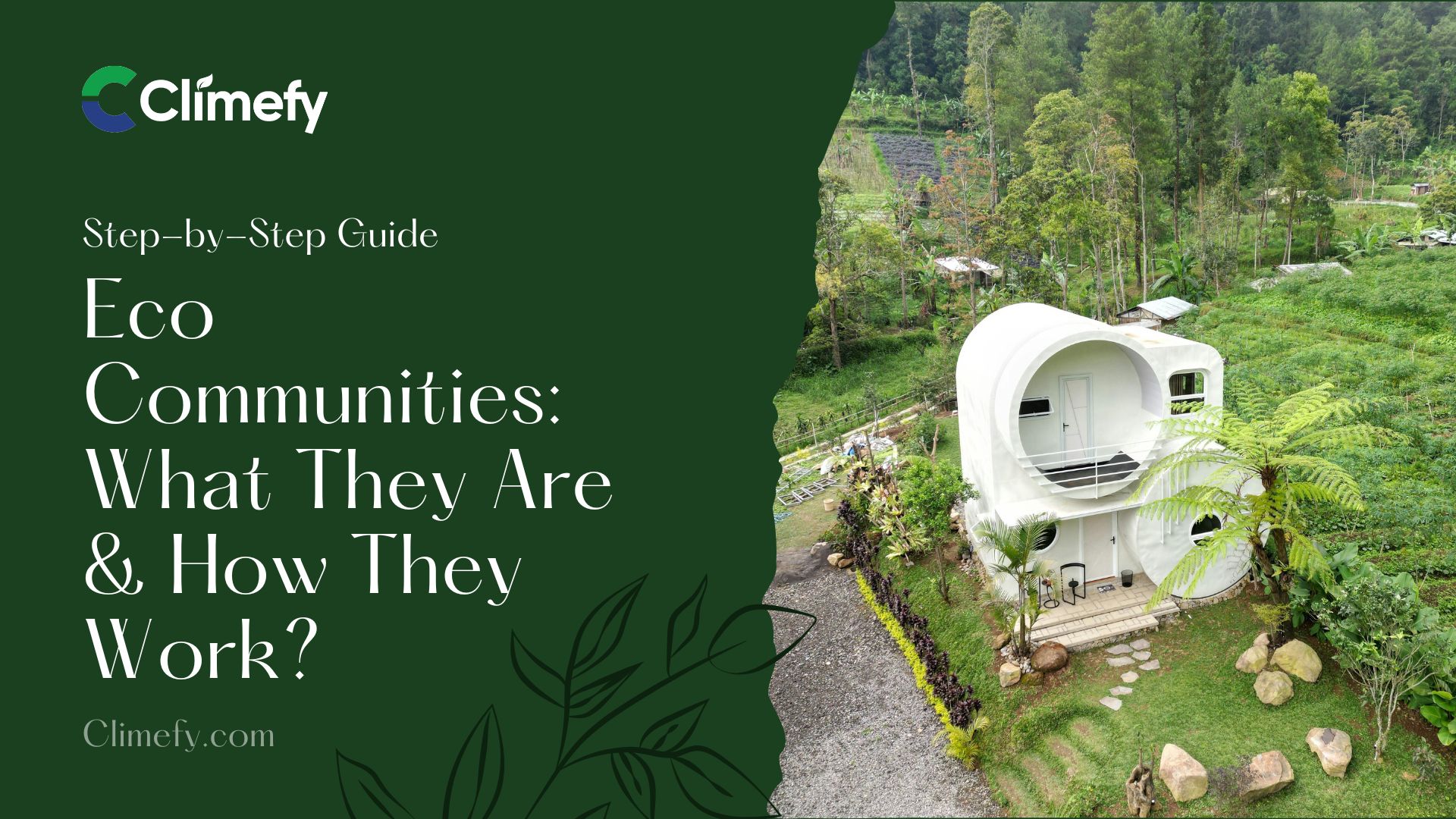
Eco communities represent a transformative blueprint for sustainable living, merging environmental stewardship, social equity, and economic resilience into a cohesive model for the future. These intentional communities are designed to minimize ecological footprints while maximizing human well-being, serving as tangible solutions in the global fight against climate change and resource depletion. This comprehensive guide delves into the philosophy, design, and operational mechanics of eco-villages and sustainable communities, providing an authoritative resource for anyone seeking to understand this critical movement.
In this definitive guide, you will learn:
Read More:
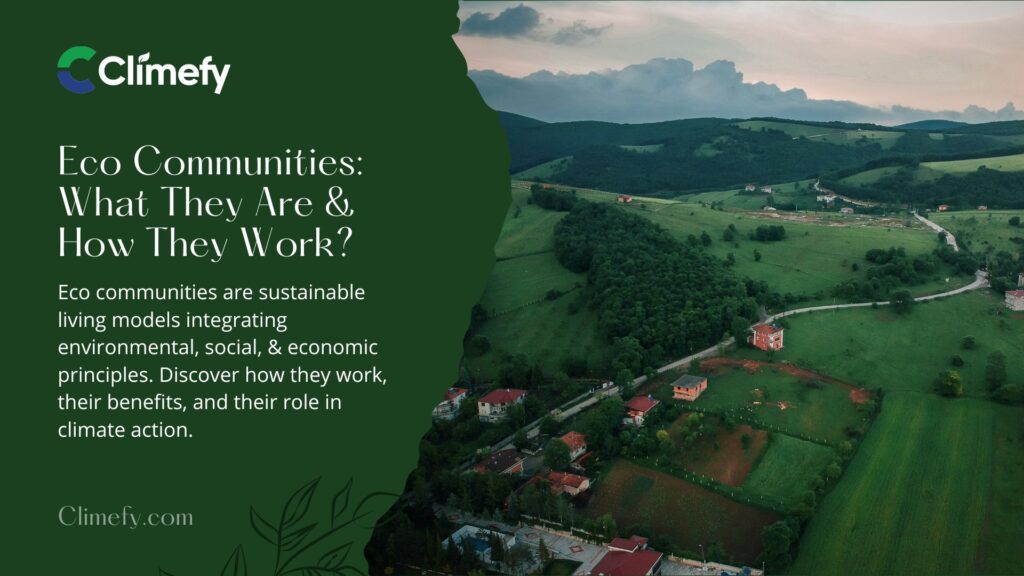
An eco community, also commonly known as an ecovillage or sustainable community, is an intentional or traditional community consciously designed through locally owned, participatory processes to regenerate social and natural environments.
The core aim is to harmonize human activities with the natural world in a way that is supportive of healthy human development and can be successfully continued into the indefinite future. These communities are living laboratories for sustainability, integrating various aspects of ecological design, permaculture, green building, renewable energy, circular economies, and participatory governance.
They are a direct response to the environmental crises of climate change, biodiversity loss, and pollution, as well as social challenges like disconnection and inequality. By modeling a low-carbon, high-quality lifestyle, eco communities provide a practical pathway for both individuals and broader society toward genuine sustainability and resilience.
The concept is underpinned by the three core pillars of sustainability, often expanded into a holistic framework:
✅ Ecological Integrity: This pillar focuses on creating a human habitat that works in partnership with nature. It involves practices like organic agriculture, biodiversity conservation, natural building, renewable energy generation, and closed-loop waste and water systems. The goal is to create a net-positive environmental impact.
✅ Social Well-being: A successful eco community fosters a strong sense of belonging, mutual support, and shared purpose. It emphasizes participatory decision-making, conflict resolution, shared facilities, cultural activities, and social justice, ensuring that the community is nurturing and inclusive for all members.
✅ Economic Resilience: Moving beyond conventional capitalism, eco communities often develop alternative economic models. These can include local currencies, cooperative ownership, community-supported agriculture (CSA), sharing economies, and social enterprises. The focus is on creating local, circular, and fair economic systems that meet needs without exploitation.
The Global Ecovillage Network (GEN) classifies eco communities into several types, demonstrating the movement’s diversity:
Understanding your personal or organizational carbon footprint is a fundamental first step toward the sustainable lifestyle modeled by eco communities. Tools like Climefy’s carbon footprint calculator for individuals provide crucial insight into your environmental impact, offering a baseline from which to build more sustainable habits, whether you live in an eco-village or are taking steps in a conventional setting.
The design and planning of an eco community is a meticulous, holistic process that applies systems thinking to every aspect of human settlement. It moves far beyond simply installing solar panels; it involves creating a synergistic relationship between the land, infrastructure, buildings, and inhabitants.
This process is deeply informed by disciplines like permaculture, which offers a set of design principles centered around caring for the earth, caring for people, and fair share. The planning stage is critical, as it sets the foundation for the community’s long-term viability, ecological success, and social harmony.
It requires balancing visionary goals with practical constraints, financial realities, and legal frameworks, often involving years of dedicated work before the first foundation is laid.
The physical and ecological design of an eco community is its most visible manifestation. This encompasses several integrated systems:
✅ Land Use and Permaculture Zoning: The community land is mapped into zones based on frequency of human use and the needs of plants and animals. Zone 0 (the home) is at the center, moving out to Zone 1 (intensive vegetable garden), Zone 2 (orchard and small livestock), Zone 3 (main crops and larger animals), Zone 4 (semi-managed forest for timber and forage), and Zone 5 (wilderness). This design minimizes energy expenditure and creates efficient flows.
✅ Regenerative Food Systems: Food security and sovereignty are paramount. Communities employ agroecology, food forests, aquaponics, and holistic animal management to create abundant, chemical-free food sources. Community-Supported Agriculture (CSA) models are common, directly linking producers and consumers.
✅ Sustainable Water Management: Systems are designed to catch, store, and purify all water on-site. This includes rainwater harvesting, greywater recycling for irrigation, composting toilets, and the creation of constructed wetlands for blackwater treatment, effectively closing the water loop.
✅ Renewable Energy and Green Building: The goal is energy independence through a mix of solar PV, wind, micro-hydro, and biomass energy. Buildings are constructed or retrofitted using natural, local, and non-toxic materials like straw bale, cob, and reclaimed wood, with passive solar design for heating and cooling.
For businesses inspired by this level of systematic sustainability planning, embarking on a Net Zero Journey requires a similar comprehensive approach. Climefy’s Net Zero Journey service provides the strategic framework and expertise to help organizations systematically reduce emissions and align with the regenerative principles exemplified by leading eco communities.
While the ecological design is crucial, the social and economic architecture of an eco community is what enables it to thrive as a human settlement. These structures are intentionally created to foster cooperation, shared responsibility, and resilience, contrasting sharply with the individualism and competition prevalent in mainstream society.
The social fabric is built on clear communication, inclusive decision-making, and shared values, while the economic models are designed to be equitable, transparent, and supportive of the community’s ecological goals. Without healthy social and economic systems, even the most technologically advanced eco-project can falter. Therefore, communities invest significant time in developing governance models, conflict resolution processes, and shared economic agreements that uphold their collective vision.
The governance and social cohesion of an eco community are maintained through innovative and participatory structures:
✅ Consensus Decision-Making and Sociocracy: Many communities use consensus-based models or sociocracy (a system of dynamic governance using consent and circular feedback) to ensure all voices are heard and decisions align with the community’s shared purpose. This builds deep ownership and commitment.
✅ Shared Common Facilities and Resources: To reduce consumption and foster interaction, communities often share resources like kitchens (common houses), laundry facilities, workshops, guest rooms, vehicles, and tools. This not only lowers costs and environmental impact but also strengthens social bonds.
✅ Education, Ceremony, and Conflict Resolution: Ongoing learning is embedded in community life. Regular meetings, skill-sharing workshops, and celebratory rituals maintain cultural vitality. Formalized conflict resolution processes, such as Nonviolent Communication (NVC) or restorative circles, are essential for addressing tensions healthily.
The economic models within eco communities are diverse and innovative, designed to support internal resilience:
For larger organizations looking to embed similar principles of responsibility and transparency into their operations, Climefy’s ESG Consultancy can help develop robust environmental, social, and governance frameworks that resonate with the values of accountability and sustainability practiced in eco communities.
The daily functioning of an eco community is a dynamic interplay of routine maintenance, project work, social interaction, and personal time, all guided by the community’s agreed-upon systems. It is a lived experience of applied sustainability, where theory meets practice in managing food, water, waste, energy, and human relationships.
Operations are typically decentralized, with responsibilities shared among members based on interest, skill, and rotating duties. This collective management fosters a profound sense of agency and connection, as members see the direct results of their labor in the health of their environment and the well-being of their neighbors. Effective daily function relies on clear communication channels, well-maintained infrastructure, and a culture of mutual aid.
Key operational systems ensure the community runs smoothly and sustainably:
✅ Integrated Waste Management: Towards Zero Waste: Eco communities treat waste as a resource. They employ rigorous recycling, composting of all organic matter (creating fertilizer for gardens), and upcycling/repurposing of materials. The ultimate goal is to eliminate the concept of waste entirely, mirroring natural cyclical systems.
✅ Food Production and Distribution: Daily life is often rhythmed by the growing season. Tasks include planting, weeding, watering, harvesting, and animal care. Harvested food is distributed through shared meals in the common house, CSA boxes for members, or a community store/pantry system.
✅ Energy and Water System Monitoring: Members take responsibility for monitoring renewable energy systems (checking battery banks, solar panel output) and water levels in storage tanks. Usage is often tracked to encourage conservation and ensure system stability.
✅ Maintenance and Stewardship Work: Regular workdays are dedicated to maintaining shared infrastructure—repairing buildings, tending to common gardens, managing trails, and caring for community vehicles and tools.
The successful management of these complex, interrelated systems provides a powerful model for Solid Waste Management and resource efficiency on a larger scale. The principles of circularity and regeneration practiced daily in eco communities are the same ones needed to transform municipal and corporate waste streams.
The benefits of eco communities are multi-faceted, delivering measurable positive impacts on the environment, tangible enhancements to social and personal well-being, and valuable economic advantages. These benefits validate the eco community model as not just an alternative lifestyle but a viable and superior response to the interconnected crises of the 21st century.
Research and longitudinal studies of established ecovillages consistently show significantly lower ecological footprints per capita compared to national averages, alongside higher levels of life satisfaction, social connection, and health among residents. The impacts extend beyond their borders, as they serve as educational centers and demonstration sites, inspiring visitors and influencing regional policy toward greater sustainability.
The environmental benefits are the most direct and quantifiable outcome:
✅ Dramatically Reduced Carbon Footprint: Through renewable energy, local food, reduced consumption, and shared resources, eco community residents often have carbon footprints 50-80% lower than their national average. This is a powerful form of direct climate action.
✅ Enhanced Biodiversity and Soil Regeneration: By practicing organic agriculture, agroforestry, and habitat restoration, these communities become sanctuaries for native plants and wildlife, actively reversing land degradation and building topsoil.
✅ Closed-Loop Resource Cycles: By treating water, waste, and nutrients as cyclical resources, they minimize pollution, conserve freshwater, and eliminate landfill contributions, creating a regenerative local metabolism.
The social and personal benefits are equally transformative, addressing the modern epidemics of loneliness and stress:
✅ Strong Social Support and Reduced Loneliness: The intentional social structure provides a deep sense of belonging, mutual care, and intergenerational connection, significantly boosting mental and emotional health.
✅ Improved Physical Health: Access to organic food, clean air and water, daily physical activity in nature, and reduced exposure to toxins contribute to better overall physical health and vitality.
✅ Personal Empowerment and Skill Development: Living in a community requires and fosters a wide range of practical skills—from gardening and building to conflict facilitation and project management—leading to increased self-reliance and confidence.
For individuals and businesses unable to join a physical community but wishing to contribute to these broad environmental benefits, participating in the voluntary carbon market is a significant step. Climefy’s Marketplace for GHG reduction projects offers verified carbon offsets from initiatives like reforestation and renewable energy, allowing anyone to support tangible climate action and sustainable development, extending the positive impact of the eco-community ethos globally.
Despite their many benefits, the path of establishing and sustaining an eco community is fraught with challenges. These hurdles test the resilience, commitment, and adaptability of the group. Recognizing and proactively addressing these common pitfalls is crucial for any group embarking on this journey.
The challenges span the practical, financial, legal, and deeply interpersonal realms. Success depends not only on a compelling ecological vision but also on the group’s ability to navigate complex human dynamics, secure financial stability, and comply with often rigid regulatory frameworks. Learning from the experiences of established communities provides an invaluable roadmap for avoiding common failures.
The most prevalent challenges include:
✅ Financial Hurdles and Land Access: Securing affordable, suitable land with appropriate zoning is a major initial barrier. High upfront costs for land purchase and infrastructure development can be prohibitive. Solutions include creative financing (land trusts, community share offerings), phased development, and seeking properties with existing usable infrastructure.
✅ Legal and Zoning Obstacles: Conventional zoning laws are often not designed for mixed-use, clustered, or off-grid developments. Navigating permits for alternative building techniques or waste systems can be difficult. Solutions involve hiring knowledgeable legal counsel, engaging proactively with local planning departments, and sometimes pursuing zoning changes or variances.
✅ Social Conflict and Group Dynamics: Interpersonal conflicts, burnout of core members, power imbalances, and decision-making fatigue are perhaps the most common reasons communities struggle or dissolve. Solutions require investing in strong social foundations: clear agreements (covenants), ongoing training in communication and conflict resolution, professional facilitation for difficult issues, and designing governance systems that distribute leadership and prevent burnout.
✅ Maintaining Momentum and Vision: Over years, initial enthusiasm can wane, and the demanding reality of community living can lead to attrition. Solutions involve regular community retreats to revisit and renew the shared vision, celebrating milestones, creating pathways for new members to join, and ensuring there is space for both work and joy.
For organizations, translating sustainability vision into actionable, certified outcomes can present similar challenges of verification and credibility. The Climefy Verified Carbon Standard (CVCS) provides the rigorous framework needed to ensure environmental projects deliver real, measurable, and permanent benefits, addressing the challenge of integrity head-on, much like a successful community’s governance documents.
The future of eco communities is intrinsically linked to the broader global trajectory toward sustainability and climate resilience. As the impacts of climate change and resource scarcity become more acute, the principles and practices honed in these intentional communities will move from the fringe toward the mainstream.
We are likely to see a proliferation of urban and suburban eco-communities, greater integration of technology for smart resource management, and stronger policy support for cooperative and sustainable housing models. Furthermore, the knowledge and culture of eco communities will increasingly influence urban planning, corporate sustainability strategies, and educational curricula.
They are evolving from isolated experiments into essential nodes in a growing network of regenerative culture, demonstrating not just how to survive, but how to thrive in a changing world.
Emerging trends shaping the future include:
✅ Digital Tools for Community Management: Platforms for collaborative decision-making, resource sharing, skill-tracking, and internal communication are becoming standard, enhancing transparency and efficiency.
✅ Regenerative Development and Climate Resilience: New communities are being explicitly designed as climate refuges, focusing on extreme weather resilience, water security, and regional food sovereignty in response to specific climate threats.
✅ Mainstream Integration and Policy Influence: Concepts like cohousing, passive house building, and district-scale renewable energy are gaining municipal and developer interest. Eco communities are actively advocating for policy changes to support sustainable land use and building codes.
Getting involved with the eco community movement can take many forms, regardless of your current life situation:
While some eco communities are rural and agrarian, the movement is incredibly diverse. Urban ecovillages, suburban cohousing communities, and retrofit projects in existing neighborhoods are increasingly common. The core principles of sustainability, community, and shared resources can be applied in any setting, from city centers to remote countryside.
Affordability varies widely. Some communities have low-cost options through sweat equity or rental units, while others require significant upfront buy-in. The overall cost of living is often lower due to shared expenses, reduced energy bills, and local food. Starting a community requires substantial capital for land and infrastructure, which is why many groups explore models like community land trusts to improve accessibility.
The most commonly cited challenges involve the social dimension: the time commitment required for meetings and group decisions, the inevitability of interpersonal conflicts, and the need for compromise on personal preferences. Privacy can also be less than in a standalone home. The physical work can be demanding, and exiting a community can be complex if you have invested equity.
Absolutely. While no single community can solve the climate crisis, they serve as critical demonstration sites and innovation hubs. Their drastically lower per-capita emissions provide a proven model for low-carbon living. Perhaps more importantly, they train sustainability leaders, develop scalable technologies and social tools, and inspire thousands of visitors each year to make changes in their own lives, creating a powerful ripple effect.
Successful communities invest heavily in their social systems. They typically use formalized decision-making models like consensus or sociocracy, have written agreements (covenants) covering everything from pet policies to financial contributions, and establish clear processes for conflict resolution, often involving trained facilitators. Regular community-building activities and transparent communication are foundational to healthy governance.