
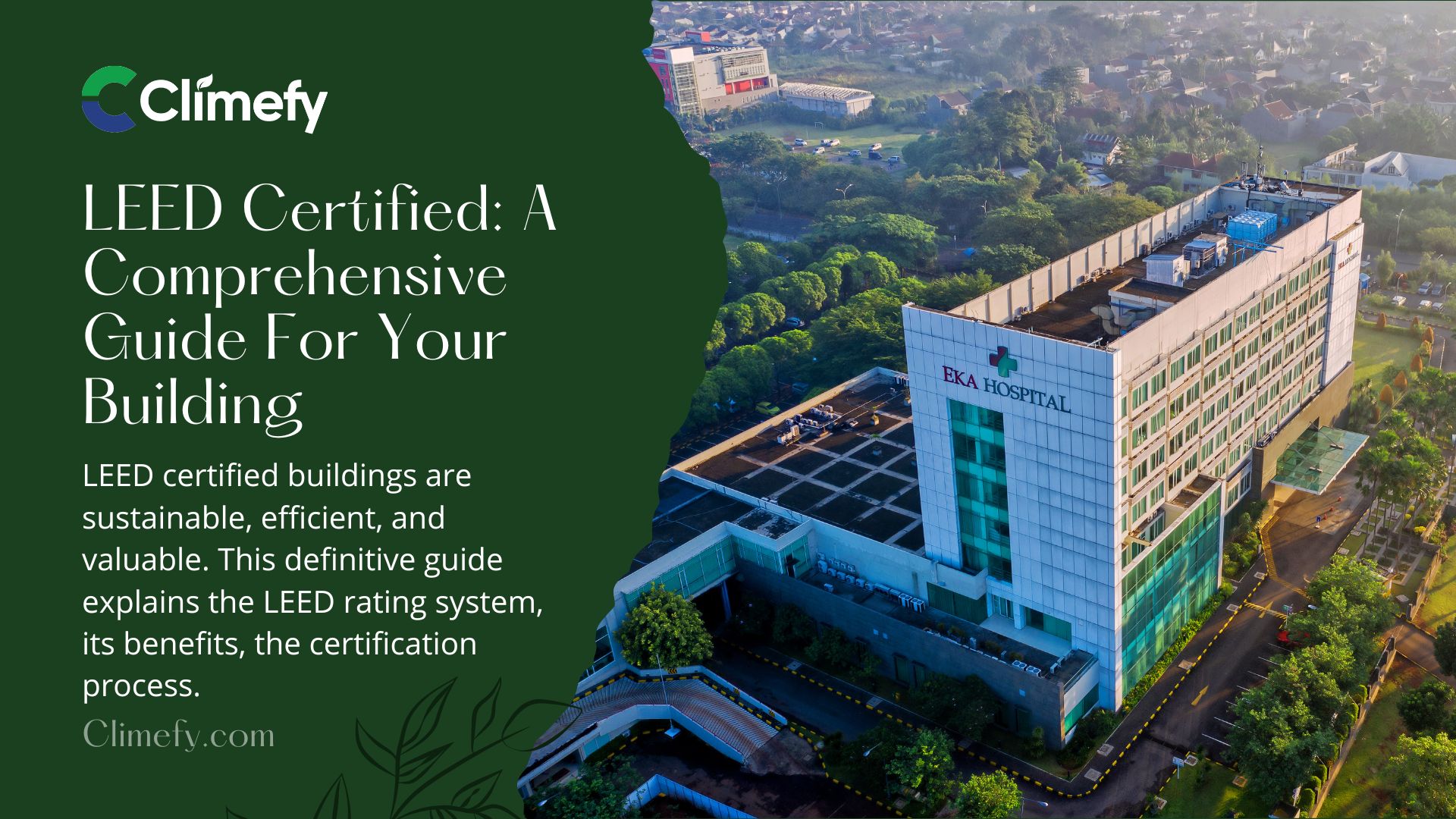
LEED certification is the globally recognized benchmark for the design, construction, operation, and maintenance of high-performance green buildings. This guide provides a definitive exploration of the LEED rating system, detailing its profound benefits, the step-by-step certification process, and its critical role in the broader context of corporate sustainability and climate action. You will learn how achieving LEED certification not only reduces environmental impact but also enhances asset value, occupant well-being, and operational resilience.
In this comprehensive guide, you will learn:
Read More:
LEED, which stands for Leadership in Energy and Environmental Design, is a globally recognized green building certification system developed by the U.S. Green Building Council (USGBC). It provides a framework for creating healthy, highly efficient, and cost-saving green buildings that have a reduced carbon footprint.
LEED certification matters because it is the definitive standard for measuring building sustainability, offering third-party verification that a structure was designed and built using strategies aimed at improving performance across critical human and environmental health metrics. In an era of climate urgency and rising stakeholder demand for corporate responsibility,
LEED provides a credible, points-based pathway to demonstrate tangible environmental stewardship, operational excellence, and future-proof asset management.
Established Facts about LEED:
✓ LEED is the most widely used green building rating system in the world, with projects in over 180 countries.
✓ The system is designed to work for all building types—from new construction and interiors to existing building operations and entire neighborhoods.
✓ LEED is a voluntary consensus standard, meaning it is developed and continuously refined by a diverse community of industry leaders.
Core Principles of the LEED Framework:
Pursuing LEED certification delivers a powerful return on investment that extends far beyond an environmental badge. The advantages permeate financial performance, occupant health, and risk mitigation, making it a strategic business decision.
A LEED-certified building operates more efficiently, attracts and retains tenants more effectively, and demonstrates leadership in a market increasingly driven by sustainability criteria. The benefits are proven and multi-sector, applicable to commercial real estate, corporate facilities, institutional buildings, and residential developments alike.
Financial and Operational Benefits:
✔ Significant Cost Savings: LEED buildings are engineered for resource efficiency. They typically consume 25-30% less energy and see up to 20% lower maintenance costs compared to conventional buildings. This translates directly to reduced utility bills and operational expenditures over the building’s lifecycle.
✔ Enhanced Asset Value and Higher ROI: Green buildings command higher property values, with studies showing premiums of up to 10% for certified assets. They also experience lower vacancy rates and can qualify for green financing, tax incentives, and zoning allowances.
✔ Improved Occupant Productivity and Health: Superior indoor environmental quality (IEQ)—through better ventilation, thermal comfort, and access to daylight—can reduce sick days and improve cognitive function. Research indicates productivity gains of up to 8-11% in green-certified spaces.
✔ Future-Proofing and Regulatory Compliance: LEED certification prepares buildings for evolving environmental regulations and energy codes. It mitigates risks associated with volatile energy prices and water scarcity, ensuring long-term operational resilience.
✔ Strengthened Brand Reputation and Marketability: LEED is a visible symbol of commitment to sustainability. It enhances corporate image, meets the ESG expectations of investors and customers, and serves as a powerful marketing tool to attract environmentally conscious tenants and employees.
The path to LEED certification is a structured, multi-phase journey that integrates sustainability into every stage of a building’s life. Understanding this process is crucial for project teams to plan effectively, allocate resources, and achieve their desired certification level.
The process is managed through the USGBC’s online portal, LEED Online, and involves close collaboration between the project owner, design team, contractors, and a LEED-accredited professional.
The Four Key Levels of LEED Certification:
Phases of the LEED Certification Process:
Crucial Roles in the Process:
The LEED rating system is organized into a series of credit categories, each targeting a specific area of environmental and human health performance. Points are earned by meeting prerequisites (mandatory) and credits (optional) within these categories.
The total points achieved determine the certification level. A deep understanding of these categories allows project teams to strategize effectively and maximize their score based on project-specific opportunities and constraints.
This category rewards thoughtful site selection and encourages alternatives to single-occupancy vehicle travel. It aims to reduce greenhouse gas emissions associated with transportation, preserve natural habitats, and promote walkable, connected communities with access to public amenities.
Key Strategies and Credits:
✓ LEED for Neighborhood Development Location: Prioritizing sites within existing developed areas or certified greenfields.
✓ Sensitive Land Protection: Avoiding construction on environmentally sensitive land like floodplains or endangered species habitats.
✓ Access to Quality Transit: Selecting sites with proximity to bus, rail, or other public transit options to reduce car dependency.
✓ Bicycle Facilities & Storage: Providing secure bike storage and shower facilities to encourage cycling.
✓ Reduced Parking Footprint: Minimizing the amount of land dedicated to parking, often through shared parking agreements or unbundled parking costs.
Water efficiency is a cornerstone of resilient building design, addressing the increasing stress on freshwater supplies globally. This category focuses on reducing potable water consumption through innovative landscaping, high-efficiency fixtures, and water reuse strategies, leading to lower utility costs and reduced strain on municipal water and wastewater systems.
Core Areas of Focus:
✓ Outdoor Water Use Reduction: Utilizing native or adapted landscaping (xeriscaping), high-efficiency irrigation systems, and harvested rainwater to eliminate or minimize the need for potable water in irrigation.
✓ Indoor Water Use Reduction: Installing WaterSense-labeled or ultra-low-flow fixtures for toilets, urinals, faucets, and showerheads. This can lead to savings of 30-50% compared to baseline codes.
✓ Building-Level Water Metering: Installing permanent meters to track total potable water consumption, enabling ongoing performance monitoring and leak detection.
✓ Cooling Tower Water Use: Optimizing cooling tower operations and utilizing alternative water sources (like treated rainwater or condensate) to minimize potable water use for cooling.
The Energy & Atmosphere (EA) category is typically the largest point-earner in LEED and has the most direct impact on operational costs and carbon emissions. It emphasizes whole-building energy performance, the use of renewable energy, and responsible refrigerant management to mitigate a building’s contribution to climate change and ozone depletion.
Fundamental Prerequisites and Credits:
✓ Fundamental Commissioning & Verification: Ensuring building systems are designed, installed, and calibrated to operate according to the owner’s project requirements.
✓ Minimum Energy Performance: Meeting the mandatory baseline set by ASHRAE Standard 90.1 or local energy codes.
✓ Optimize Energy Performance: This is the credit with the most points. It rewards percentage improvements beyond the baseline, often achieved through high-efficiency HVAC, advanced building envelope design, LED lighting with controls, and energy modeling.
✓ Renewable Energy Production: Generating clean energy on-site via solar photovoltaic (PV) systems, wind turbines, or other renewable technologies.
✓ Enhanced Refrigerant Management: Using refrigerants with low or zero ozone-depletion potential (ODP) and low global warming potential (GWP) to minimize direct emissions.
✓ Green Power and Carbon Offsets: While reducing energy use is paramount, LEED also recognizes the purchase of green-e certified renewable energy certificates (RECs) or high-quality carbon offsets to address remaining emissions. This is where integrating with a comprehensive climate partner like Climefy becomes strategic. Climefy’s Carbon Offset Issuance & Certification and its Marketplace for GHG reduction projects offer a credible pathway to source verified offsets, complementing on-site efficiency measures to achieve deeper carbon neutrality goals.
This category encourages a sustainable life-cycle approach to materials, from extraction to end-of-life. It aims to reduce waste generated during construction and operation, utilize environmentally preferable products, and promote the circular economy through reuse and recycling.
Important LEED MR Strategies:
✓ Construction and Demolition Waste Management: Diverting a significant percentage (often 75% or more) of construction debris from landfills through recycling and salvage.
✓ Building Life-Cycle Impact Reduction: This can involve reusing existing building structures, using salvaged materials, or designing for adaptability and disassembly.
✓ Environmental Product Declarations (EPDs) & Material Ingredients: Selecting building products with published EPDs (which transparently report environmental impacts) and those with optimized chemistry to avoid hazardous substances.
✓ Regional Materials: Sourcing raw materials and products extracted and manufactured within a defined radius of the project site to support local economies and reduce transportation emissions.
The Indoor Environmental Quality (IEQ) category addresses the conditions inside the building that directly impact the health, comfort, and productivity of its occupants. It focuses on air quality, thermal comfort, lighting, and acoustics.
Key Elements for a High-Performing Indoor Environment:
✓ Minimum Indoor Air Quality (IAQ) Performance & Enhanced Ventilation: Meeting ASHRAE standards for outdoor air delivery and potentially exceeding them to ensure ample fresh air dilution of indoor pollutants.
✓ Low-Emitting Materials: Specifying paints, coatings, adhesives, sealants, flooring, composite wood, and furniture that have low or no volatile organic compound (VOC) emissions.
✓ Thermal Comfort: Designing HVAC systems and building envelopes to maintain consistent temperature and humidity levels, with potential for individual occupant control.
✓ Interior Lighting: Providing high-quality electric lighting with controls (dimming, occupancy sensors) and maximizing access to natural daylight and views, which has been linked to improved mood and focus.
✓ Acoustic Performance: Designing spaces to control background noise and reverberation time, supporting speech privacy and concentration in offices and learning environments.
LEED certification is not an isolated achievement; it is a powerful, tangible component of a comprehensive corporate sustainability and climate action strategy. In today’s business landscape, where investors, customers, and regulators demand accountability, LEED provides verified data and performance metrics that feed directly into broader initiatives like ESG reporting, Net Zero commitments, and climate risk management. A LEED-certified building is a physical asset that demonstrates execution against stated environmental, social, and governance (ESG) principles.
The Synergy Between LEED and Corporate Sustainability Frameworks:
Measuring and Managing the Carbon Footprint: Understanding your building’s full carbon footprint is the first step toward meaningful reduction. This is where specialized tools are indispensable. For large organizations managing portfolios, utilizing a Carbon Calculator for Large Organizations is critical for detailed analysis.
Small and medium enterprises can begin their assessment with a dedicated Carbon Calculator for Small & Medium Companies. Even individuals can contribute to the ethos by tracking their personal impact. Climefy’s suite of digital integration solutions can help seamlessly embed this carbon intelligence into corporate systems and customer-facing platforms.
Embarking on a LEED project requires clear vision, early commitment, and the right expertise. Whether you are planning a new construction, a major renovation, or seeking to improve the performance of an existing building, a methodical approach will set the stage for success.
Actionable Steps to Begin Your LEED Journey:
Leveraging Expertise for Success: For many organizations, partnering with a full-service sustainability firm can de-risk the process and maximize outcomes. Firms like Climefy offer a synergistic suite of services that extend beyond certification.
From initial ESG Consultancy to help align your building goals with corporate strategy, to providing verified offsets for unavoidable emissions through the Climefy Verified Carbon Standard, and even educational resources through the Climefy Sustainability Academy for team upskilling, a holistic partner can ensure your LEED project is a cornerstone of a genuine and impactful climate action plan.
The costs vary significantly based on project size, location, target certification level, and the project team’s experience. Costs include USGBC registration and certification fees (which are tiered by size), soft costs for hiring LEED consultants and additional design/engineering analysis, and potential hard costs for premium green technologies. However, numerous studies confirm that the average premium for LEED certification is 0-4% of total construction costs, which is typically recouped within a few years through operational savings. Many jurisdictions also offer tax credits, density bonuses, and expedited permitting that can offset initial costs.
Absolutely not. While LEED for Building Design and Construction (BD+C) is for new builds, the LEED for Existing Buildings: Operations & Maintenance (O+M) rating system is specifically designed for improving the sustainability of buildings that are already occupied and operating. O+M focuses on performance in areas like energy and water use, waste streams, purchasing policies, and occupant comfort, making it an excellent tool for portfolio-wide improvements and corporate sustainability reporting.
LEED (U.S.-based, global) and BREEAM (U.K.-based, strong in Europe) are comprehensive green building systems covering a wide range of environmental categories. They differ in their structure, regional applicability, and specific credit weightings. The WELL Building Standard is focused exclusively on human health and wellness, diving deeper into areas like air, water, nourishment, light, fitness, and mental well-being. LEED and WELL are highly complementary; many projects pursue both certifications to demonstrate leadership in both environmental performance and occupant health.
Yes, for the LEED O+M rating system, which requires recertification every 1-3 years. If a building fails to submit recertification documentation or no longer meets the minimum performance standards, its certification can expire. For BD+C projects, the certification is based on as-built design and initial performance; it is not revoked unless it is proven that fraudulent data was submitted. This underscores the importance of the ongoing performance focus of LEED O+M.
The timeline varies. For new construction (BD+C), the process is integrated into the design and construction schedule, typically adding 2-6 months for design integration and documentation. The GBCI review phase itself usually takes 20-25 business days for the preliminary review and another 20-25 for the final review after the team responds. For existing buildings (O+M), the timeline depends on how much data collection and system upgrades are needed before applying.