


Green office design is a holistic approach to creating workspaces that minimize environmental impact while maximizing human health, well-being, and operational efficiency. This transformative strategy moves beyond mere aesthetics, integrating sustainable materials, energy-efficient technologies, and nature-inspired principles to foster a healthier planet and a more productive, financially resilient business. By embracing a green office, companies can significantly reduce utility costs, enhance employee satisfaction and performance, and build a powerful brand rooted in environmental responsibility.
In this comprehensive guide, you will learn:
Read More:
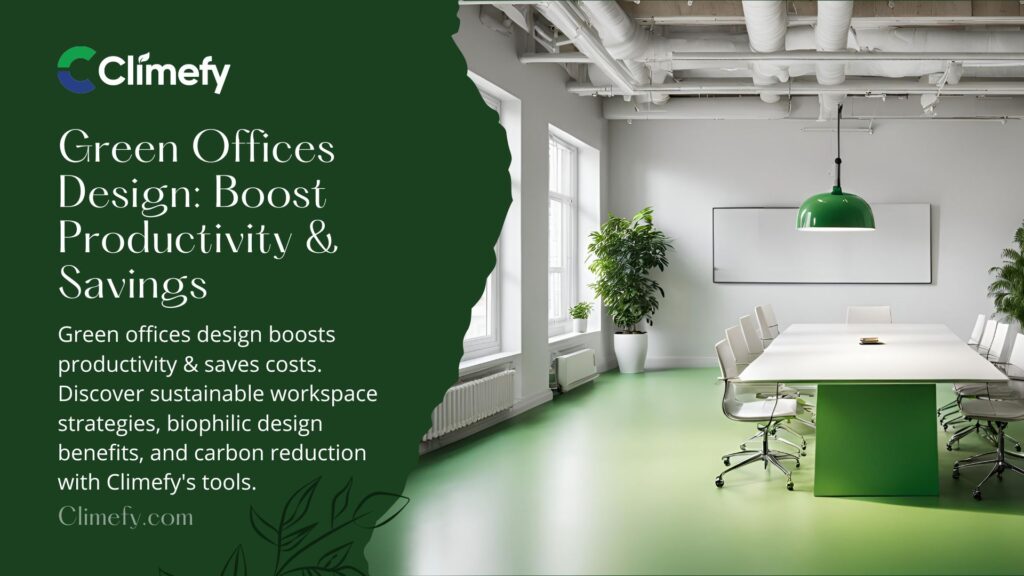
A green office, also known as a sustainable workspace or eco-friendly workplace, is an intentionally designed environment that reduces its ecological footprint through resource efficiency, pollution prevention, and the use of sustainable materials.
It matters profoundly for modern businesses because it directly addresses a triple bottom line: people, planet, and profit. This design philosophy is no longer a niche trend but a strategic imperative driven by rising energy costs, stringent environmental regulations, and a growing demand from employees and consumers for corporate accountability.
A well-executed green office design leads to substantial operational savings, mitigates regulatory and climate-related risks, and serves as a tangible manifestation of a company’s Environmental, Social, and Governance (ESG) commitments, attracting top talent and loyal customers.
The business case is supported by established facts and data:
Core components defining a green office include:
✔ Energy Efficiency: Utilizing LED lighting, high-efficiency HVAC systems, and smart building controls.
✔ Sustainable Materials: Sourcing low-VOC paints, recycled content furniture, and rapidly renewable resources like bamboo.
✔ Water Conservation: Installing low-flow fixtures, water-efficient appliances, and rainwater harvesting systems.
✔ Indoor Environmental Quality (IEQ): Ensuring superior air quality, ample natural light, and acoustic comfort.
✔ Waste Management: Implementing robust recycling, composting, and circular economy principles to divert waste from landfills.
Energy-efficient office design focuses on reducing the amount of energy required to power lighting, heating, cooling, and office equipment, thereby directly slashing utility bills—one of the largest overheads for any business. This is achieved through a combination of passive design strategies, high-performance building envelopes, and intelligent active systems.
By minimizing energy demand and waste, companies can achieve dramatic cost savings, improve their resilience against energy price volatility, and reduce their scope 1 and scope 2 carbon emissions. An energy-optimized office is a financially smarter office, with investments in efficiency often paying for themselves within a few years through ongoing savings.
Key strategies for maximizing energy efficiency include:
To understand and manage the carbon emissions associated with your office’s energy consumption, businesses can utilize tools like the Climefy carbon calculator for organizations. This tool helps you quantify your energy-related emissions, set reduction targets, and track progress, turning operational data into actionable climate strategy.
Biophilic design is the practice of connecting building occupants more closely to nature through the use of direct nature, indirect nature, and space and place conditions. Its core principles are rooted in the innate human affinity for natural systems and processes.
In an office context, biophilic design reduces stress, enhances cognitive function, and boosts creativity by lowering cortisol levels, blood pressure, and heart rates. It counteracts the sensory deprivation of sterile, artificial environments by providing dynamic, multisensory engagement with natural elements, which has been proven to restore mental energy and reduce feelings of anxiety and fatigue among employees.
The application of biophilic design rests on three pillars:
Selecting sustainable materials for office furniture, flooring, walls, and finishes is critical for reducing the embodied carbon of a workspace—the total greenhouse gas emissions generated during the lifecycle of a material.
Prioritizing these materials minimizes environmental degradation, supports circular economies, and ensures better indoor air quality for occupants. The goal is to choose products that are low-impact, non-toxic, durable, and ideally, reusable or recyclable at the end of their life. This requires a shift from a linear “take-make-dispose” model to a circular one focused on renewal and regeneration.
A prioritized list of sustainable material categories includes:
Table: Comparison of Common Office Flooring Options
| Material | Key Sustainable Attributes | Considerations |
|---|---|---|
| Cork | Rapidly renewable, natural thermal & acoustic insulator, hypoallergenic. | Can be soft; requires sealing from moisture. |
| Bamboo | Extremely fast-growing, very durable, FSC certification available. | Some glues in engineered bamboo may contain formaldehyde. |
| Recycled Carpet Tiles | High recycled content, modular for easy replacement, some are fully recyclable. | Requires careful maintenance; some fibers shed microplastics. |
| Polished Concrete | Uses existing slab, highly durable, excellent thermal mass for efficiency. | Hard surface; can be cold and acoustically reflective. |
| Linoleum (Natural) | Made from biodegradable materials (linseed oil, cork dust), antimicrobial. | Requires periodic waxing/sealing; can be damaged by standing water. |
For businesses seeking expert guidance on sourcing sustainable materials and integrating them into a broader corporate sustainability framework, Climefy’s ESG Consultancy provides tailored strategies to align your physical workspace with your environmental goals.
Implementing an effective waste management system in an office is the first concrete step towards embracing a circular economy—an economic system aimed at eliminating waste and the continual use of resources. An effective system moves beyond basic recycling to encompass waste prevention, reuse, and material recovery, turning waste streams into valuable resources.
This not only diverts material from landfills, reducing disposal fees and environmental harm, but also fosters a culture of resource consciousness among employees. The ultimate goal is to design out waste, keeping products and materials in use for as long as possible.
A step-by-step approach to a zero-waste office includes:
✔ Conduct a Waste Audit: Identify what waste is generated, in what quantities, and where it comes from. This data is crucial for designing targeted solutions.
✔ Prioritize the Waste Hierarchy: Focus on Reduce first, then Reuse, then Recycle/Compost, with disposal as the last resort.
✔ Establish Clear Sorting Stations: Place clearly labeled bins for landfill, mixed recyclables (paper, plastic, metal, glass), and organics (for composting) in accessible locations like pantries and copy rooms.
✔ Go Digital and Paperless: Encourage double-sided printing, use of digital documents, and digital note-taking to drastically cut paper use.
✔ Implement a Reuse Program: Create a “free shelf” for office supplies, use reusable dishware and cutlery, and choose refillable containers for soaps and sanitizers.
✔ Partner with Responsible Recyclers: Ensure your recycling and compost haulers are credible and that materials are actually being processed appropriately.
✔ Engage and Educate Staff: Regular communication, training, and visible metrics (e.g., “We diverted 200 kg from landfill this month!”) are essential for high participation rates.
For comprehensive solid waste management strategies that extend beyond the office to encompass your entire supply chain and product lifecycle, specialized services can help architect a truly circular model, minimizing environmental liability and creating new value streams.
Smart technologies are the central nervous system of a high-performance green office, enabling real-time monitoring, automated control, and data-driven optimization of resource use. They play the critical role of translating sustainable design intent into daily operational reality.
By integrating Internet of Things (IoT) sensors, intelligent software platforms, and automated systems, a smart green office can dynamically respond to occupancy, weather, and usage patterns, eliminating human error and waste. This technology layer is what transforms a static “green” building into a responsive, learning organism that continuously improves its own efficiency.
Essential smart technologies for a green office include:
To seamlessly integrate carbon accountability into your digital infrastructure, explore Climefy’s Digital Integration Solutions. These allow businesses to embed real-time carbon tracking and offsetting options directly into their own platforms, empowering both the facility managers and the end-users with data for sustainable decision-making.
Green office design contributes to employee health and well-being by systematically eliminating environmental stressors and introducing health-promoting features. It directly addresses the physical, cognitive, and emotional needs of occupants through superior Indoor Environmental Quality (IEQ).
A focus on clean air, comfortable thermal conditions, ergonomic furniture, access to nature, and spaces for respite and collaboration creates a holistic environment where employees can thrive. This reduces the incidence of work-related illnesses, lowers stress, and enhances overall job satisfaction, which are fundamental drivers of sustained productivity and reduced organizational healthcare costs.
The health benefits are delivered through several key channels:
Yes, a substantial body of scientific research and post-occupancy evaluation data confirms that green offices lead to measurable, significant increases in productivity. This productivity boost is not a vague claim but a direct outcome of the improved physical and psychological conditions detailed earlier.
When employees are healthier, more comfortable, and less stressed, they can think more clearly, collaborate more effectively, and maintain focus for longer periods. Key metrics for measuring this increase include reduced absenteeism, lower staff turnover, faster task completion rates, and higher scores on cognitive function tests administered in different environmental conditions.
The evidence linking specific green design features to productivity outputs is compelling:
✔ A Study on Ventilation & Cognition: Research published in Environmental Health Perspectives found that employees in offices with improved ventilation and lower levels of CO2 and VOCs scored 61% higher on cognitive function tests.
✔ The Impact of Daylight: A study by the California Energy Commission correlated access to natural light with a 15% reduction in absenteeism. Employees with window access also reported better sleep quality and more physical activity.
✔ Noise Reduction & Focus: Findings published in the Journal of Applied Psychology indicate that noise distraction is one of the top detractors from office productivity. Effective acoustic design can recover hundreds of lost work hours per employee annually.
✔ Biophilia & Creativity: Research from institutions like the University of Oregon has shown that workspaces with natural elements can increase creativity and problem-solving capabilities by up to 15%.
Quantifying the financial impact of these gains often reveals that the value of increased productivity surpasses the entire energy savings of a green building.
For businesses looking to measure their starting point and track improvement in their environmental footprint—a key component of social responsibility that employees value—utilizing a carbon calculator for small & medium companies or larger organizations is an excellent first step.
Transitioning to a green office is a strategic project that requires careful planning, stakeholder engagement, and phased execution. It is not necessarily a full-gut renovation but a deliberate journey of incremental improvements aligned with a long-term vision.
The process involves assessing the current state, setting clear and measurable goals, designing interventions, implementing changes, and then monitoring performance to ensure goals are met. A successful transition balances “quick win” retrofits with deeper, more capital-intensive upgrades, all while engaging employees as active participants in the change.
Follow this actionable 7-step process for a successful transition:
For organizations embarking on a comprehensive net zero journey, this office transition is a critical component. Expert guidance can help navigate this complex process, ensuring every step is aligned with global standards and delivers maximum value.
Calculating the Return on Investment (ROI) for green office investments requires looking beyond simple payback periods on equipment to encompass a wider array of tangible and intangible benefits. The financial case is built on direct cost savings, indirect productivity gains, risk mitigation, and value appreciation.
A holistic ROI analysis captures both hard savings from reduced utility and waste bills and soft savings from improved human capital outcomes, presenting a complete picture of the investment’s value. Often, the combined financial benefits make green office projects not just environmentally sound but also superior financial investments compared to business-as-usual alternatives.
A framework for calculating a comprehensive ROI includes:
1. Quantify Direct Cost Savings (Hard Savings):
2. Quantify Indirect Productivity & Health Benefits (Soft Savings):
3. Factor in Intangible Value & Risk Mitigation:
Example Simplified ROI Calculation Table for an LED Lighting Retrofit:
| Cost/Benefit Item | Calculation | Annual Value |
|---|---|---|
| Project Cost | Installation & materials | -$20,000 |
| Energy Savings | 50% reduction on $10,000 annual lighting bill | +$5,000 |
| Maintenance Savings | Fewer bulb replacements & labor | +$1,500 |
| Productivity Uplift | 1% gain on $1,000,000 payroll (conservative) | +$10,000 |
| Total Annual Benefit | +$16,500 | |
| Simple Payback Period | $20,000 / $16,500 | ~1.2 years |
| 3-Year ROI | (($16,500 * 3) – $20,000) / $20,000 | 147.5% |
To accurately model the carbon emissions aspect of your ROI—turning reductions into potential carbon credit assets or compliance savings—consulting with experts in carbon offset issuance & certification can provide clarity on this emerging financial dimension.
The simplest and most impactful first step is to conduct a waste and energy audit. Identify the low-hanging fruit: switch all lighting to LEDs, implement a clear recycling and composting program, and encourage behavioral changes like turning off equipment at night. Engaging employees through a green team can foster collective ownership from the start.
Absolutely not. Green office principles can be applied to any workspace, regardless of size, age, or budget. For older buildings or small businesses, the focus is often on retrofits (like lighting and weatherization), operational changes, and material choices during refurbishment. The Climefy Sustainability Academy offers courses that can equip small teams with the knowledge to start their sustainability journey effectively.
Communication, education, and incentives are key. Clearly explain the “why” behind initiatives. Make participation easy with well-labeled bins and user-friendly systems. Gamify efforts with departmental challenges, recognize “green champions,” and share progress metrics regularly. Empowering employees with knowledge, such as through resources on calculating their personal carbon footprint, can also drive engagement.
They are deeply interconnected concepts. A green office primarily focuses on reducing environmental impact (energy, water, waste). A healthy office focuses on optimizing conditions for human well-being (air, light, comfort, mental health). The best practices, like those in the WELL Building Standard, integrate both, creating a “green and healthy” office where sustainability and occupant health are two sides of the same coin.
While some premium sustainable materials or technologies may have higher upfront costs, the total lifecycle cost is typically lower due to massive operational savings. Many efficiency upgrades have rapid payback periods of 2-5 years. Furthermore, a phased approach allows for budget-friendly implementation. The perception of high cost is often offset by the significant ROI from energy savings, productivity gains, and reduced absenteeism.