
Eco packaging represents a fundamental shift in how we protect, preserve, and present products while prioritizing planetary health. Moving beyond mere disposal, it encompasses a holistic lifecycle approach—from responsibly sourced materials and energy-efficient manufacturing to clever design for reuse, recycling, or compostability. This comprehensive guide delves into the core principles, innovative materials, and business imperatives of sustainable packaging, providing a roadmap for individuals and corporations to make impactful environmental choices.
In this definitive guide, you will learn:
Read More:
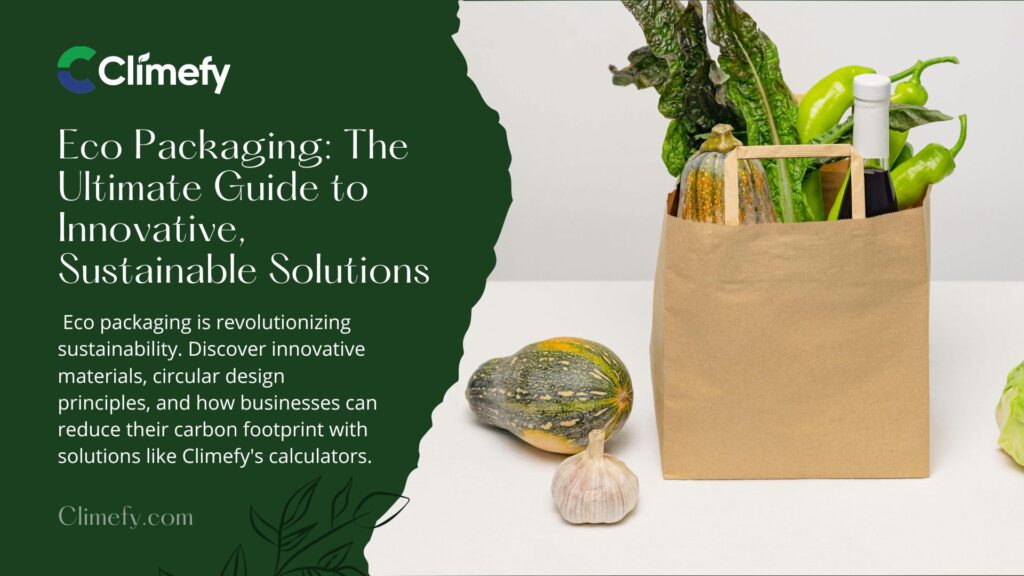
Eco packaging, also known as sustainable packaging, green packaging, or environmentally friendly packaging, is the development and use of packaging solutions that have minimal environmental impact and footprint throughout their entire life cycle.
This means considering every stage: from raw material sourcing (like using recycled content or rapidly renewable resources) and production processes (using renewable energy, less water, and fewer chemicals) to transportation efficiency, consumer use, and, crucially, the end-of-life scenario—whether that is composting, recycling, reuse, or biodegradation in a controlled environment. It is not a single attribute but a multi-faceted approach grounded in lifecycle assessment (LCA) and circular economy principles.
In an era of escalating climate crisis and plastic pollution, transitioning to eco packaging is non-negotiable for businesses. It directly reduces greenhouse gas emissions from production and waste, conserves finite resources, mitigates pollution, and meets the soaring consumer demand for corporate environmental responsibility. For any business on a net-zero journey, addressing packaging is a clear, actionable, and measurable step.
Established Facts About the Packaging Problem:
Core Objectives of Truly Sustainable Packaging Solutions:
✓ Source Responsibly: Use renewable, recycled, or bio-based materials.
✓ Optimize Design: Right-size packaging, eliminate unnecessary layers, and design for efficient logistics.
✓ Ensure Safety & Performance: Protect the product without over-engineering.
✓ Maximize End-of-Life Value: Design for easy recycling, composting, or reuse within a circular system.
✓ Utilize Clean Production: Implement energy-efficient, low-emission manufacturing processes.
✓ Communicate Clearly: Provide unambiguous disposal instructions to consumers.
The evolution of eco packaging materials is moving beyond traditional recycled cardboard. Today’s innovations span plant-based polymers, mushroom mycelium, and even seaweed, each offering unique environmental profiles.
Choosing the right material requires a balance of performance, cost, availability, and end-of-life infrastructure. A thorough understanding of these options is the first step in redesigning a packaging portfolio for sustainability. Below, we explore the key categories and their characteristics, which are crucial for making informed decisions that align with both product needs and environmental goals.
A common point of confusion lies in the terms “biodegradable” and “compostable.” While related, they are not interchangeable and mislabeling can lead to contamination of waste streams. Biodegradable packaging refers to any material that can be broken down by microorganisms (like bacteria or fungi) into water, carbon dioxide, and biomass over time.
However, this process can occur in various environments (landfill, soil, marine) and may leave behind microplastics or toxic residues; the timeframe is also often unspecified. Compostable packaging, a subset of biodegradable, must break down into non-toxic, nutrient-rich compost (humus) within a specific timeframe under controlled composting conditions—typically in an industrial composting facility that maintains high temperatures.
Home-compostable materials meet this standard in a backyard compost bin. Certification to standards like ASTM D6400 or EN 13432 is essential for credible compostable claims. For businesses, selecting compostable options requires ensuring local composting infrastructure exists, otherwise, the benefit is lost.
This category leverages annually renewable resources, reducing dependence on fossil fuels and often offering a lower carbon footprint. Key examples include:
✓ Paper and Cardboard from Sustainable Forestry: The classic eco packaging solution, especially when made from post-consumer recycled (PCR) content or sourced from Forest Stewardship Council (FSC) certified forests.
✓ Bioplastics (PLA, PHA): Polymers like Polylactic Acid (PLA) are derived from corn starch or sugarcane. They are typically compostable under industrial conditions but require specific waste streams.
✓ Mushroom Mycelium: Grown around agricultural waste into custom shapes, this material is home-compostable and uses minimal energy in production.
✓ Seaweed and Algae Packaging: Emerging as a water-soluble, edible, or marine-degradable alternative for sachets, wrappers, and films.
✓ Bagasse: A by-product of sugarcane processing, molded into durable food containers and clamshells as a substitute for polystyrene.
✓ Palm Leaf: Fallen leaves are heat-pressed into sturdy, compostable plates and bowls without any chemical binders.
Using recycled content is one of the most effective ways to close the loop. Post-Consumer Recycled (PCR) materials—like recycled paper, cardboard, glass, aluminum, and plastics (rPET, rPP)—divert waste from landfills and reduce the need for virgin resource extraction, saving significant energy and water. Upcycled materials take this a step further by transforming waste streams into higher-value products (e.g., fabric scraps into paper, ocean-bound plastic into packaging).
The key challenge is maintaining material quality and food-grade safety through multiple recycling loops. Designing packaging for mono-material construction (avoiding mixed materials that are hard to separate) greatly enhances its recyclability and the quality of the recycled output.
Table: Comparison of Common Eco Packaging Materials
| Material Type | Primary Source | Key Benefits | End-of-Life Ideal Path | Key Considerations |
|---|---|---|---|---|
| Recycled Cardboard (PCR) | Recycled paper fibers | High recyclability, widely accepted, carbon sequestration | Recycling | Ensure it stays dry and clean; avoid heavy ink coatings. |
| rPET (Recycled Polyethylene Terephthalate) | Recycled plastic bottles | Reduces plastic waste, lower energy than virgin PET | Recycling | Closed-loop systems are optimal; downcycling is a risk. |
| PLA Bioplastic | Corn starch, sugarcane | Renewable, compostable (industrial) | Industrial Composting | Can contaminate plastic recycling; needs specific facilities. |
| Mushroom Mycelium | Agricultural waste & fungi | Home-compostable, low-energy growth, moldable | Composting (Home/Industrial) | Limited to specific shapes and moisture-sensitive products. |
| Molded Pulp | Recycled paper/plant fibers | Biodegradable, excellent cushioning, versatile | Composting/Recycling | Can be heavy; may require moisture-resistant coatings. |
Circular design thinking moves beyond the traditional “take-make-dispose” linear model. It requires reimagining packaging as part of a continuous loop where materials retain their value.
This philosophy is operationalized through strategies focused on reduction, reuse, and designing for optimal end-of-life. Implementing these principles often requires cross-functional collaboration between procurement, design, marketing, and logistics teams, and can be guided by frameworks such as Cradle to Cradle or the Ellen MacArthur Foundation’s principles.
For companies seeking expert guidance on integrating these principles into their broader sustainability strategy, Climefy’s ESG Consultancy offers tailored support to align packaging initiatives with corporate environmental, social, and governance goals.
The most effective sustainable packaging is often no packaging at all, or significantly less of it. The “reduce” principle focuses on source reduction—using the minimum material necessary to safely deliver the product.
This involves:
✓ Right-Sizing: Eliminating empty space (slack fill) to reduce material use and shipping volume.
✓ Lightweighting: Using thinner, stronger materials that maintain performance.
✓ Eliminating Unnecessary Components: Removing outer plastic wraps, separate lids, or excessive layers.
✓ Concentrated Products: Designing products like concentrates that use smaller, refillable containers.
Reduction not only cuts material costs and waste but also lowers the carbon footprint of transportation—a major contributor to Scope 3 emissions in the supply chain. Businesses can start by conducting a comprehensive packaging audit to identify clear reduction opportunities.
Reusable packaging models represent the pinnacle of circular design, where packaging is designed for multiple cycles of use. This shifts the economic model from selling packaging to leasing or managing a pool of assets.
Common systems include:
✓ Returnable Transit Packaging (RTP): Durable pallets, crates, and totes used in B2B logistics.
✓ Refillable/Returnable Consumer Packaging: Glass milk bottles, durable containers for dry goods, or cosmetics containers that can be returned, cleaned, and refilled.
✓ Bulk Dispensing Systems: In-store refill stations where consumers fill their own containers.
Success depends on a robust reverse logistics system, consumer engagement, and designing for durability and easy cleaning. While the initial investment is higher, the long-term savings on material costs and waste disposal, along with profound brand loyalty, can be substantial.
If packaging cannot be reduced or reused, it must be designed to seamlessly re-enter the biological or technical cycle. This means creating packaging that the existing waste management infrastructure can handle effectively.
✓ Design for Recycling: Use mono-materials, easy-to-separate components, and clearly labeled polymer types. Avoid dark colors (which hinder optical sorting), plastic films on cardboard boxes, and glued-on labels that contaminate streams.
✓ Design for Composting: Ensure materials are certified compostable and communicate disposal instructions prominently to avoid contaminating organic waste.
✓ Design for Biodegradation (where appropriate): For applications where recovery is unlikely (e.g., certain agricultural films), use materials that will safely and completely biodegrade in the specific environment without leaving harmful residues.
A critical first step for any business is to understand the actual waste processing capabilities in their key markets. A reputable partner like Climefy, which offers solid waste management expertise, can provide valuable insights into local infrastructure and optimal material choices.
Transitioning to sustainable packaging is not merely a cost center or a compliance exercise; it is a powerful strategic investment that drives value across multiple business functions. The benefits extend from the bottom line to brand equity and future-proofing against regulatory shifts. In today’s market, sustainability is a competitive advantage and a key driver of consumer and investor decisions.
✓ Enhanced Brand Loyalty & Reputation: Consumers, especially younger demographics, actively seek out and remain loyal to brands that demonstrate genuine environmental stewardship. Transparent communication about sustainable packaging efforts builds trust and differentiates your brand in a crowded marketplace.
✓ Cost Savings & Efficiency: Reduction and lightweighting directly decrease material purchase costs. Optimized packaging lowers shipping and warehousing expenses due to reduced volume and weight. Furthermore, designing for reuse or recycling can mitigate rising waste disposal fees and potential extended producer responsibility (EPR) levies.
✓ Risk Mitigation & Regulatory Compliance: Governments worldwide are enacting strict regulations on single-use plastics, mandatory recycling content, and EPR schemes. Early adoption of eco packaging future-proofs your business against sudden regulatory changes and supply chain disruptions linked to virgin materials.
✓ Attracting Investment & Talent: Strong environmental, social, and governance (ESG) performance, of which packaging is a visible component, is increasingly important to investors. Similarly, a clear sustainability mission helps attract and retain top talent who want to work for purposeful companies.
✓ Innovation & Market Access: The drive for sustainable solutions fosters innovation within R&D teams and can open doors to new markets or retail channels that have strict sustainability requirements for their suppliers.
To quantify the climate impact of your packaging decisions and broader operations, businesses of all sizes can utilize Climefy’s carbon calculators. For small & medium companies and large organizations, these tools provide precise tracking of emissions, helping to identify hotspots in the packaging supply chain and measure the positive impact of sustainable material switches.
Understanding the full carbon footprint of your packaging—from cradle to grave—is essential for credible goal-setting and communication. This involves calculating the greenhouse gas (GHG) emissions associated with raw material extraction, production, transportation, and end-of-life processing.
This data allows businesses to target the highest-impact areas for reduction and, for unavoidable emissions, invest in high-quality offset projects.
The GHG Protocol categorizes emissions into three scopes, all relevant to packaging:
After measuring and actively working to reduce emissions, carbon offsetting addresses the residual, unavoidable footprint. This involves purchasing carbon credits from verified projects that remove or avoid an equivalent amount of GHG emissions elsewhere. For packaging, this could mean supporting projects like:
✓ Afforestation and Reforestation: Planting trees that absorb CO2, aligning with the renewable resource ethos of eco packaging.
✓ Renewable Energy Projects: Funding wind, solar, or biogas projects that displace fossil fuel energy.
✓ Community-Based Waste Management: Projects that capture landfill methane or improve recycling rates in underserved regions.
It is critical to choose offsets that are real, measurable, permanent, additional, and independently verified. The Climefy Verified Carbon Standard (CVCS) ensures that projects listed on the Climefy Marketplace meet these rigorous criteria, allowing businesses to invest in credible climate action as part of their net zero journey.
The frontier of sustainable packaging is being pushed by smart technology, advanced materials science, and digital transparency tools. These innovations promise to enhance functionality, improve recycling systems, and provide unprecedented insight into the lifecycle of packaging materials.
✓ Smart and Active Packaging: Integrating sensors to monitor freshness (reducing food waste) or using QR codes to provide detailed recycling instructions and brand storytelling.
✓ Advanced Recycling Technologies: Chemical recycling and enzymatic processes that can break down mixed or contaminated plastics back into virgin-quality feedstock, potentially revolutionizing plastic circularity.
✓ Digital Watermarks and Blockchain: Invisible codes on packaging (like the HolyGrail 2.0 initiative) that enable high-precision sorting at recycling facilities. Blockchain can be used to trace material provenance and recycled content claims.
✓ Platform-Based Reuse Systems: Digital platforms that manage the deposit, return, and logistics of reusable packaging for e-commerce and grocery delivery, making reuse as convenient as disposal.
✓ AI-Powered Design Optimization: Using artificial intelligence to generate packaging designs that use minimal material while meeting all strength and protection requirements.
For businesses looking to embed these capabilities, Climefy’s Digital Integration Solutions offer pathways to incorporate real-time carbon tracking and sustainable engagement directly into customer-facing platforms and operational systems.
Beginning the transition can seem daunting, but a structured, step-by-step approach makes it manageable and effective. This journey aligns perfectly with broader corporate climate targets and can be integrated into your overall sustainability roadmap.
Embracing eco packaging is a decisive step toward operational resilience, environmental stewardship, and building a future-proof brand. It is a tangible manifestation of a company’s commitment to its net zero journey and a critical response to the global climate challenge.
By leveraging innovative materials, circular design, and credible climate partnerships like those offered by Climefy, businesses can transform their packaging from a waste problem into a core component of their sustainability legacy.
Not necessarily. While some innovative biomaterials may have a higher upfront cost, strategies like right-sizing and lightweighting reduce material use and shipping costs, leading to net savings. Furthermore, as demand grows and production scales, the cost of sustainable materials continues to decrease. Avoiding future regulatory fines and leveraging enhanced brand value also contribute to a positive long-term ROI.
Look for official certifications from independent bodies. For industrial composting, seek labels like “BPI Certified” (USA) or the “Seedling” logo (Europe) compliant with ASTM D6400 or EN 13432. For home composting, look for specific “Home Compostable” certifications (e.g., TÜV OK HOME COMPOST). Always be wary of vague terms like “degradable” or “earth-friendly” without certification.
There is no single “most sustainable” material; it depends on the product, geography, and end-of-life infrastructure. The best choice follows the waste hierarchy: first reduce material use, then design for reuse, and finally, choose a single-material, recyclable or compostable option that aligns with local waste processing capabilities. A lifecycle assessment (LCA) provides the most accurate comparison.
Yes. Advances in material science have produced durable alternatives. Molded pulp provides excellent cushioning, certain bioplastics offer similar barrier properties, and reinforced paper composites are strong and lightweight. The key is matching the material properties (barrier, crush resistance, moisture tolerance) to the specific product’s needs.
It reduces greenhouse gas emissions at multiple stages: using recycled content lowers energy-intensive virgin material production; lightweighting reduces transport emissions; composting organic packaging avoids methane generation from landfills; and using renewable materials sequesters carbon. Collectively, this significantly lowers the carbon footprint of products.